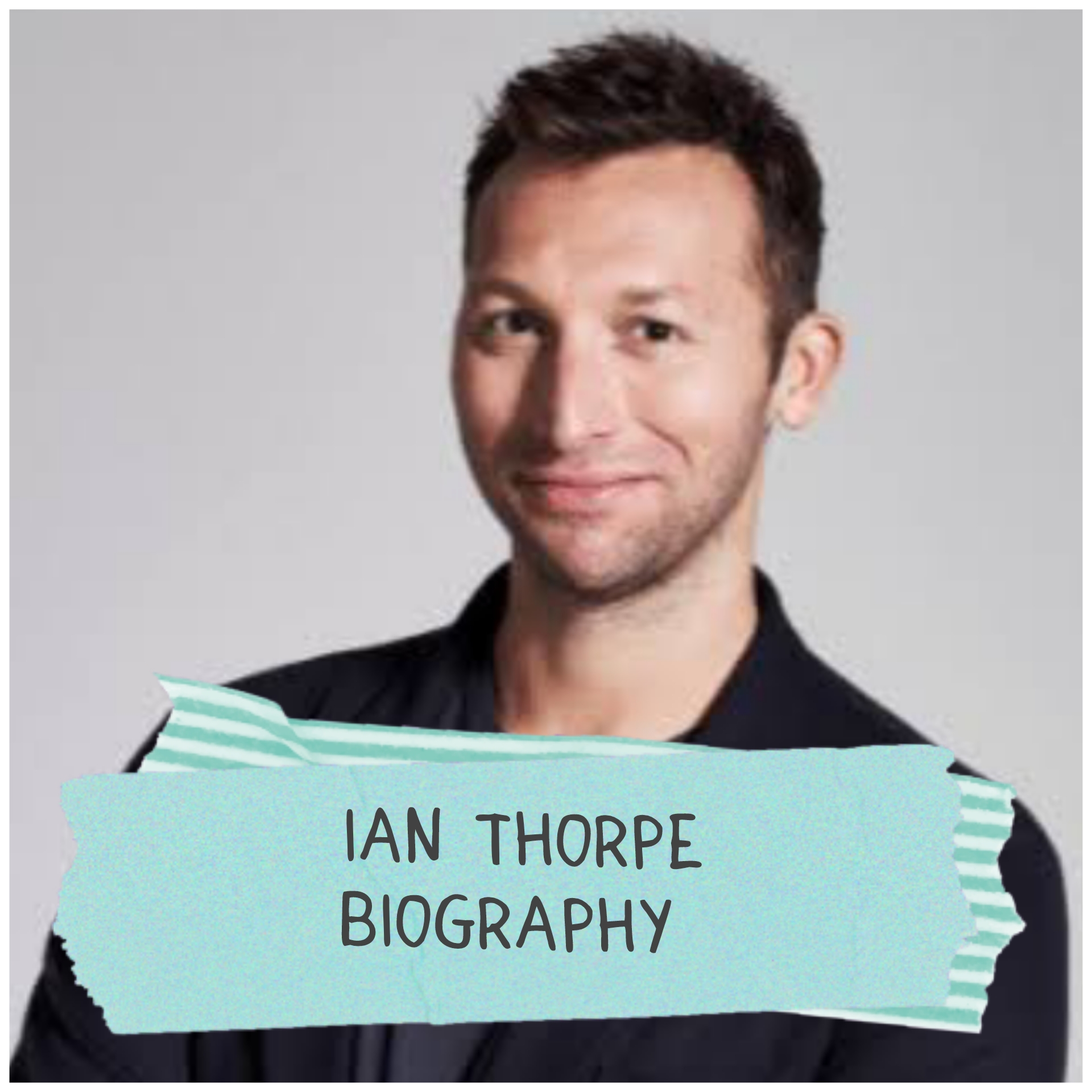
Ian Thorpe is one of the greatest swimmers in Australian history and one of the most successful freestyle swimmers the world has ever seen. Nicknamed “Thorpedo” and “Thorpey”, he became an international sporting phenomenon as a teenager, winning his first world championship title at only 15 and becoming the youngest male world champion in swimming history at the time. He later won nine Olympic medals, including five gold medals, and became Australia’s most successful male Olympian by gold-medal count.
Thorpe’s greatest achievements came at the 2000 Sydney Olympics and the 2004 Athens Olympics. At Sydney 2000, competing in front of his home crowd, he won three gold and two silver medals. Four years later in Athens, he added two more gold medals and a bronze. His dominance extended beyond the Olympics. He won 11 long-course world championship gold medals, set 13 individual world records and became the first swimmer to win six gold medals at a single World Championships.
His story, however, goes far beyond medals. Thorpe retired from swimming at 24, attempted a difficult comeback for the 2012 London Olympics, and subsequently became increasingly open about depression, anxiety, loneliness and the psychological burden of being a global sporting celebrity from childhood. He came out publicly as gay in 2014 and later became an advocate for LGBTQ+ rights, Indigenous education and athlete wellbeing. In 2026, he continued that public work while reflecting on his extraordinary life in the ABC series The Assembly.
Ian Thorpe Profile Summary
| Profile | Details |
| Full Name | Ian James Thorpe |
| Nicknames | Thorpedo, Thorpey |
| Date of Birth | October 13, 1982 |
| Age | 43 years old |
| Place of Birth | Milperra, Sydney, New South Wales, Australia |
| Nationality | Australian |
| Profession | Retired competitive swimmer, author, television personality and advocate |
| Sport | Swimming |
| Main Events | 100m, 200m, 400m and 800m freestyle |
| Years Active | 1995-2006; comeback from 2011-2012 |
| Olympic Medals | 9 |
| Olympic Gold Medals | 5 |
| World Championship Gold Medals | 11 long-course gold medals |
| Olympic Games | Sydney 2000, Athens 2004 |
| Height | 1.96 m / 6 ft 5 in |
| Weight During Career | Approximately 104 kg / 229 lb |
| Nickname | Thorpedo |
| Sexuality | Gay |
| Partner | No current partner reliably confirmed |
| Former Partner | Ryan Channing |
| Parents | Ken Thorpe and Margaret Thorpe |
| Sister | Christina Thorpe |
| School | East Hills Boys Technology High School |
| Major Honour | Legend of Australian Sport |
| Human Rights Honour | 2012 Human Rights Medal |
| Olympic Committee Honour | Order of Merit |
| @ian,thrope | |
| Estimated Net Worth | Commonly estimated around US$6 million, but not officially disclosed |
Ian Thorpe Early Life
Ian James Thorpe was born on October 13, 1982, in Milperra, a suburb of Sydney, New South Wales, Australia. He grew up in a sporting family. His father, Ken Thorpe, had been a talented junior cricketer, while his mother, Margaret, was involved in netball and worked as a teacher. Ian had an older sister, Christina, who also became involved in swimming. His family’s sporting environment played an important role in introducing him to competitive athletics.
Thorpe began swimming when he was five years old, initially because his sister had been encouraged to swim after suffering a broken wrist. The activity quickly became more than a family pastime. Thorpe was unusually talented, but he initially faced an ironic problem: he was allergic to chlorine. The allergy made swimming uncomfortable and forced him to develop unusual habits in the pool, including keeping his head above the water during his early lessons. He eventually overcame the problem and began winning races.
His physical development also made him stand out. Thorpe eventually grew to around 1.96 metres tall, with an enormous wingspan and size-17 feet, physical characteristics that became famous among swimming fans. His combination of height, large feet, powerful legs and an unusually efficient freestyle technique made him exceptionally fast. By his early teens, however, his talent had already begun attracting serious national attention.
At the 1996 Australian national age championships, Thorpe dominated his age group and earned selection for Australia’s international team. In 1997, at only 14, he represented Australia at the Pan Pacific Championships. His rapid rise meant that he was still a schoolboy when he began competing against some of the world’s best adult swimmers. By the following year, he had transformed from a promising teenager into a world champion.
Ian Thorpe Education
Thorpe attended East Hills Boys Technology High School in New South Wales. His former school has preserved records of his teenage years and the enormous commitment he was already making to swimming. School records show that he trained extremely early in the morning, attended classes and then returned to training in the afternoon. Even before becoming internationally famous, his daily schedule was dominated by competitive swimming.
As his swimming career accelerated, balancing school with elite competition became increasingly difficult. Thorpe was already breaking records while still a teenager, travelling internationally and training at a level that few young athletes could sustain. Contemporary accounts described him as a strong student, but his education increasingly had to accommodate his sporting commitments. Eventually, competitive swimming became his primary focus.
Thorpe later attempted university study and explored different interests after retiring from swimming. His post-sport period was deliberately broader than his teenage life had been. He explored television, design, writing and other activities as he tried to determine who he was outside competitive swimming. His experience demonstrated one of the challenges faced by athletes who become professionals and celebrities before reaching adulthood: conventional education and career development can be displaced by sporting success.
Ian Thorpe Career
Rise to International Swimming
Thorpe’s international breakthrough came in 1997 when he was selected for Australia’s team at the Pan Pacific Championships. He was only 14 years old, making his emergence remarkable even by the standards of elite swimming. At the 1998 World Championships in Perth, he won the 400-metre freestyle and became the youngest male world champion in swimming history at the time.
The 1998 championship transformed Thorpe into an Australian sporting celebrity. He also won gold in the 4×200-metre freestyle relay and established himself as a serious international contender. That same year, he won four gold medals at the Commonwealth Games in Kuala Lumpur, demonstrating that his success at the World Championships was not a one-off achievement.
Thorpe’s rise continued through 1999. At the Pan Pacific Championships in Sydney, he produced a series of world-class performances and broke multiple world records. By the time he entered the 2000 Olympics, he was already one of the most recognizable young athletes in Australia and one of the central figures in the country’s preparations for the Sydney Games.
Sydney 2000 Olympics
The Sydney Olympics became the defining moment of Thorpe’s teenage career. At only 17, he entered the Games as one of Australia’s biggest medal hopes. The pressure was enormous because he was competing in front of a home crowd that had already come to expect extraordinary things from him.
Thorpe delivered immediately. He won the men’s 400-metre freestyle and broke the world record. On the same day, he helped Australia win the 4×100-metre freestyle relay, producing one of the most famous relay victories in Australian swimming history. Australia defeated the United States in an event in which the Americans had never previously lost at the Olympics.
He later won another gold medal in the 4×200-metre freestyle relay. He also won silver in the individual 200-metre freestyle after finishing behind Pieter van den Hoogenband and another silver as part of Australia’s 4×100-metre medley relay team. His final Sydney tally was three gold medals and two silver medals, making him Australia’s most successful individual athlete at those Games.
The Olympics made Thorpe a global celebrity. His image appeared on advertisements, billboards, television programmes and cereal boxes, while his distinctive appearance and enormous feet became almost as famous as his swimming. He was still a teenager, yet he was already dealing with the pressures of international celebrity and the expectations of an entire country.
2001 World Championships
Thorpe reached an extraordinary level at the 2001 World Championships in Fukuoka, Japan. He won six gold medals, becoming the first swimmer to win six gold medals at a single World Championships. His victories came in the 200m, 400m and 800m freestyle and three relay events.
He also set world records during the championships. His performance confirmed that his success at Sydney 2000 had not simply been the result of competing at home. Thorpe was establishing himself as the dominant freestyle swimmer of his era.
The 2001 championships are one of the strongest arguments for Thorpe’s place among swimming’s all-time greats. He was only 18, yet he was simultaneously dominating several distances and carrying Australia’s relay teams. His combination of endurance, speed and versatility was unusual in elite swimming.
2002 Commonwealth Games
At the 2002 Commonwealth Games in Manchester, Thorpe continued his dominance. He won six gold medals, including victories in the 100m, 200m and 400m freestyle and three relay events. His performances demonstrated that he was no longer simply a specialist in the 400m. He had developed into one of the world’s most versatile freestyle swimmers.
His 2002 season also reinforced his commercial status. Thorpe became one of the most recognizable athletes in Australia and attracted major sponsorship agreements. Companies including Adidas, Qantas and Telstra were associated with him during his career, and he became one of the country’s most commercially valuable sporting personalities.
2003 World Championships
The 2003 World Championships in Barcelona produced another landmark achievement. Thorpe successfully defended his world title in the 200m and 400m freestyle and became the first swimmer to win the same event at three consecutive World Championships in the 400m freestyle.
He also won the 4x200m freestyle relay and additional medals in the 100m freestyle and individual medley events. His ability to remain dominant across multiple years made him one of the defining athletes of early-2000s swimming.
Athens 2004 Olympics
The 2004 Athens Olympics brought another major chapter in Thorpe’s career. He successfully defended his Olympic 400m freestyle title and won gold in the 200m freestyle. The 200m final was one of the most anticipated races of the Games, bringing Thorpe against Dutch star Pieter van den Hoogenband and an emerging American swimmer named Michael Phelps. It was widely promoted as one of swimming’s great races.
Thorpe also won bronze in the 100m freestyle, completing the unusual achievement of winning Olympic medals across the 100m, 200m and 400m freestyle events. He added silver in the 4x200m freestyle relay, giving him four medals in Athens. His career Olympic total reached nine medals: five gold, three silver and one bronze.
Retirement from Swimming
By 2006, Thorpe was struggling with the demands of elite swimming. He had spent most of his life training and competing and had become one of the world’s most recognizable athletes before turning 20. The pressure, media attention and physical demands gradually affected his relationship with the sport.
Thorpe announced his retirement from competitive swimming on November 21, 2006, at only 24. He explained that breaking more world records no longer inspired him in the same way. The decision marked the end of an extraordinary competitive career that had lasted roughly a decade.
At retirement, Thorpe had won five Olympic gold medals, 11 World Championship gold medals and numerous Commonwealth titles. He had also set 23 world records according to the Sport Australia Hall of Fame. His achievements earned him a place among Australia’s greatest athletes.
Mental Health and Life After Swimming
Retirement proved difficult. Thorpe had spent virtually his entire adolescence working toward swimming goals, so leaving the sport removed the structure around which much of his life had been built. He later spoke openly about depression that had affected him since his teenage years and about the loneliness that accompanied his fame.
In his autobiography This Is Me, Thorpe revealed the severity of his depression and described periods in which he struggled deeply with his mental health. He also discussed alcohol as a coping mechanism. His openness helped challenge the idea that sporting success automatically protects someone from psychological difficulties.
His story became particularly important because of the contrast between his public image and private experience. To millions of people, Thorpe represented extraordinary confidence and physical strength. Privately, however, he could experience anxiety, loneliness and depression. His willingness to discuss those experiences later became an important part of his public work.
Attempted Comeback
In 2011, Thorpe announced a return to competitive swimming with the goal of qualifying for the 2012 London Olympics. His comeback generated enormous international interest. He had been away from elite competition for several years and was attempting to return to a sport that had changed considerably during his absence.
The comeback was difficult. Thorpe openly admitted that training was a struggle and that he was not yet close to his previous level. His attempt to qualify for London ultimately failed. He did not make the Australian Olympic team.
Although the comeback was unsuccessful competitively, Thorpe later viewed the experience differently. It helped him rediscover aspects of swimming that he had once loved. The experience also forced him to confront the difference between the athlete he had been at 20 and the person he had become after retirement.
Coming Out as Gay
In July 2014, Thorpe publicly came out as gay during a televised interview with British broadcaster Michael Parkinson. The announcement ended years of speculation and represented a major personal moment for an athlete who had spent much of his career under intense public scrutiny.
Thorpe explained that he hoped his decision would make life easier for other young people struggling with their sexuality. His coming out was widely regarded as significant because he was one of Australia’s most famous athletes and had grown up during an era when elite male sport often placed considerable pressure on athletes to conform to traditional expectations of masculinity.
His openness also became part of his broader advocacy work. Thorpe has subsequently supported LGBTQ+ equality and spoken about the psychological consequences of hiding important parts of one’s identity.
Ian Thorpe and Ryan Channing
Thorpe entered a relationship with Australian model and businessman Ryan Channing after coming out publicly. The relationship attracted considerable media attention, particularly because Thorpe had only recently spoken publicly about his sexuality.
Thorpe and Channing were together for several years and discussed marriage publicly, although they ultimately separated in 2019. Channing later died in Bali in 2022. Thorpe has generally kept his subsequent romantic life private, and no current long-term partner has been reliably confirmed in 2026.
Advocacy and Philanthropy
Thorpe’s life after swimming has included substantial charitable work. He established the Ian Thorpe’s Fountain for Youth Foundation, which focused particularly on improving educational opportunities for Indigenous Australian children. The Australian Human Rights Commission recognized his work with remote communities and literacy programmes when it awarded him the 2012 Human Rights Medal.
Thorpe also became a co-patron of the Close the Gap campaign, which focuses on improving health outcomes for Aboriginal and Torres Strait Islander Australians. His involvement demonstrated that his public identity had expanded from sporting celebrity to social advocate.
His philanthropic interests have also included young people, health, mental health and athlete wellbeing. The National Portrait Gallery notes that his advocacy has included Indigenous education, marriage equality and mental health.
Mental Health Advocacy
Mental health has become one of Thorpe’s most important causes. His own experience with depression and anxiety gave him a personal understanding of the difficulties that can accompany elite sport and sudden fame.
Thorpe has repeatedly emphasized that athletes need support not only while competing but also when their competitive careers end. He has argued that retirement can produce an identity crisis because athletes who spend decades defining themselves through sport suddenly have to construct a different life.
This became particularly relevant to his own post-retirement experience. In 2026, he continued speaking about the adjustment involved in moving from a life in which he constantly stood out to one in which he wanted to feel more ordinary.
Legend of Australian Sport
Thorpe was inducted into the Sport Australia Hall of Fame in 2008. In 2021, he was elevated to Legend of Australian Sport, one of the country’s highest sporting honours.
The honour reflects the extraordinary breadth of his achievements. He was not simply an Olympic champion. He dominated World Championships, Commonwealth Games and world-record tables while becoming one of Australia’s most internationally recognized athletes.
Ian Thorpe in 2026
In 2026, Thorpe remains active as a public figure, advocate and commentator on sport and athlete wellbeing. One of the year’s most significant appearances was his participation in ABC’s The Assembly, where he discussed his life in the spotlight and the challenges of adjusting to ordinary life after elite sport.
Thorpe described himself as an introvert and explained that large public events can still be tiring for him. He said he has learned techniques such as positive self-talk and taking breaks to manage the pressure associated with public appearances. These comments provided a more personal perspective on the man behind the famous sporting image.
He also remains involved in mental-health advocacy. In 2026, Thorpe was associated with the Laps for Life campaign, an annual swimming fundraiser supporting youth mental-health services. His continued involvement demonstrates how his own experiences have influenced the causes he supports after retirement.
Ian Thorpe Trending: Why Is Ian Thorpe Famous?
Ian Thorpe has remained in the public eye in 2026 because of his continuing role as one of Australia’s most respected sporting figures and because of his appearance on ABC’s The Assembly. The programme gave him an opportunity to reflect openly on growing up as a teenage sporting superstar, dealing with enormous expectations and learning how to live after professional swimming.
His 2026 interviews have generated renewed interest because Thorpe is now discussing aspects of his life that were less visible during his competitive career. He has spoken about being an introvert, the exhaustion that comes with public appearances and the challenge of moving from a life in which he constantly stood out to one in which he wanted to find a more ordinary identity.
He also remains relevant because of his extraordinary sporting record. Thorpe’s five Olympic gold medals remain the joint-highest total ever achieved by an Australian Olympian, alongside Emma McKeon. His nine Olympic medals, 11 long-course World Championship golds and numerous world records continue to place him among swimming’s greatest athletes.
Ian Thorpe Personal Life
Ian Thorpe publicly came out as gay in 2014 after years of speculation about his sexuality. His decision was widely discussed because of his status as one of Australia’s most famous male athletes. He explained that he had spent years hiding his sexuality and hoped his decision to be open would help other people feel less isolated.
Thorpe was previously in a long-term relationship with Ryan Channing. The pair began dating after Thorpe came out and remained together until 2019. Channing later died in Bali in 2022. Thorpe has kept his romantic life comparatively private since their separation, and no current partner has been reliably confirmed as of September 2026.
Thorpe has never married and does not have publicly confirmed children. He has nevertheless built a life around several causes that he considers important, including mental health, Indigenous education, LGBTQ+ equality and athlete welfare. His public identity today is therefore broader than that of an Olympic swimmer. He is also an advocate who uses his experiences to speak about issues that affect young people and athletes.
Ian Thorpe Age, Religion, Nationality, Height and Physical Appearance
Ian Thorpe was born on October 13, 1982, making him 43 years old in September 2026. He was born in Milperra, Sydney, New South Wales, Australia, and is Australian. He remains closely associated with Sydney, where he grew up and where he continues to live.
Thorpe is approximately 1.96 metres tall, or 6 feet 5 inches. His height was combined with an unusually long arm span and enormous feet, reportedly size 17, giving him a distinctive physical advantage in the pool. His large feet functioned almost like natural flippers and became one of the most famous physical characteristics associated with his swimming career.
Thorpe’s religion has not been consistently documented by authoritative sources, so a specific denomination should not be assigned to him. His public identity has instead focused heavily on sport, mental health, human rights, LGBTQ+ equality and Indigenous advocacy.
Ian Thorpe Net Worth
Ian Thorpe earned significant income during his swimming career through prize money, appearance fees and major sponsorship agreements. His commercial value was particularly high during the late 1990s and early 2000s, when he became one of Australia’s most recognizable athletes. Sponsors associated with him included major international and Australian companies, and his celebrity status extended well beyond swimming.
His post-swimming income has come from television, books, public appearances, speaking engagements, media work and other commercial activities. He has also owned property in Sydney. However, unlike a publicly traded company executive, Thorpe does not publish a verified personal balance sheet.
Celebrity Net Worth currently estimates Thorpe’s fortune at approximately US$6 million, but that figure is not officially confirmed. Other websites produce substantially different estimates, demonstrating why precise online celebrity-net-worth figures should be treated cautiously. A reasonable description is therefore that Thorpe is a multimillionaire whose exact net worth is private.
Ian Thorpe Legacy
Ian Thorpe’s sporting legacy is extraordinary. He won five Olympic gold medals and nine Olympic medals overall, making him one of the most successful swimmers in Olympic history. He won three gold medals at Sydney 2000 and two at Athens 2004, while competing against some of the greatest swimmers of his generation.
His World Championship record is equally impressive. Thorpe won 11 long-course World Championship gold medals and became the first swimmer to win six gold medals at one World Championships. He also set 13 individual world records and 23 world records overall when relay records are included. These achievements helped establish him as one of the defining swimmers of the early 21st century.
Perhaps the most important part of Thorpe’s later legacy, however, is his openness about life away from the pool. By speaking about depression, anxiety, sexuality, loneliness and the difficulty of adjusting after elite sport, he has helped challenge the image that sporting champions are invulnerable. His advocacy for Indigenous education, LGBTQ+ equality and mental health has given his post-swimming life a significance that extends well beyond his medal collection.
Conclusion
Ian Thorpe’s life is the story of a sporting prodigy who became a national hero before he was old enough to fully understand what fame meant, then spent years learning how to build an identity beyond swimming. His five Olympic gold medals, nine Olympic medals, 11 World Championship golds and numerous world records place him among the greatest swimmers in history, but his legacy is now much broader. His openness about depression, sexuality, loneliness and the psychological pressures of elite sport has helped countless people see another side of athletic success. In 2026, as he continues his work in mental health, athlete wellbeing and advocacy, Ian Thorpe remains not only one of Australia’s greatest Olympians but also one of its most thoughtful sporting voices.
Frequently Asked Questions About Ian Thorpe
Who is Ian Thorpe?
Ian Thorpe is a retired Australian Olympic swimmer and one of the most successful freestyle swimmers in history. He won five Olympic gold medals and nine Olympic medals overall.
How old is Ian Thorpe?
Ian Thorpe was born on October 13, 1982. He is 43 years old as of September 2026.
Where was Ian Thorpe born?
Ian Thorpe was born in Milperra, Sydney, New South Wales, Australia.
What is Ian Thorpe famous for?
Ian Thorpe is famous for winning five Olympic gold medals, nine Olympic medals overall, 11 World Championship gold medals and numerous world records in freestyle swimming.
How many Olympic gold medals did Ian Thorpe win?
Ian Thorpe won five Olympic gold medals. He won three at the 2000 Sydney Olympics and two at the 2004 Athens Olympics.
How many Olympic medals did Ian Thorpe win?
Ian Thorpe won nine Olympic medals: five gold, three silver and one bronze.
When did Ian Thorpe retire?
Ian Thorpe first retired from competitive swimming in November 2006 at the age of 24.
Did Ian Thorpe return to swimming after retiring?
Yes. Thorpe returned to competitive swimming in 2011 in an attempt to qualify for the 2012 London Olympics. He ultimately failed to qualify for the Australian Olympic team.
Why did Ian Thorpe retire?
Thorpe retired partly because the demands of elite swimming and the constant pressure surrounding his career had become difficult. He also said that breaking more records no longer inspired him in the same way it once had.
Is Ian Thorpe gay?
Yes. Ian Thorpe publicly came out as gay in 2014 during an interview with Michael Parkinson. He later became an advocate for LGBTQ+ equality.
Who was Ian Thorpe’s partner?
Ian Thorpe was previously in a long-term relationship with model and businessman Ryan Channing. They separated in 2019. Channing died in Bali in 2022.
Is Ian Thorpe married?
No. Ian Thorpe has not been publicly confirmed as married.
Does Ian Thorpe have children?
Ian Thorpe does not have publicly confirmed children.
What is Ian Thorpe’s height?
Ian Thorpe is approximately 6 feet 5 inches tall, or 1.96 metres.
What was Ian Thorpe’s nickname?
His most famous nickname is “Thorpedo.” He was also commonly called “Thorpey.”
What school did Ian Thorpe attend?
Ian Thorpe attended East Hills Boys Technology High School in New South Wales. His school records document his extraordinary commitment to swimming even as a teenager.
How many world records did Ian Thorpe break?
Thorpe set 13 individual world records and was part of relay teams that established additional world records. The Sport Australia Hall of Fame credits him with 23 world records overall.
What is Ian Thorpe’s net worth?
Ian Thorpe’s exact net worth is not publicly verified. Celebrity Net Worth estimates his fortune at approximately US$6 million, but this should be treated as an estimate rather than an official figure.
What does Ian Thorpe do now?
Ian Thorpe is involved in television, public speaking, philanthropy, mental-health advocacy, athlete wellbeing and LGBTQ+ advocacy. He continues to appear in Australian media and sporting initiatives.
What happened to Ian Thorpe after swimming?
After retiring, Thorpe struggled with the transition away from elite sport and later spoke publicly about depression, anxiety and alcohol misuse. He eventually became an advocate for mental health and athlete wellbeing.
What did Ian Thorpe say about mental health?
Thorpe has spoken openly about experiencing depression from his teenage years and has encouraged people experiencing mental-health difficulties to seek professional help. His openness became an important part of his post-swimming advocacy.
What is Ian Thorpe doing in 2026?
In 2026, Thorpe appeared on ABC’s The Assembly, where he discussed his life as an elite athlete, fame, introversion, public pressure and the challenge of adjusting to life after professional sport. He also remains involved in mental-health and athlete-wellbeing advocacy.
Is Ian Thorpe still involved in swimming?
Although he no longer competes professionally, Thorpe remains closely connected to swimming through advocacy, public appearances, commentary, mental-health initiatives and youth programmes.
Why is Ian Thorpe considered one of the greatest swimmers?
Thorpe combined Olympic success, World Championship dominance, world records and extraordinary versatility. He won major titles from the 100m through the 800m freestyle and remained internationally dominant for much of the late 1990s and early 2000s. His five Olympic gold medals and 11 World Championship golds are the foundation of his reputation as one of swimming’s all-time greats.