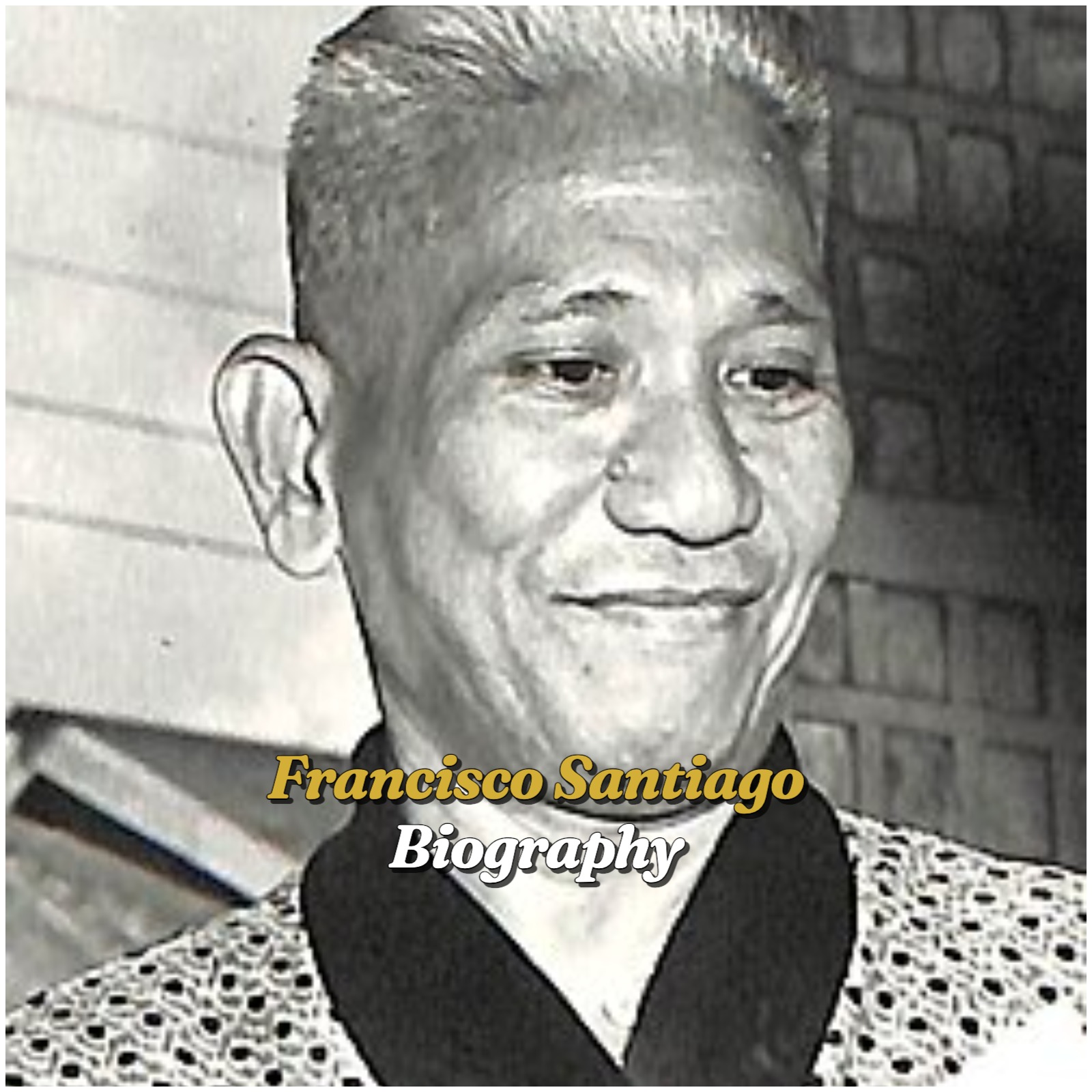
Francisco Santiago was a Filipino composer and pianist who became one of the most important figures in the development of the Filipino kundiman as an art song. Often called the “Father of Kundiman Art Song,” he combined traditional Filipino musical ideas with Western classical forms and techniques, helping elevate kundiman from a popular musical tradition into a more formally developed art form.
Born on January 29, 1889, in Santa Maria, Bulacan, Santiago grew up in a musically inclined family. Despite coming from humble circumstances, he developed exceptional musical abilities and pursued formal training in Manila and later in the United States. His career eventually took him to the University of the Philippines, where he became a teacher, composer and director of the UP Conservatory of Music.
Santiago’s best-known compositions include “Pakiusap,” “Madaling Araw,” “Anak-Dalita,” “Hibik ng Pilipinas,” “Sakali Man” and “Ano Kaya ang Kapalaran.” His music remains part of the study and performance of Philippine classical music and kundiman. In September 2026, renewed cultural attention surrounding newly proclaimed National Artist Alfredo Buenaventura also brought renewed discussion of earlier Filipino composers such as Santiago, whose work helped establish the musical tradition that later generations developed.
Francisco Santiago Profile Summary
| Fact | Details |
| Full name | Francisco Santiago |
| Date of birth | January 29, 1889 |
| Place of birth | Santa Maria, Bulacan, Philippines |
| Date of death | September 28, 1947 |
| Age at death | 58 years old |
| Nationality | Filipino |
| Profession | Composer, pianist and music educator |
| Musical genres | Kundiman and classical music |
| Known as | Father of Kundiman Art Song |
| Parents | Felipe Santiago and Maria Santiago |
| Education | Liceo de Manila, University of the Philippines Conservatory of Music, Chicago Musical College |
| Famous works | “Pakiusap,” “Madaling Araw,” “Anak-Dalita,” “Hibik ng Pilipinas” |
| University position | Director of the UP Conservatory of Music |
| Doctoral degree | Doctor of Music, Chicago Musical College |
| Death place | Manila, Philippines |
| Burial place | Manila North Cemetery |
Francisco Santiago Early Life
Francisco Santiago was born on January 29, 1889, in Santa Maria, Bulacan, during the Spanish colonial period in the Philippines. His parents, Felipe Santiago and Maria Santiago, came from humble backgrounds but were musically inclined. Their family’s musical environment helped nurture Santiago’s abilities from an early age.
Santiago showed considerable musical talent while still young. He eventually travelled to Manila to receive a more formal education and training in music. His early exposure to both Filipino musical traditions and Western musical methods would later become an important feature of his compositions.
By the beginning of the 20th century, Santiago was already developing into a serious musician and composer. In 1908, he composed “Purita,” one of his earliest known works, dedicating it to Pura Villanueva, who was the first Carnival Queen of the Philippines.
Francisco Santiago Education
Santiago studied at the Liceo de Manila before continuing his musical education at the University of the Philippines Conservatory of Music. He studied piano and composition and eventually earned a piano degree in 1921 and a degree in Science and Composition in 1922.
His education at UP gave him a strong foundation in Western classical music while he continued to develop his understanding of Filipino musical traditions. This combination later became central to his approach to kundiman, which incorporated Filipino melodies and themes within more sophisticated art-song structures.
Santiago subsequently travelled to the United States for advanced musical studies at the Chicago Musical College. He completed a Doctor of Music degree there in 1924. His advanced training strengthened his reputation as a serious composer and helped establish him as one of the leading Filipino musicians of his generation.
Francisco Santiago Career
Francisco Santiago’s career extended across composition, piano performance, teaching, conducting and academic administration. His work was particularly important during a period when Filipino musicians were increasingly adapting Western classical techniques while preserving local musical traditions.
Francisco Santiago and the Kundiman
Santiago is widely remembered as the “Father of Kundiman Art Song.” The kundiman was already an established Filipino musical form, but Santiago helped transform it into a more formally developed art-song genre.
His compositions combined Western musical forms and techniques with Filipino folk materials. Through this approach, he helped demonstrate that Filipino musical traditions could be developed within the structures and standards of formal concert music.
Santiago was part of the group often described as the Triumvirate of Filipino Composers, alongside Nicanor Abelardo and Antonio Molina. The three composers played important roles in the development of early 20th-century Philippine art music.
Francisco Santiago at the University of the Philippines
Santiago became closely associated with the University of the Philippines Conservatory of Music. He joined the institution as a teacher in 1916 and eventually became its director. His work as an educator allowed him to influence younger generations of Filipino musicians and composers.
In 1946, after World War II, he was named Professor Emeritus by the University of the Philippines. His academic career was therefore closely connected with the development of formal music education in the Philippines.
Francisco Santiago’s Famous Compositions
Santiago produced numerous vocal, piano and orchestral compositions. Among his best-known works are “Pakiusap,” “Madaling Araw,” “Sakali Man,” “Hibik ng Pilipinas,” “Ano Kaya ang Kapalaran,” and “Kundiman (Anak-Dalita).”
“Pakiusap” became one of his most recognised kundiman compositions. The song has remained part of the Filipino art-song repertoire and has been performed and recorded by later generations of Filipino singers.
Another important work is “Anak-Dalita,” a composition that remains associated with Santiago’s contribution to the development of kundiman. His compositions helped preserve Filipino musical themes while demonstrating how they could be incorporated into more sophisticated classical structures.
Francisco Santiago During the War
The Second World War was a difficult period for Santiago and many other Filipino musicians. Much of his musical material was reportedly destroyed during the wartime destruction of Manila. Despite the loss, he continued his musical and academic work after the war.
His postwar career included his appointment as Professor Emeritus at the University of the Philippines in 1946. He died the following year, leaving behind a body of work that had already become important to Philippine musical history.
Francisco Santiago Trending: Why Is Francisco Santiago Famous?
Francisco Santiago is attracting renewed attention in September 2026 amid cultural discussions surrounding Alfredo Buenaventura, who was among the 10 Filipinos newly proclaimed National Artists by President Ferdinand Marcos Jr. on September 1, 2026. Buenaventura was recognised for Music, prompting renewed public discussion of the history of Philippine classical music and the composers who helped shape it.
Santiago’s name has appeared alongside other important Filipino composers in recent cultural programming. A September 2026 concert titled Opera at Kundiman featured works by Santiago, Nicanor Abelardo and other Filipino composers, highlighting the development of Filipino art song and kundiman.
The renewed attention is also connected to Santiago’s importance to Bulacan’s musical heritage. A September 2026 cultural conference organised by the Provincial Government of Bulacan highlighted Francisco Santiago among the province’s distinguished musical figures, alongside National Artists and other major Filipino cultural personalities.
Francisco Santiago Death and Cause of Death
Francisco Santiago died on September 28, 1947, in Manila, at the age of 58. His death occurred only about a year after he was named Professor Emeritus of the University of the Philippines.
Some historical accounts identify the cause of death as a heart attack. He was buried at the Manila North Cemetery, where his remains continue to form part of the historical memory associated with important Filipino cultural figures.
His death did not end the influence of his music. His compositions continued to be performed, taught and recorded, and his role in the development of kundiman remained an important part of Philippine music education.
Francisco Santiago Personal Life
Francisco Santiago was born into the family of Felipe Santiago and Maria Santiago. His parents were described as musically inclined, and the family’s modest background makes Santiago’s eventual rise to the highest levels of Philippine musical education particularly notable.
Details about Santiago’s romantic relationships, wife and children are not extensively documented in reliable public historical sources. Most surviving biographical accounts focus on his musical education, compositions, teaching career and contribution to Filipino music.
Santiago’s professional life was deeply connected with the University of the Philippines and the wider Filipino musical community. His students and fellow musicians helped carry forward the traditions that he had developed, allowing his influence to continue after his death.
Francisco Santiago Age, Religion, Nationality, Height and Physical Appearance
Francisco Santiago was born on January 29, 1889, and died on September 28, 1947. He was therefore 58 years old when he died.
Reliable historical biographies do not provide sufficient information to establish Santiago’s personal religious beliefs with certainty. He lived during a period when Catholicism and other Christian traditions were deeply established in Filipino society, but his specific personal religious affiliation should not be assumed without direct evidence.
Santiago was Filipino and was born in Santa Maria, Bulacan. His work became strongly associated with Filipino cultural identity because of his efforts to develop kundiman using both Filipino musical traditions and Western classical techniques.
Detailed records of Santiago’s height and physical measurements have not survived in widely available historical sources. Photographs from his lifetime show him dressed formally in the style of the early 20th century, particularly in portraits associated with his academic and musical career.
Francisco Santiago Net Worth
Francisco Santiago’s net worth cannot be reliably estimated in modern monetary terms. He lived and worked in the first half of the 20th century, and there are no reliable public records establishing the value of his personal assets or income.
His principal sources of income were connected to his work as a composer, pianist, teacher and academic. He held important positions at the University of the Philippines and eventually became director of its Conservatory of Music.
Rather than a measurable modern net worth, Santiago’s enduring value is primarily cultural and historical. His compositions became part of the Filipino musical canon, and his contribution to the development of kundiman has continued to influence performers and music educators decades after his death.
Francisco Santiago Legacy
Francisco Santiago is remembered as one of the central figures in the development of the Filipino kundiman as an art song. His work helped bring Filipino musical traditions into formal concert and academic settings while preserving the emotional character associated with kundiman.
His compositions, particularly “Pakiusap,” “Madaling Araw” and “Anak-Dalita,” remain part of the Filipino musical repertoire. “Pakiusap” in particular has continued to be performed and recorded by Filipino singers long after Santiago’s death.
Santiago’s legacy also lives on through Philippine music education. Historical markers and cultural institutions continue to recognise him as the “Ama ng Kundiman,” or Father of Kundiman. His work helped establish a foundation upon which later composers and performers built the modern Filipino art-song tradition.
Conclusion
Francisco Santiago was a pioneering Filipino composer, pianist and educator whose work helped transform kundiman into a respected Filipino art-song tradition. Born in Santa Maria, Bulacan, in 1889, he overcame humble beginnings to receive advanced musical education in the Philippines and the United States before becoming a leading figure at the University of the Philippines Conservatory of Music. His compositions, including “Pakiusap,” “Madaling Araw” and “Anak-Dalita,” remain important examples of Filipino classical music, while his legacy as the “Father of Kundiman Art Song” continues to be recognised in Philippine cultural life.
Frequently Asked Questions About Francisco Santiago
Who was Francisco Santiago?
Francisco Santiago was a Filipino composer, pianist and music educator best known as the Father of Kundiman Art Song.
When was Francisco Santiago born?
Francisco Santiago was born on January 29, 1889, in Santa Maria, Bulacan, Philippines.
When did Francisco Santiago die?
Francisco Santiago died on September 28, 1947, in Manila, Philippines.
How old was Francisco Santiago when he died?
Francisco Santiago was 58 years old when he died.
What was Francisco Santiago famous for?
Francisco Santiago was famous for developing the Filipino kundiman as an art-song form and for composing several important Filipino classical works.
What is Francisco Santiago’s most famous song?
Among Francisco Santiago’s best-known compositions are “Pakiusap,” “Madaling Araw” and “Kundiman (Anak-Dalita).”
Why is Francisco Santiago called the Father of Kundiman?
Francisco Santiago is called the Father of Kundiman Art Song because he helped develop traditional Filipino kundiman into a more formally structured art-song genre using Western classical techniques.
Where did Francisco Santiago study?
Francisco Santiago studied at the Liceo de Manila, the University of the Philippines Conservatory of Music and the Chicago Musical College.
Did Francisco Santiago study in the United States?
Yes. He studied at the Chicago Musical College and completed a Doctor of Music degree there in 1924.
Was Francisco Santiago a National Artist?
Francisco Santiago was not a National Artist of the Philippines. He died in 1947, before the National Artist system was established. He is nevertheless recognised as one of the country’s most important historical composers.
Who were the other members of the Triumvirate of Filipino Composers?
The Triumvirate is commonly identified as Francisco Santiago, Nicanor Abelardo and Antonio Molina.
What are Francisco Santiago’s famous compositions?
His famous works include “Pakiusap,” “Madaling Araw,” “Sakali Man,” “Hibik ng Pilipinas,” “Ano Kaya ang Kapalaran” and “Anak-Dalita.”
Where did Francisco Santiago work?
Francisco Santiago worked extensively at the University of the Philippines Conservatory of Music, where he became a teacher and later director.
What was Francisco Santiago’s cause of death?
Historical accounts identify a heart attack as the cause of Francisco Santiago’s death.
Where is Francisco Santiago buried?
Francisco Santiago is buried at the Manila North Cemetery.
What nationality was Francisco Santiago?
Francisco Santiago was Filipino.
Did Francisco Santiago have a wife?
Reliable historical sources do not provide enough information to confidently establish the identity of Francisco Santiago’s wife.
Why is Francisco Santiago trending in 2026?
Francisco Santiago has received renewed cultural attention in 2026 amid discussions of Philippine musical heritage, including the proclamation of new National Artists and performances featuring his kundiman compositions.