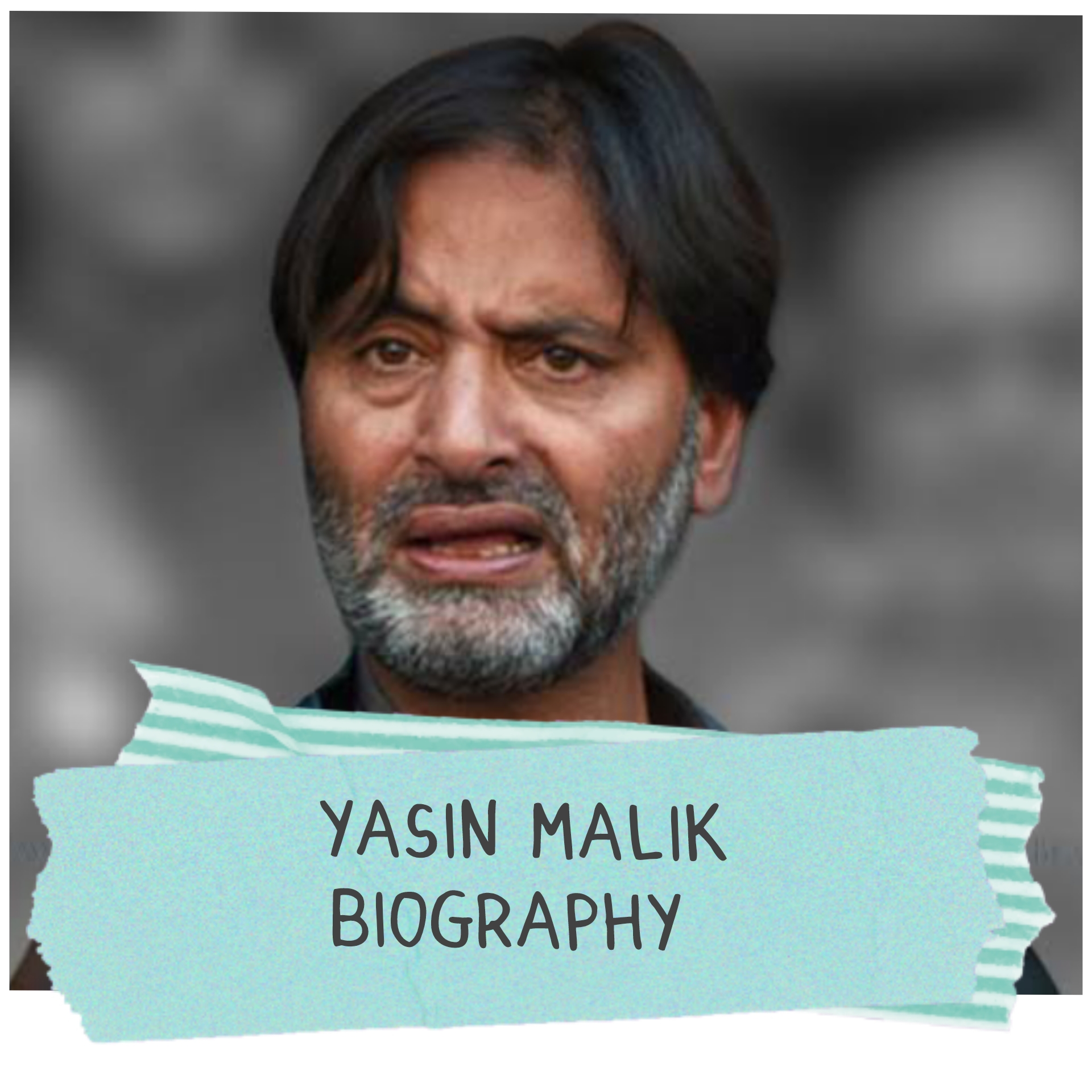
Yasin Malik is a prominent Kashmiri separatist leader and the chairman of the Jammu Kashmir Liberation Front (JKLF), a political organization associated with the movement for an independent Kashmir. Born on April 3, 1966, in Maisuma, Srinagar, Jammu and Kashmir, Malik became involved in Kashmir’s political struggle at a young age and later emerged as one of the region’s most recognizable separatist figures.
Over the course of his career, Yasin Malik moved from involvement in armed militancy to advocating political and nonviolent methods. In 1994, he publicly announced that he had renounced armed struggle and subsequently became involved in political activities through the JKLF. His political career, however, remained highly controversial, and he was repeatedly involved in legal proceedings connected to his activities in the Kashmir separatist movement.
In recent years, Malik’s imprisonment and ongoing legal battles have kept him in the public spotlight. He is serving a life sentence in Tihar Jail following his conviction in a terror-funding case, while he also faces proceedings connected to the 1990 killing of Kashmiri Pandit nurse Sarla Bhat. His personal life, including his marriage to Pakistani human-rights activist Mushaal Hussein Mullick and his relationship with their daughter, has also attracted significant public attention.
Yasin Malik Early Life
Yasin Malik was born on April 3, 1966, in Maisuma, a locality in Srinagar, Jammu and Kashmir. He grew up in a period marked by political tensions and growing unrest in the Kashmir Valley. His early experiences in Srinagar shaped his views on the political situation in the region and influenced his later involvement in the Kashmiri separatist movement.
As a young man, Malik became increasingly involved in political activism. During his youth, he was associated with student-led political activities and opposition to the prevailing political establishment in Jammu and Kashmir. His activism eventually brought him into conflict with Indian authorities and played a major role in his transition from student politics to the wider separatist movement.
Malik’s early political activities later developed into involvement with the Jammu Kashmir Liberation Front (JKLF). He became one of the organization’s prominent figures during the armed phase of the Kashmir insurgency in the late 1980s and early 1990s. These experiences established the foundation for his later career as a separatist leader and shaped the political positions for which he would become widely known.
Yasin Malik Education
Yasin Malik received his early education in Srinagar, Jammu and Kashmir, where he grew up and completed his schooling. His formative years coincided with a period of increasing political tension in the Kashmir Valley, and his experiences as a student contributed to his growing interest in the region’s political affairs.
After completing his schooling, Malik pursued further studies in Srinagar. Biographical accounts generally associate his higher education with Srinagar’s Islamia College of Science and Commerce, although detailed information about his academic qualifications and graduation record is limited in reliable public sources. His time as a student was significant because he became increasingly involved in political activism during this period.
Rather than following a conventional academic or professional career after his studies, Malik became deeply involved in Kashmiri politics and separatist activism. His student activism eventually developed into a broader political role, leading to his association with the Jammu Kashmir Liberation Front (JKLF). Consequently, his educational years are often discussed as an important stage in his transition from student activist to a prominent figure in the Kashmir separatist movement.
Yasin Malik Career
Yasin Malik began his public career as a political activist in Jammu and Kashmir during the 1980s, when political tensions in the region were intensifying. He became involved in student activism and opposition politics in Srinagar, eventually emerging as a prominent figure among young Kashmiri activists. His early activities brought him into confrontation with Indian authorities and helped establish his reputation within the separatist movement.
Malik later became associated with the Jammu Kashmir Liberation Front (JKLF), an organization that advocated an independent and sovereign Kashmir. During the late 1980s and early 1990s, he was associated with the armed phase of the Kashmir insurgency. His role during this period made him one of the better-known figures in the separatist movement, while also making him a target of Indian security agencies.
A major turning point in Malik’s career came in 1994, when he announced that he was giving up armed struggle. He subsequently emphasized political and nonviolent methods for pursuing his vision of Kashmir’s future. Malik continued to lead the JKLF and participated in political activities, public campaigns and efforts to draw international attention to the Kashmir dispute.
Despite his shift away from armed militancy, Malik remained a highly controversial political figure. Indian authorities accused him and members of the JKLF of involvement in violence, militancy and other offenses connected with the Kashmir conflict. Over the years, he faced multiple criminal cases, arrests and investigations, while his supporters portrayed him as a political leader advocating Kashmiri self-determination.
In 2022, Malik’s career entered a decisive legal phase when a special National Investigation Agency court convicted him in a terror-funding case and sentenced him to life imprisonment. He has remained incarcerated while continuing to pursue legal challenges and facing other proceedings connected to incidents from the Kashmir insurgency. His career therefore remains closely linked to the political history of Kashmir, as well as the continuing legal and political controversy surrounding his activities.
Yasin Malik’s Latest Legal Developments
Yasin Malik has recently returned to the spotlight because of developments surrounding the 1990 killing of Kashmiri Pandit nurse Sarla Bhat. In the latest proceedings, Malik submitted a lengthy affidavit in court in which he denied involvement in Bhat’s kidnapping and murder while also stating that he would no longer contest the proceedings. The development has renewed public attention on one of the long-running cases associated with his past activities.
Despite maintaining that he was falsely implicated, Malik reportedly asked the court to impose the death penalty on him. He made clear that his decision not to contest the proceedings should not be interpreted as an admission of guilt. His position has generated considerable attention because he is already serving a life sentence in a separate terror-funding case.
Malik’s personal circumstances have also become part of the recent discussion surrounding him. During the latest legal proceedings, he reportedly referred to his prolonged separation from his family and indicated that he intended to separate from his wife, Mushaal Hussein Mullick. His comments about his daughter and the consequences of his lengthy imprisonment have added a personal dimension to the continuing legal story.
The developments come as Malik remains imprisoned in Tihar Jail while facing multiple legal matters. The National Investigation Agency has separately sought a harsher sentence in his terror-funding conviction, while proceedings connected to the Sarla Bhat case represent another significant chapter in his long-running legal history.
Yasin Malik Personal Life and Family
Yasin Malik is married to Mushaal Hussein Mullick, a Pakistani artist and activist whom he married in 2009. Their marriage attracted considerable attention because of Malik’s prominent role in the Kashmir separatist movement and Mushaal’s Pakistani background. The couple has largely remained separated because of Malik’s prolonged imprisonment, although Mushaal has continued to speak publicly about his legal situation and their family.
Yasin Malik and Mushaal Hussein Mullick have one daughter, Raziya Sultana. Malik’s extended imprisonment has meant that he has spent significant periods away from his wife and daughter. In recent legal proceedings, he reportedly referred to the emotional and personal consequences of this prolonged separation, particularly his limited time with his daughter.
Malik’s family life has therefore been closely intertwined with his political and legal career. His marriage, daughter and separation from his family have received public attention alongside his court cases and imprisonment. In 2026, reports surrounding his latest legal proceedings also indicated that Malik had expressed an intention to separate from Mushaal, adding another significant development to the story of his personal life.
Yasin Malik Age, Religion, Nationality, Height and Physical Appearance
Yasin Malik was born on April 3, 1966, making him 60 years old in 2026. He was born and raised in Maisuma, Srinagar, Jammu and Kashmir, and has spent much of his life involved in the region’s political and separatist affairs.
Malik is Muslim by religion and is Indian by nationality. His religious and regional background has been an important part of his identity and public profile, particularly because of his long involvement in the Kashmir political movement and his advocacy concerning the region’s political status.
In terms of physical appearance, Yasin Malik is commonly reported to be around 5 feet 10 inches (177 cm) tall. He has a medium build, dark hair that has become noticeably grayer with age, and a beard. His appearance has changed over the years, particularly since his imprisonment, but he remains readily recognizable through his distinctive facial features and beard.
Yasin Malik Legacy
Yasin Malik’s legacy is closely tied to the history of the Kashmir separatist movement and the Jammu Kashmir Liberation Front (JKLF). He became one of the movement’s most recognizable figures, particularly during the period of armed insurgency in the late 1980s and early 1990s. His subsequent decision in 1994 to abandon armed struggle and pursue what he described as political and nonviolent methods became an important turning point in his public career.
Malik remains a deeply controversial and polarizing figure. Supporters and sections of the Kashmiri separatist movement have portrayed him as a political leader advocating Kashmiri self-determination, while Indian authorities have accused him of involvement in militancy, terrorism and violence. His imprisonment and criminal convictions have consequently become a major part of how his career is viewed, with sharply different interpretations of his actions and political objectives.
His continuing legal battles have ensured that Malik remains a significant figure in discussions about Kashmir’s modern political history. His life encompasses the transition from youth activism and armed militancy to political advocacy, followed by imprisonment and prolonged court proceedings. Whatever the interpretation of his political legacy, Malik’s career has had a lasting place in the history of the Kashmir conflict and continues to generate debate over separatism, political resistance, violence and self-determination.
Conclusion
Yasin Malik remains one of the most prominent and controversial figures associated with the Kashmir separatist movement. From his early activism and involvement with the Jammu Kashmir Liberation Front to his decision to renounce armed struggle and pursue political methods, his career has been marked by major political and legal developments. His imprisonment, ongoing court cases, family life and continued prominence in discussions about Kashmir have kept him in the public spotlight. His legacy remains deeply divided, with supporters viewing him as an advocate for Kashmiri self-determination and Indian authorities holding him responsible for serious crimes connected to the conflict.
Frequently Asked Questions About Yasin Malik
Who is Yasin Malik?
Yasin Malik is a Kashmiri separatist leader and chairman of the Jammu Kashmir Liberation Front (JKLF). He became prominent during the Kashmir insurgency and later said he had renounced armed struggle in 1994 in favor of political and nonviolent methods.
How old is Yasin Malik?
Yasin Malik is 60 years old in 2026. He was born on April 3, 1966, in Maisuma, Srinagar, Jammu and Kashmir.
Is Yasin Malik married?
Yes. Yasin Malik is married to Mushaal Hussein Mullick, a Pakistani artist and activist. They married in 2009 and have one daughter, Raziya Sultana.
Does Yasin Malik have children?
Yes. Yasin Malik has one daughter, Raziya Sultana, with his wife, Mushaal Hussein Mullick.
Where is Yasin Malik now?
Yasin Malik is imprisoned in Tihar Jail in New Delhi, where he is serving a life sentence following his conviction in a terror-funding case.
What is Yasin Malik’s religion?
Yasin Malik is Muslim. He was born into a Muslim family in Srinagar, Jammu and Kashmir.
What is Yasin Malik’s nationality?
Yasin Malik is Indian by nationality and is from Srinagar in the union territory of Jammu and Kashmir.
What is Yasin Malik’s height?
Yasin Malik is commonly reported to be approximately 5 feet 10 inches (177 cm) tall.
Why is Yasin Malik in prison?
Yasin Malik is serving a life sentence after being convicted in 2022 in a terror-funding case. He has also faced other legal proceedings related to incidents connected with the Kashmir conflict.
What is the latest news about Yasin Malik?
The latest major development concerns the 1990 Sarla Bhat murder case. Malik submitted an affidavit denying involvement in the killing while reportedly stating that he would no longer contest the proceedings. He also reportedly asked the court to impose the death penalty on him.
When did Yasin Malik renounce armed struggle?
Yasin Malik announced in 1994 that he had abandoned armed struggle. He subsequently said he would pursue political and nonviolent methods to advance his position on Kashmir.
What is Yasin Malik known for?
Yasin Malik is primarily known for his leadership of the Jammu Kashmir Liberation Front (JKLF) and his prominent role in the Kashmir separatist movement. His political activities, legal cases and imprisonment have made him a highly controversial figure in the region’s modern history.