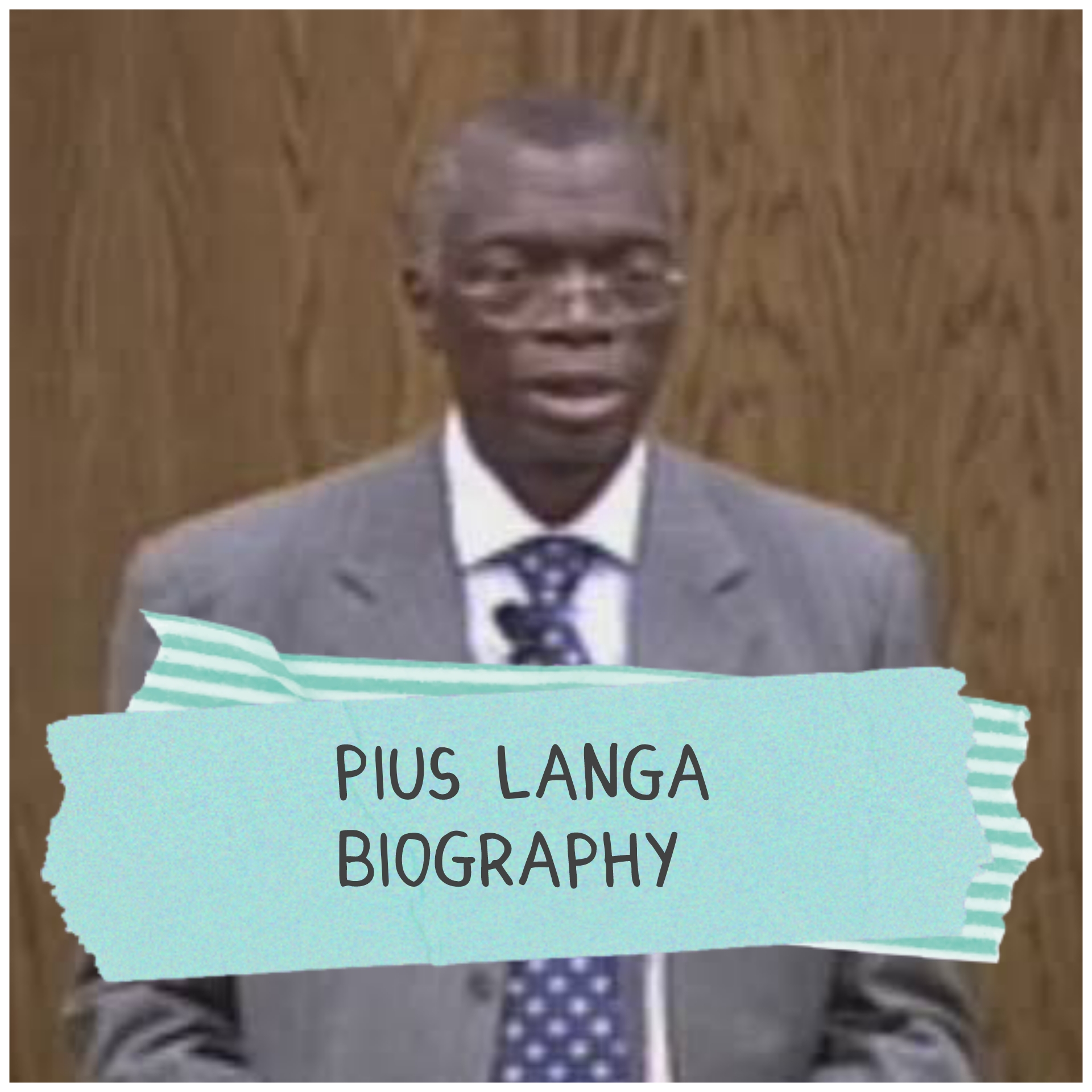
Pius Nkonzo Langa was one of the most influential jurists in South Africa’s transition from apartheid to constitutional democracy. A lawyer, human-rights advocate and judge, he rose from relatively modest beginnings to become the country’s Chief Justice and the head of the Constitutional Court. His career stretched across some of the most important periods in modern South African legal history, from apartheid-era injustice to the establishment and consolidation of constitutional democracy.
Born on March 25, 1939, in Bushbuckridge, Pius Langa did not come from a wealthy background. His parents could not afford to keep him in school after his early secondary education, forcing him to find employment as a teenager. He worked in a shirt factory while continuing his education through private study, eventually completing his matriculation and later earning law degrees through long-distance study at the University of South Africa.
Langa’s legal career developed alongside his opposition to apartheid and his commitment to human rights. He worked in the Department of Justice before becoming an advocate, representing disadvantaged people, trade unions, civic organisations and people prosecuted for political offences. After the end of apartheid, Nelson Mandela appointed him to the newly established Constitutional Court. He subsequently became Deputy President of the Court, Deputy Chief Justice and, in 2005, Chief Justice of South Africa. He retired in 2009 and died in Johannesburg in 2013.
Pius Langa Profile Summary
| Field | Details |
| Full Name | Pius Nkonzo Langa |
| Date of Birth | March 25, 1939 |
| Place of Birth | Bushbuckridge, Transvaal, South Africa |
| Nationality | South African |
| Profession | Lawyer, Advocate and Judge |
| Best Known For | Former Chief Justice of South Africa |
| Constitutional Court | Justice, 1994–2001; Deputy President, 1997–2001 |
| Deputy Chief Justice | 2001–2005 |
| Chief Justice | 2005–2009 |
| Legal Qualification | B Juris and LLB |
| University | University of South Africa |
| Secondary School | Adams College |
| Wife | Thandekile Mncwabe |
| Marriage | 1966 |
| Children | Six |
| Death | July 24, 2013 |
| Place of Death | Johannesburg, South Africa |
| Age at Death | 74 |
| Major Honour | Order of the Baobab in Gold |
| Political-Era Work | Anti-apartheid legal and constitutional work |
Pius Langa Early Life
Pius Nkonzo Langa was born on March 25, 1939, in Bushbuckridge, in what was then the Transvaal. He was the second of seven children. His father, Simon Peter Langa, was a Zulu-speaking preacher associated with the Pentecostal Holiness Church, while his mother was Swazi. Because his father’s religious work required the family to move, Langa spent parts of his childhood in different areas before the family eventually settled in Stanger in Natal. Growing up in a religious and relatively modest household shaped his early understanding of discipline, responsibility and community.
Langa’s education was interrupted by financial difficulties. He attended primary school in Stanger and then spent two years at Adams College in Amanzimtoti in 1954 and 1955. His attendance at Adams College was made possible through a departmental bursary because his parents could not afford the fees. The opportunity was particularly important because he was initially expected to leave formal schooling and find work. After leaving Adams College at the age of 16, he moved to Durban and began working at a shirt factory in 1957.
His decision to continue learning despite having to work became one of the defining features of his life. While employed at the factory, Langa continued studying privately and eventually completed his matriculation in 1960. That same year, he entered the Department of Justice as an interpreter and messenger. His experiences working within the justice system exposed him directly to the inequalities produced by apartheid-era laws and institutions. Instead of turning him away from the legal profession, those experiences helped convince him that law could become a means of challenging injustice.
Pius Langa Education
Langa’s formal education was unconventional because he had to combine employment, family responsibilities and private study. After his time at Adams College, he completed his secondary education through private study rather than following the traditional university-preparatory route. He eventually matriculated in 1960, an achievement that opened the way for his continued development within the legal profession.
While working for the Department of Justice, Langa pursued university-level legal studies through the University of South Africa. He obtained his B Juris degree in 1973 and his LLB degree in 1976. Both qualifications were completed through long-distance learning, allowing him to continue earning an income while studying. His route to becoming a lawyer therefore took considerably longer than that of a conventional university student, but it demonstrated the persistence that had characterised his education from adolescence.
His academic journey also influenced the way he approached law. By the time he completed his LLB, he had already spent years working around magistrates’ courts and observing the operation of the justice system. His practical experience, combined with formal legal education, gave him a particularly strong understanding of how laws affected ordinary people. In June 1977, after completing his legal studies, he was admitted as an advocate of the Supreme Court of South Africa.
Pius Langa Career
Early Working Life and Department of Justice
Langa began his working life in a shirt factory in the late 1950s. Although the job was far removed from the senior judicial positions he would eventually hold, it allowed him to support himself while continuing his education.
In 1960, he joined the Department of Justice as an interpreter and messenger. He subsequently progressed through several positions within the justice system, including work as a prosecutor and eventually as a magistrate. His years inside the courts gave him first-hand knowledge of both the formal workings of the legal system and the discriminatory realities of apartheid.
His experiences during this period played a major role in his decision to become an advocate. He developed an understanding of law not simply as an academic discipline but as an instrument capable of either reinforcing inequality or protecting human dignity.
Career as an Advocate
Langa left the civil service in 1977 and joined the Natal Bar in Durban. He practised as an advocate for approximately 17 years before being appointed to the Constitutional Court.
His legal practice increasingly became associated with people and organisations affected by apartheid. He represented underprivileged clients, civic organisations, trade unions and people facing prosecution for political offences. His work placed him directly within the legal struggles surrounding apartheid and the political repression of the period.
Langa was also involved in organisations seeking to transform South Africa’s legal system. He became associated with the National Association of Democratic Lawyers, an organisation established to challenge the inequalities and limitations within the apartheid-era legal profession. He served as its president from 1988 to 1994.
Anti-Apartheid and Constitutional Work
Langa’s legal career was closely connected with the broader movement for democratic change in South Africa. He participated in the United Democratic Front and became involved in constitutional negotiations during the country’s transition away from apartheid.
He served on the African National Congress Constitutional Committee during the late apartheid and transition period. His work contributed to discussions surrounding constitutional reform, human rights and the creation of a democratic legal order.
He was also involved in the Convention for a Democratic South Africa, commonly known as CODESA, which brought political parties and other representatives together to negotiate the country’s transition to democracy.
These experiences were important preparation for the work he would later undertake as a Constitutional Court judge. Langa entered the post-apartheid judiciary with an understanding of both the legal system that had existed under apartheid and the constitutional principles that were intended to replace it.
Constitutional Court Judge
In 1994, Nelson Mandela appointed Langa as one of the judges of the newly established Constitutional Court of South Africa. He was among the first group of judges selected for the institution that would become one of the central pillars of South Africa’s new constitutional democracy.
The Constitutional Court was created to interpret and protect the country’s new constitutional order. Langa therefore became part of a judicial institution responsible for defining the meaning of fundamental rights and placing constitutional limits on government power.
His judicial career included participation in major constitutional cases. Among the most significant was S v Makwanyane, the landmark judgment in which the Constitutional Court declared the death penalty unconstitutional. The judgment reflected the Court’s developing interpretation of the right to life and the prohibition of cruel, inhuman or degrading punishment.
Deputy President of the Constitutional Court
In August 1997, Langa became Deputy President of the Constitutional Court. The position placed him among the country’s most senior judicial figures and gave him a significant role in the development of South Africa’s new constitutional jurisprudence.
During this period, he continued to be associated with a judicial philosophy centred on human rights, dignity and constitutionalism. His approach was generally described as measured and conciliatory, qualities that later became prominent in descriptions of his leadership of the judiciary.
Deputy Chief Justice
In November 2001, Langa became Deputy Chief Justice of South Africa. The change followed constitutional amendments that altered the formal structure and titles within the judiciary.
As Deputy Chief Justice, he worked alongside Chief Justice Arthur Chaskalson during an important stage in the development of South Africa’s constitutional system. The judiciary was still establishing how the new constitutional framework would function in practice, and Langa was one of the senior judges involved in that process.
Chief Justice of South Africa
In 2005, President Thabo Mbeki appointed Langa as Chief Justice of South Africa. He formally took office on June 1, 2005, succeeding Arthur Chaskalson.
Langa’s appointment was historically significant. He became South Africa’s first black African Chief Justice, marking another important development in the transformation of the country’s judiciary after apartheid.
As Chief Justice and head of the Constitutional Court, Langa was responsible for leading the country’s highest court during a period when constitutional law was continuing to develop rapidly. His leadership style was generally characterised by restraint, dignity and an emphasis on institutional integrity.
His tenure also included difficult controversies. One of the most notable was the Constitutional Court’s complaint concerning Judge John Hlophe, who was accused of attempting to improperly influence Constitutional Court judges in connection with a politically sensitive matter. Langa’s role in the episode demonstrated the increasingly important responsibility of the Chief Justice in defending the independence and integrity of the judiciary.
Retirement
Langa reached the mandatory retirement age and retired from the Constitutional Court in October 2009. His departure brought an end to more than three decades of legal work, including service as an advocate, Constitutional Court judge, Deputy Chief Justice and Chief Justice.
Retirement did not erase his influence on South African law. He remained involved in legal and constitutional discussions and continued to be regarded as an important figure in the development of post-apartheid jurisprudence.
Pius Langa Trending: Why Is Pius Langa Famous?
Pius Langa is remembered primarily because he became South Africa’s first black African Chief Justice and played a major role in building the country’s post-apartheid constitutional order. His career represented a remarkable progression from a teenager who had to leave school for financial reasons to the head of the country’s highest court.
His name remains closely associated with the transformation of South Africa’s judiciary. He was part of the first generation of Constitutional Court judges appointed after apartheid and helped establish a rights-based judicial culture under the new constitutional system.
Langa is also remembered for the personal determination behind his career. He worked in a factory, studied privately, worked his way through the Department of Justice and obtained his legal qualifications through long-distance education. His story has therefore become an example of educational perseverance and professional advancement despite financial and social barriers.
Pius Langa Personal Life
Pius Langa married Thandekile Mncwabe in 1966. Thandekile, who was also known as Beauty Langa, was a nursing sister. The couple remained married until her death in 2009. Their marriage lasted more than four decades and coincided with much of Langa’s rise from civil servant and magistrate to advocate, judge and eventually Chief Justice.
Langa and Thandekile had six children together and later became grandparents. Despite the demands of his legal and political work, Langa was described by colleagues and biographers as a devoted family man. His family life existed alongside a career that frequently required travel, public appearances and involvement in major national issues.
Langa’s upbringing also remained an important part of his identity. He came from a large family and was raised by deeply religious parents. His father’s work as a preacher exposed him to a strong tradition of service and community responsibility. Langa later became known for his humility and calm demeanour, characteristics frequently mentioned in tributes following his death.
Pius Langa Age, Religion, Nationality, Height and Physical Appearance
Pius Langa was born on March 25, 1939, in Bushbuckridge, South Africa. He was South African by nationality and was 74 years old when he died on July 24, 2013. His family background included a Zulu-speaking father and a Swazi mother, while his childhood was shaped by movement between different parts of South Africa because of his father’s religious work.
Langa was raised in a deeply religious Christian household. His father, Simon Peter Langa, was a Pentecostal Holiness Church preacher. Religion was therefore an important part of his early family environment, although Langa’s public legacy is more strongly associated with constitutionalism, human rights and judicial service than with religious advocacy.
A reliable official record of Langa’s exact height is not readily available. Photographs from his years as a lawyer and judge show him as a dignified, formally dressed figure, frequently appearing in judicial robes or professional attire. His public image became strongly associated with composure, humility and seriousness rather than with celebrity-style personal presentation.
Pius Langa Cause of Death and Death
Pius Langa died on July 24, 2013, in Johannesburg, South Africa. He was 74 years old. His death followed a period of illness during which he was hospitalised in Johannesburg.
Contemporary reports described Langa as having suffered a long illness before his death. Public records and official tributes confirmed his passing but did not establish a single detailed medical cause of death that can be stated confidently as the definitive cause.
His death prompted tributes from South Africa’s government, judiciary and legal profession. Leaders highlighted his contribution to constitutional democracy, human rights and the transformation of the country’s legal system. He was remembered not simply as a former Chief Justice but as one of the people who helped build the institutions of post-apartheid South Africa.
Pius Langa Net Worth
There is no reliable public figure establishing Pius Langa’s personal net worth at the time of his death. Unlike entertainers and business executives, his career was primarily in public service and law, and there is no authoritative financial record that provides a definitive personal wealth figure.
Langa’s professional income came from his work as an advocate and later as a senior judge. He spent much of his career in public judicial positions, eventually reaching the country’s highest judicial office. His seniority would have provided him with substantial professional remuneration, but salary and pension information should not be confused with a verified estimate of his total personal wealth.
It is therefore more accurate to describe Pius Langa’s financial position as publicly undocumented rather than assign him an invented net-worth figure. His enduring importance lies in his legal and constitutional contributions rather than in personal wealth, and claims giving an exact fortune without supporting documentation should be treated cautiously.
Pius Langa Legacy
Pius Langa’s most important legacy is his contribution to the creation and development of South Africa’s constitutional democracy. As one of the first judges of the Constitutional Court, he helped establish a new judicial culture based on constitutional rights after decades in which the legal system had been used to enforce apartheid.
His personal journey is equally significant. Langa had to leave school because his parents could not afford his education, worked in a factory, completed his schooling privately and then studied law through distance education while working. He eventually became an advocate, Senior Counsel, Constitutional Court judge, Deputy Chief Justice and Chief Justice. His career demonstrated that difficult beginnings did not prevent him from reaching the highest levels of the legal profession.
The South African government recognised his contribution in 2008 when he was awarded the Order of the Baobab in Gold for exceptional service to law, constitutional jurisprudence and human rights. After his death, tributes repeatedly emphasised his humility, wisdom, commitment to justice and role in South Africa’s democratic transformation. His name remains part of the country’s constitutional and judicial history.
Conclusion
Pius Langa’s life was an extraordinary journey from financial hardship and factory work to the highest office in South Africa’s judiciary. Through private study, years in the Department of Justice, anti-apartheid legal advocacy and decades of judicial service, he became a central figure in the country’s transition to constitutional democracy. As a founding Constitutional Court judge, Deputy Chief Justice and South Africa’s first black African Chief Justice, Langa left behind a legacy rooted in human rights, constitutionalism, judicial independence and the belief that education and perseverance could overcome even significant barriers.
Frequently Asked Questions About Pius Langa
Who was Pius Langa?
Pius Nkonzo Langa was a South African lawyer, judge and former Chief Justice who played an important role in the development of the country’s post-apartheid constitutional democracy.
When was Pius Langa born?
Pius Langa was born on March 25, 1939, in Bushbuckridge, South Africa.
How old was Pius Langa when he died?
Pius Langa was 74 years old when he died on July 24, 2013.
When did Pius Langa become Chief Justice?
Pius Langa became Chief Justice of South Africa on June 1, 2005.
How long was Pius Langa Chief Justice?
Langa served as Chief Justice from June 2005 until his retirement in October 2009, approximately four years.
Was Pius Langa the first black Chief Justice of South Africa?
Pius Langa was South Africa’s first black African Chief Justice. His appointment was an important milestone in the transformation of the country’s judiciary after apartheid.
Who appointed Pius Langa as Chief Justice?
President Thabo Mbeki appointed Pius Langa as Chief Justice in 2005.
Who appointed Pius Langa to the Constitutional Court?
Nelson Mandela appointed Pius Langa to the Constitutional Court in 1994.
What did Pius Langa study?
Pius Langa studied law through the University of South Africa. He obtained a B Juris degree in 1973 and an LLB degree in 1976.
Where did Pius Langa study?
He attended Adams College for part of his secondary education and later studied law through the University of South Africa by long-distance learning.
Did Pius Langa work before becoming a lawyer?
Yes. He worked at a shirt factory before joining the Department of Justice in 1960. He subsequently worked as an interpreter, messenger, prosecutor and magistrate.
Was Pius Langa involved in the anti-apartheid struggle?
Yes. As a lawyer and constitutional activist, Langa represented people and organisations affected by apartheid and was involved with democratic and constitutional organisations. He was also a member of the ANC Constitutional Committee.
Who was Pius Langa’s wife?
Pius Langa was married to Thandekile Mncwabe, also known as Beauty Langa. They married in 1966.
How many children did Pius Langa have?
Pius Langa and his wife, Thandekile, had six children.
What was Pius Langa famous for?
He was famous for serving as Chief Justice of South Africa, becoming the country’s first black African Chief Justice, and helping shape the post-apartheid Constitutional Court.
What awards did Pius Langa receive?
Among his major honours was the Order of the Baobab in Gold, awarded in 2008 for his exceptional contribution to law, constitutional jurisprudence and human rights.
When did Pius Langa die?
Pius Langa died on July 24, 2013, in Johannesburg, South Africa.
What was Pius Langa’s cause of death?
Langa died after a period of illness. Although contemporary reports described a long illness, a single definitive medical cause of death is not reliably established in the public records used for his biography.
What was Pius Langa’s net worth?
There is no authoritative public record establishing Pius Langa’s exact net worth at the time of his death. Claims giving a precise figure should therefore be treated as estimates rather than confirmed facts.