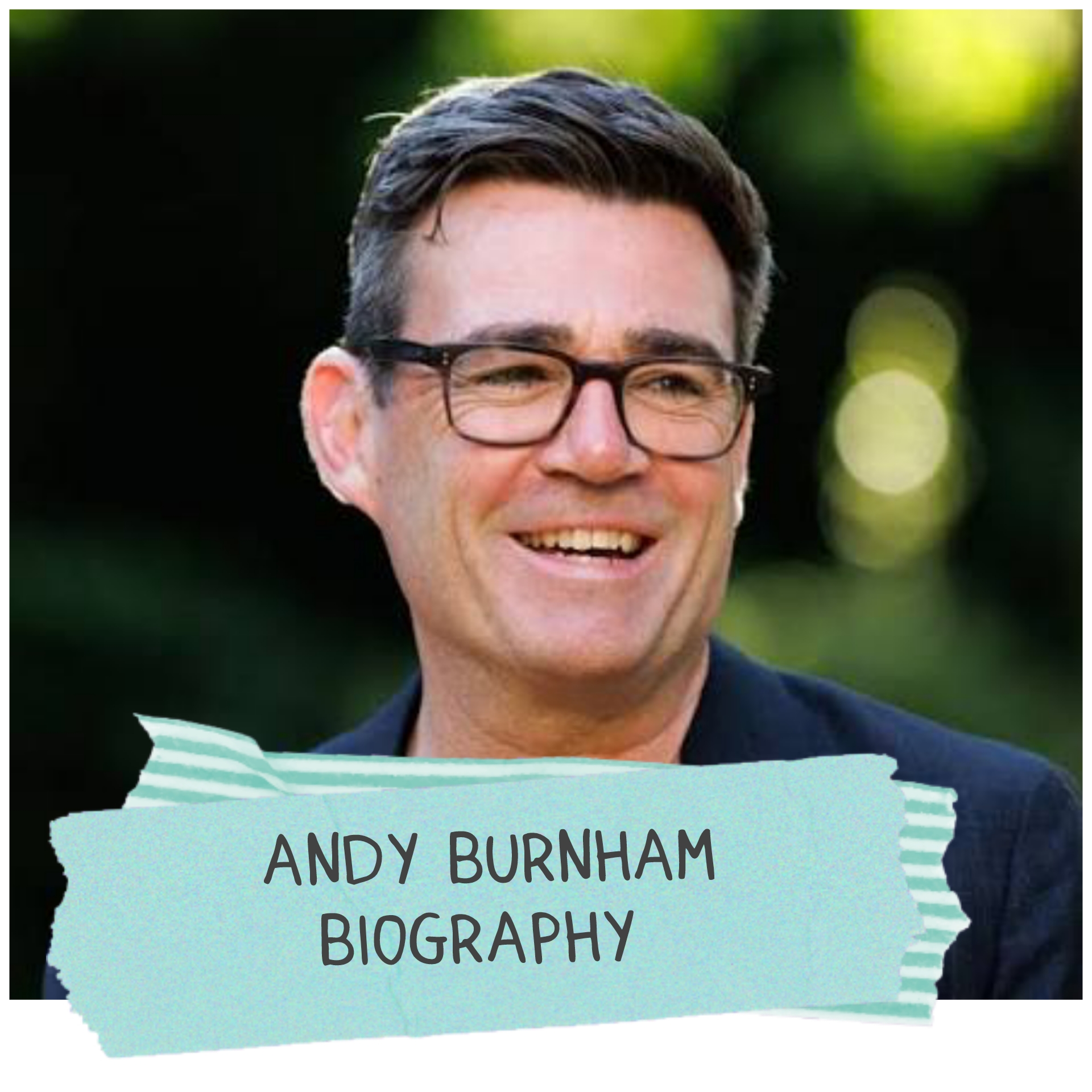
Andy Burnham is a British Labour politician who became the Prime Minister of the United Kingdom in July 2026, completing a remarkable political journey that has taken him from a working-class upbringing in Cheshire to the highest elected political office in Britain. Before becoming Prime Minister, Burnham spent more than a decade as an MP, held several senior Cabinet positions under Labour governments, and served as Mayor of Greater Manchester from 2017 to 2026. He became particularly popular in northern England and was frequently nicknamed the “King of the North.”
Born Andrew Murray Burnham on January 7, 1970, in Aintree, Liverpool, Burnham grew up in nearby Culcheth in a working-class Catholic family. He studied English at Fitzwilliam College, Cambridge, where he met his future wife, Marie-France van Heel. After university, he worked in journalism and political research before entering Parliament as the Labour MP for Leigh in 2001. His early Westminster career eventually led to Cabinet positions including Chief Secretary to the Treasury, Secretary of State for Culture, Media and Sport, and Secretary of State for Health.
Burnham’s career took a dramatic turn after he left Westminster in 2017 to become the first elected Mayor of Greater Manchester. Over the following nine years, he developed a distinctive political identity based on regional devolution, public transport, tackling homelessness, economic development and greater public control of essential services. His handling of the COVID-19 pandemic dramatically raised his national profile, while the creation of the Bee Network became one of his most recognizable achievements. After returning to Parliament in 2026, Burnham won the Labour leadership and became Prime Minister on July 20, 2026.
Andy Burnham Profile Summary
| Profile | Details |
| Full Name | Andrew Murray Burnham |
| Popular Name | Andy Burnham |
| Date of Birth | January 7, 1970 |
| Age | 56 years old |
| Place of Birth | Aintree, Liverpool, England |
| Nationality | British |
| Profession | Politician |
| Political Party | Labour Party |
| Political Tradition | Labour and Co-operative |
| Current Position | Prime Minister of the United Kingdom |
| Became Prime Minister | July 20, 2026 |
| Previous Major Office | Mayor of Greater Manchester |
| Mayor of Greater Manchester | 2017–2026 |
| Former Constituency | Leigh |
| Current Constituency | Makerfield |
| Education | Fitzwilliam College, University of Cambridge |
| Degree | English |
| Wife | Marie-France van Heel |
| Marriage | 2000 |
| Children | Three |
| Religion | Catholic by upbringing |
| Height | Commonly reported around 5 ft 10 in, though not officially confirmed |
| Nickname | King of the North |
| Political Party Joined | Labour Party as a teenager |
| Net Worth | Exact figure not publicly verified |
Andy Burnham Early Life
Andy Burnham was born on January 7, 1970, at Aintree Hospital in Liverpool. His father, Roy Burnham, worked as a telephone engineer for the Post Office, while his mother, Eileen Burnham, worked as a receptionist. Shortly after Andy’s birth, the family moved from Merseyside to Culcheth, a village in Cheshire, after his father received a promotion that took him to the Manchester area. Burnham has subsequently described his childhood as happy and relatively modest, emphasizing that his family did not grow up with significant wealth.
He was raised in a Catholic household and attended Catholic schools, including St Lewis Catholic Primary School and St Aelred’s Roman Catholic High School. His political consciousness developed unusually early. Burnham has spoken about the impact of the BBC drama Boys from the Blackstuff, which portrayed unemployment and economic hardship in Liverpool. The programme affected him deeply and helped inspire him to join the Labour Party as a teenager. His childhood also coincided with major events such as the miners’ strike, which shaped the political environment of northern England.
Football and sport were also important parts of Burnham’s early life. He became a supporter of Everton Football Club, a connection that has remained part of his public identity throughout his political career. He was also involved in cricket and rugby league and later became associated with Leigh’s rugby league community. His combination of northern roots, Catholic upbringing, football culture and early Labour activism eventually became central to the political identity he developed as an adult.
Andy Burnham Education
Burnham attended St Lewis Catholic Primary School before moving to St Aelred’s Roman Catholic High School. Despite coming from a comprehensive-school background, he performed strongly academically. His school years gave him the foundation for eventually winning a place at one of Britain’s most prestigious universities.
He went on to study English at Fitzwilliam College, University of Cambridge. Cambridge proved important not only academically but personally because it was where he met his future wife, Marie-France van Heel, who was also a student at the university. The pair reportedly met in 1989 and developed a relationship while studying there.
After graduating from Cambridge, Burnham initially moved into journalism and political research rather than immediately seeking elected office. His education in English helped develop the communication and storytelling abilities that later became major features of his political style. His ability to deliver emotionally resonant speeches and connect political issues with personal experiences became particularly noticeable during his years as Mayor of Greater Manchester.
Andy Burnham Career
Early Career in Journalism and Politics
After graduating from Cambridge, Burnham worked briefly in journalism and publishing. He was involved with trade publications, including magazines covering industries such as shipping and transportation.
His political career began to take shape when he joined the parliamentary office of Labour politician Tessa Jowell as a researcher. Working inside Parliament gave him first-hand exposure to Westminster politics and allowed him to develop relationships within the Labour movement.
He subsequently worked as a parliamentary officer for the NHS Confederation and also became involved with the Football Task Force. These positions combined politics, public services and his long-standing interest in football.
The experience prepared him for his eventual entry into electoral politics.
Election to Parliament
Burnham was elected as the Labour Member of Parliament for Leigh in June 2001.
His election came during the period of Tony Blair’s Labour government. Burnham quickly became part of the younger generation of Labour politicians who were expected to take on increasingly senior responsibilities.
His constituency was in Greater Manchester and had strong industrial and working-class traditions. Representing Leigh gave Burnham a direct connection to the communities of northern England that would later become central to his political identity.
Ministerial Career
Burnham’s rise through Labour ranks was relatively rapid.
In 2007, he became Chief Secretary to the Treasury, placing him in a senior government position during Gordon Brown’s premiership.
In 2008, he was appointed Secretary of State for Culture, Media and Sport. In that role, he dealt with issues involving Britain’s cultural industries, sport and broadcasting.
In 2009, he became Secretary of State for Health, one of the most senior positions in government. His tenure coincided with major debates about the future of the National Health Service and the structure of healthcare in England.
Burnham’s time as Health Secretary became particularly significant in retrospect because healthcare would later become one of the central themes of his political career.
2010 General Election and Opposition
Labour lost power at the 2010 general election, bringing Burnham’s Cabinet career to an end.
He remained in Parliament and subsequently held senior opposition roles. He served as Shadow Secretary of State for Health, Shadow Secretary of State for Education and Shadow Home Secretary at different stages.
Burnham also ran for Labour leader in 2010 following Gordon Brown’s resignation. He subsequently ran again in the 2015 Labour leadership election, finishing behind Jeremy Corbyn.
Although his leadership campaigns were unsuccessful, they helped establish him as a significant figure on Labour’s left and soft-left.
Leaving Westminster for Manchester
The most important transformation in Burnham’s career came when he decided not to seek another parliamentary role and instead ran for Mayor of Greater Manchester.
He won the mayoral election in 2017 and became the region’s first elected mayor.
The decision represented a major gamble. Burnham was leaving national politics after years of Cabinet and shadow-Cabinet experience and moving into a regional office that was still relatively new.
It ultimately became the defining decision of his political life.
Mayor of Greater Manchester
Burnham was re-elected as Mayor of Greater Manchester in 2021 and again in 2024.
His mayoralty became associated with a political philosophy sometimes described as “Manchesterism.” The approach emphasized regional government, devolution, collaboration between councils and businesses, investment in infrastructure and greater local control over public services.
One of his early major priorities was homelessness and rough sleeping. Burnham promised to make Greater Manchester a region where rough sleeping could be dramatically reduced. Although the target proved difficult to achieve fully, his administration introduced initiatives aimed at providing accommodation and support for people experiencing homelessness.
His mayoralty also focused heavily on transport.
The Bee Network
One of Burnham’s most important achievements as mayor was the development of the Bee Network, Greater Manchester’s integrated public transport system.
The ambition was to bring different forms of transport under a more coordinated regional system. Bus franchising was particularly important because Burnham argued that Greater Manchester needed greater public control over its bus network.
Bus franchising began to roll out in 2023, with services operating under the Bee Network identity. The system later expanded to incorporate rail services as part of the wider ambition for integrated transport.
For Burnham, the Bee Network became more than a transport project. It became a model for his argument that regional governments could deliver public services more effectively when they had greater control.
The success and visibility of the project became a major part of his national political pitch.
COVID-19 and the “King of the North”
Burnham’s national popularity changed dramatically during the COVID-19 pandemic.
In 2020, the UK government was imposing different levels of coronavirus restrictions across England. Greater Manchester faced the possibility of entering stricter restrictions while local leaders argued about the financial support that should accompany them.
Burnham became one of the most prominent critics of Boris Johnson’s Conservative government.
He argued that Greater Manchester could not be expected to accept severe restrictions without adequate financial assistance for workers and businesses. His refusal to simply accept the government’s position generated extensive national media coverage.
His televised appearances and confrontational negotiations with Westminster transformed his image.
Instead of being remembered primarily as a former Cabinet minister and failed Labour leadership candidate, Burnham increasingly became seen as a politician who was willing to challenge London on behalf of northern England.
The nickname “King of the North” emerged from this period.
The pandemic became a turning point in his public career and helped establish the northern political identity that ultimately became central to his route to Downing Street.
Return to Parliament
Burnham left the Greater Manchester mayoralty in 2026 after serving for almost a decade.
He returned to Westminster through a by-election for the Makerfield constituency in June 2026.
His return came at a dramatic moment in British politics. Labour’s position under Keir Starmer had deteriorated, and Burnham’s popularity outside Westminster made him an increasingly obvious alternative.
He subsequently became the Labour Party’s leader on July 16, 2026.
Becoming Prime Minister
On July 20, 2026, Andy Burnham became the Prime Minister of the United Kingdom.
His rise was remarkable because he had spent the previous nine years outside Westminster, building his political reputation as a regional mayor rather than a national parliamentarian.
Burnham entered Downing Street promising what he described as a major change in Britain’s political direction.
His government has emphasized regional devolution, public services, cost-of-living relief, public ownership and a long-term programme of economic reconstruction.
Burnham’s Political Vision
One of Burnham’s central arguments as Prime Minister is that too much political and economic power has historically been concentrated in London.
He has therefore promoted greater devolution to English regions and cities, arguing that decisions about transport, housing, education and economic development should increasingly be made closer to the communities affected by them.
He has also become a strong advocate of greater public control of essential services.
His national agenda has included proposals involving water, energy, transport and social care. The Bee Network in Greater Manchester has served as one of his most frequently cited examples of how public or regional control can be used to restructure services.
Cost-of-Living Policies
Early in his premiership, Burnham introduced a series of measures intended to provide immediate financial relief to households.
These have included changes involving energy costs and a commitment to lower bus fares, alongside measures designed to reduce pressure on households.
His government has also sought to reduce business costs in sectors such as hospitality.
However, Burnham faces a major challenge: many of his proposed reforms require substantial public investment at a time when Britain’s public finances remain under pressure.
Public Ownership and Nationalisation
Burnham has argued that some essential services should return to greater public control.
His position represents a continuation of the philosophy he developed in Manchester, particularly around bus transport.
He has proposed a long-term programme involving public ownership or increased public control of services such as water and energy.
Supporters argue that privatisation has allowed essential services to prioritize shareholder returns over public interest.
Critics, meanwhile, have questioned whether the government can afford the scale of investment required and whether public ownership alone would solve structural problems.
Social Care
Social care has become another major issue in Burnham’s political programme.
His experience as a former Health Secretary and his family’s experience with his father’s dementia have influenced his emphasis on reforming social care.
Burnham has argued that Britain’s current system places too much financial and emotional pressure on families dealing with conditions such as dementia.
He has proposed the creation of a National Care Service, intended to make social care more coherent and accessible.
Relationship with the Labour Party
Burnham’s political journey within Labour has been complicated.
He was once closely associated with the Blair-Brown era and held senior Cabinet positions under New Labour. He later moved toward positions associated with Labour’s soft left.
His unsuccessful leadership campaigns, particularly in 2015, demonstrated that he was capable of attracting significant support within the party but not enough to secure the leadership.
His time as Mayor of Greater Manchester allowed him to build a political identity that was less dependent on Westminster factionalism.
By 2026, this regional reputation had become one of his greatest political assets.
Andy Burnham Trending: Why Is Andy Burnham Famous?
Andy Burnham is currently attracting enormous attention because he became Prime Minister of the United Kingdom in July 2026 after years as Mayor of Greater Manchester.
His rise is particularly notable because he had spent nearly a decade outside Westminster. During that period, he transformed himself from a former Cabinet minister who had unsuccessfully sought the Labour leadership into one of Britain’s most recognizable regional politicians.
His current political agenda is also generating significant attention. Burnham is pushing a programme centered on greater public control of essential services, lower transport costs, regional devolution, social-care reform and a long-term reconstruction plan for the British economy.
His early months in Downing Street have also generated debate over whether his ambitious programme can be financed. Supporters see him as a politician attempting to break with decades of centralized policymaking, while critics argue that his plans risk increasing government spending and borrowing.
The contrast between his highly successful political brand in Greater Manchester and the much more difficult economic realities facing a national government is likely to define the next stage of his career.
Andy Burnham Personal Life
Andy Burnham married Marie-France van Heel, commonly known as Frankie, in 2000. The couple first met while studying at Cambridge University in the late 1980s. Van Heel was born in the Netherlands and has built a career in marketing and business strategy. She has generally maintained a lower public profile than her husband.
Burnham and his wife have three children: one son and two daughters. The family has largely kept the children’s private lives away from political publicity. Burnham has occasionally spoken about the importance of his family and the challenge of balancing political responsibilities with family life.
Burnham’s personal interests include football, cricket and rugby league. He is a lifelong Everton supporter and has also maintained a connection with rugby league in Greater Manchester and Leigh. His interest in sport has frequently appeared in his public life and contributes to the informal, northern image that has become an important part of his political brand.
Andy Burnham Age, Religion, Nationality, Height and Physical Appearance
Andy Burnham is 56 years old as of September 2026. He was born on January 7, 1970, in Aintree, Liverpool, England, and is British by nationality. His northern English upbringing has remained central to his political identity, particularly after his long period as Mayor of Greater Manchester.
Burnham was raised as a Roman Catholic and attended Catholic schools. His relationship with Catholicism has evolved over time. Although he has continued to describe Catholicism as an important part of his upbringing and has spoken positively about Catholic social teaching, he has also acknowledged that his political views have sometimes been at odds with positions taken by the Catholic Church.
His height is not officially documented by the UK government or Parliament. Entertainment databases commonly place him at around 5 ft 10 in (1.78 m), although this should be regarded as an approximate rather than officially verified measurement. His most distinctive physical characteristic is arguably his recognizable public style, often combining relatively informal clothing with the approachable manner that became associated with his years in Manchester.
Andy Burnham Net Worth
Andy Burnham’s exact personal net worth is not publicly verified. Various websites publish estimates ranging from approximately £1 million to several million pounds, but these figures are not based on a comprehensive audited disclosure of his personal assets and should therefore not be treated as confirmed.
Burnham’s principal income has historically come from his political career. He served as an MP, Cabinet minister and Mayor of Greater Manchester before becoming Prime Minister. His wife, Marie-France van Heel, has also had a successful career in marketing and business strategy, and the couple have jointly owned property.
Financial disclosures made in 2026 showed that Burnham and his wife own a London rental property and that Burnham received substantial political donations and hospitality connected with his leadership campaign and political activities. Political donations, however, should not be confused with personal wealth or income.
As a result, the safest assessment is that Burnham is financially comfortable and has accumulated significant assets over a long political career, but there is no reliable public figure that can definitively be described as his net worth.
Legacy
Andy Burnham’s political legacy was already significant before he became Prime Minister. His transformation of Greater Manchester’s political profile helped demonstrate how a regional mayor could become a nationally influential political figure.
The Bee Network is likely to remain one of his most important achievements. By bringing buses into a franchised regional system and creating a more integrated transport structure, Burnham developed a practical example of his broader belief in regional public control.
His handling of the COVID-19 pandemic also permanently changed his national image. His confrontation with Boris Johnson’s government over restrictions and financial support turned him into a symbol of northern political resistance and helped establish the “King of the North” persona.
His premiership will ultimately determine how historians assess him. If his plans for devolution, public services, social care, housing and public ownership produce measurable improvements, Burnham could become associated with one of the most significant shifts in British political power in decades. If financial constraints prevent those ambitions from being delivered, his critics may instead remember him as a politician whose Manchester model proved more difficult to reproduce nationally.
Conclusion
Andy Burnham’s journey from a working-class Catholic upbringing in Cheshire to the office of British Prime Minister is one of the most unusual political stories of modern Britain. After entering Parliament in 2001 and serving in senior Cabinet positions, Burnham’s career appeared to have stalled following unsuccessful Labour leadership campaigns, but his decision to become Mayor of Greater Manchester in 2017 gave him a political second life. His leadership during the COVID-19 pandemic, development of the Bee Network and advocacy for northern devolution transformed him into a nationally popular figure. In 2026, that regional reputation carried him back to Westminster, where he became Labour leader and Prime Minister. His greatest challenge now is translating the Manchester model into a workable national programme while managing Britain’s difficult finances and the enormous expectations surrounding his premiership.
Frequently Asked Questions About Andy Burnham
How old is Andy Burnham?
Andy Burnham is 56 years old as of September 2026. He was born on January 7, 1970.
When was Andy Burnham born?
Andy Burnham was born on January 7, 1970, in Aintree, Liverpool, England.
Who is Andy Burnham’s wife?
Andy Burnham’s wife is Marie-France van Heel, commonly known as Frankie. They met while studying at Cambridge University and married in 2000.
How many children does Andy Burnham have?
Andy Burnham and Marie-France van Heel have three children, consisting of one son and two daughters.
What is Andy Burnham’s real name?
His full name is Andrew Murray Burnham, although he is widely known as Andy Burnham.
What is Andy Burnham famous for?
Andy Burnham is famous for being a senior Labour politician, former Mayor of Greater Manchester and, since July 2026, Prime Minister of the United Kingdom. He is also known for his role in developing the Bee Network and his advocacy for northern England.
When did Andy Burnham become Prime Minister?
Andy Burnham became Prime Minister of the United Kingdom on July 20, 2026.
When did Andy Burnham become Mayor of Greater Manchester?
Andy Burnham became Mayor of Greater Manchester in 2017. He was subsequently re-elected in 2021 and 2024.
Why is Andy Burnham called the King of the North?
Burnham became known as the “King of the North” because of his strong political identity in northern England, particularly his advocacy for Greater Manchester during the COVID-19 pandemic and his campaign for greater regional power and investment.
What did Andy Burnham do before becoming Prime Minister?
Before becoming Prime Minister, Burnham was Mayor of Greater Manchester from 2017 to 2026. Before that, he was a Labour MP and served as Chief Secretary to the Treasury, Secretary of State for Culture, Media and Sport, and Secretary of State for Health.
Where did Andy Burnham go to university?
Andy Burnham studied English at Fitzwilliam College, University of Cambridge.
What religion is Andy Burnham?
Andy Burnham was raised as a Roman Catholic and attended Catholic schools. He has described Catholicism as an important part of his upbringing, although his relationship with the Church has sometimes been complicated.
How tall is Andy Burnham?
Andy Burnham’s official height has not been publicly confirmed. He is commonly listed at around 5 ft 10 in (1.78 m).
What is Andy Burnham’s net worth?
Andy Burnham’s exact net worth is not publicly verified. Online estimates vary considerably and should not be treated as confirmed.
Who are Andy Burnham’s parents?
Andy Burnham’s father was Roy Burnham, a telephone engineer who worked for the Post Office. His mother was Eileen Burnham, who worked as a receptionist.
Where was Andy Burnham raised?
Although he was born in Aintree, Liverpool, Andy Burnham was raised in Culcheth, Cheshire, after his family moved there when he was a young child.
What political party does Andy Burnham belong to?
Andy Burnham is a member of the Labour Party and is associated with the Labour and Co-operative political tradition.
Did Andy Burnham ever run for Labour leader before becoming Prime Minister?
Yes. Burnham unsuccessfully contested the Labour leadership election in 2010 and again in 2015. He eventually became Labour leader in July 2026.
What is the Bee Network?
The Bee Network is Greater Manchester’s integrated public transport system, developed during Burnham’s time as mayor. It brought bus services into a regional franchising system and aimed to integrate buses, trams and eventually rail services.
Is Andy Burnham an Everton supporter?
Yes. Andy Burnham is a lifelong Everton Football Club supporter and has frequently spoken publicly about his support for the club.
What is Andy Burnham’s political ideology?
Burnham is generally associated with the Labour soft left and describes his politics in terms of social democracy, regional empowerment, public services and greater public control of essential infrastructure. His political positions have evolved throughout his career.
What is Andy Burnham’s biggest achievement?
There is no single universally accepted answer, but his development of the Bee Network, expansion of Greater Manchester’s devolved powers and his handling of the region’s interests during the COVID-19 pandemic are among the achievements most closely associated with his political legacy.