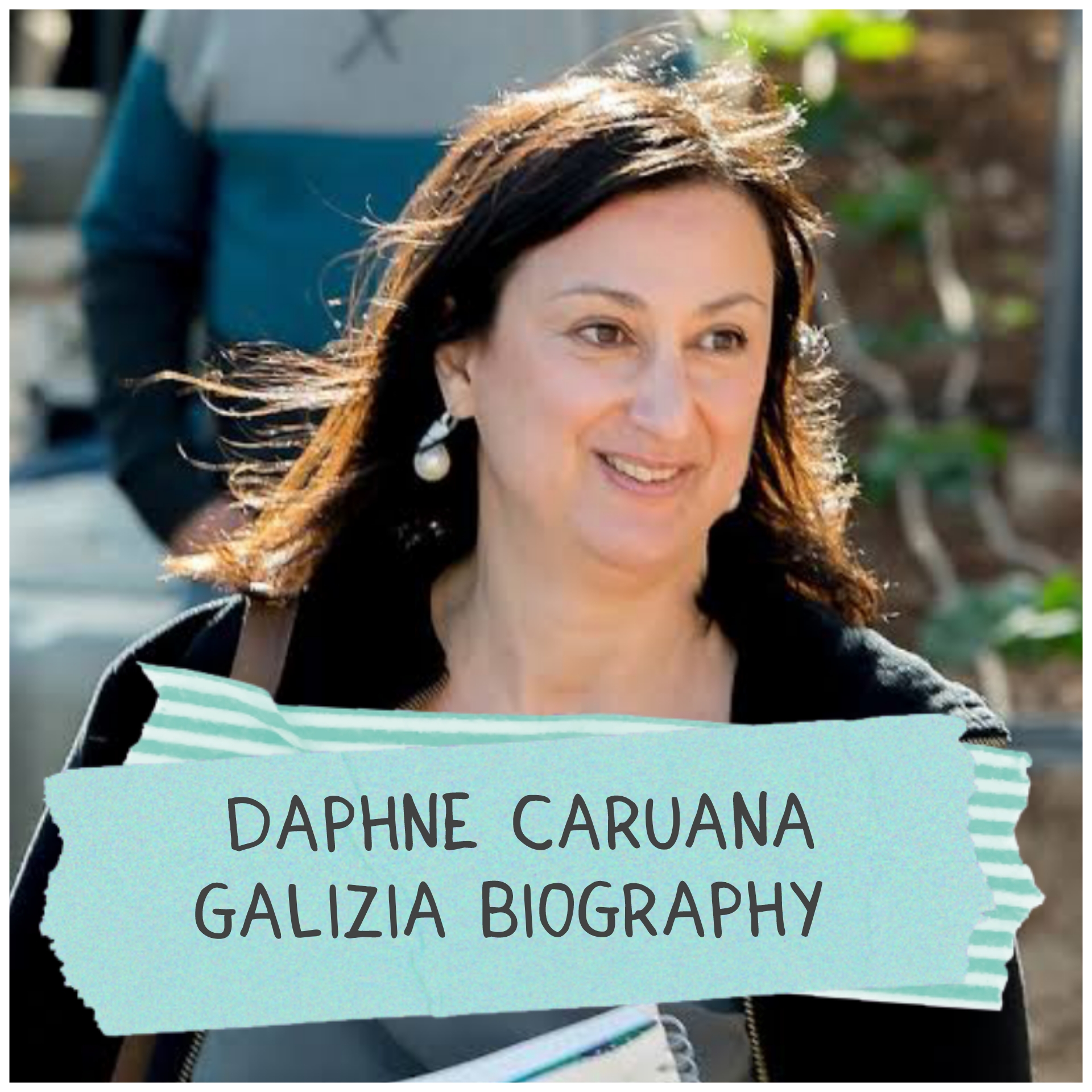
Daphne Caruana Galizia was a Maltese investigative journalist and anti-corruption campaigner whose work exposed alleged corruption, financial wrongdoing and political scandals involving some of Malta’s most powerful figures. Through her journalism and influential Running Commentary blog, she became one of Malta’s most prominent and outspoken journalists, earning international recognition for her investigations and her commitment to holding public officials and business leaders accountable.
Her career was marked by persistent reporting despite intimidation, harassment and legal pressure. Caruana Galizia’s investigations, including her reporting connected to the Panama Papers, brought significant international attention to Malta’s political and financial affairs. Her journalism also made her a controversial and highly influential public figure, with supporters praising her investigative work and critics challenging aspects of her reporting and political commentary.
Daphne Caruana Galizia was assassinated on October 16, 2017, when a car bomb exploded as she was driving near her home in Bidnija, Malta. Her murder shocked Malta and sparked international demands for justice and greater protection for journalists. The case remains significant years later, with the recent acquittal of businessman Yorgen Fenech in September 2026 becoming a major new development in the long-running search for accountability surrounding her death.
Daphne Caruana Galizia Early Life
Daphne Anne Caruana Galizia was born on August 26, 1964, in Sliema, Malta. She grew up in Malta and developed an interest in current affairs, public issues and writing from an early age. Her formative years took place during a period of significant political and social change in Malta, experiences that later influenced her interest in journalism and public affairs.
Caruana Galizia pursued her education at the University of Malta, where she studied archaeology and anthropology. She enrolled at the university at the age of 28 while already building her career in journalism. Her academic background gave her experience in research and critical analysis, skills that would become valuable throughout her later work as an investigative journalist.
As a young woman, Caruana Galizia became increasingly involved in journalism and political reporting. She began writing professionally in the late 1980s and eventually established herself as one of Malta’s best-known journalists and political commentators. Her early career laid the foundation for the investigative reporting that would later make her internationally recognized for exposing alleged corruption and wrongdoing.
Daphne Caruana Galizia Education
Daphne Caruana Galizia pursued her higher education at the University of Malta, where she studied archaeology and anthropology. She enrolled at the university at the age of 28, combining her academic studies with her developing career in journalism. Her decision to return to formal education reflected her interest in research, society and the study of people and cultures.
Her studies in archaeology and anthropology provided her with a foundation in research, observation and critical analysis. Although her professional career ultimately centered on journalism rather than academia, these skills complemented the investigative approach that became a defining feature of her work. She developed a reputation for examining complex information and pursuing stories that attracted significant public attention.
Caruana Galizia’s education was therefore an important part of her broader intellectual development, but journalism became the field in which she made her greatest impact. From her early professional work in the late 1980s, she continued to develop her reporting and investigative skills, eventually becoming one of Malta’s most prominent journalists and political commentators.
Daphne Caruana Galizia Career
Daphne Caruana Galizia began her professional journalism career in the late 1980s and gradually established herself as a prominent political reporter and commentator in Malta. Over the years, she worked with several Maltese publications and became known for her strong opinions, detailed reporting and willingness to investigate controversial issues. Her journalism increasingly focused on politics, corruption, business and the conduct of public officials.
As her reputation grew, Caruana Galizia became one of Malta’s most influential political columnists. She was recognized for her ability to scrutinize Malta’s political establishment and raise questions about relationships between politicians, businesses and other influential individuals. Her reporting frequently generated public debate and, at times, intense criticism from the people and institutions she investigated.
In 2008, she launched Running Commentary, a personal blog that became one of Malta’s most widely followed sources of political commentary and investigative reporting. Through the blog, she published articles on alleged corruption, conflicts of interest, financial affairs and other matters involving Malta’s political and business elite. Its large readership helped extend her influence beyond traditional newspaper journalism.
Caruana Galizia’s international profile increased significantly through her involvement in investigations connected to the Panama Papers. She reported on offshore financial structures and allegations involving prominent Maltese political and business figures, bringing greater international scrutiny to Malta. Her work as an investigative journalist earned recognition from press-freedom organizations and established her as an important figure in international anti-corruption journalism.
Despite facing legal challenges, harassment, intimidation and threats related to her work, Caruana Galizia continued publishing investigations and political commentary. On October 16, 2017, her career was violently cut short when she was assassinated by a car bomb while driving near her home in Bidnija. Her murder transformed her from a prominent Maltese journalist into an international symbol of press freedom, investigative journalism and the fight against corruption, while the circumstances surrounding her assassination have continued to attract international attention.
Yorgen Fenech Acquitted in Daphne Caruana Galizia Murder Trial
Daphne Caruana Galizia’s name has returned to international headlines following the recent acquittal of Maltese businessman Yorgen Fenech in the long-running murder case. Fenech had been accused of being involved in the plot to assassinate the investigative journalist, whose death in a car-bomb attack in October 2017 shocked Malta and generated widespread international condemnation.
On September 2, 2026, a jury acquitted Fenech of the charges against him, reportedly delivering an 8–1 verdict. The decision represents a major development in the case because prosecutors had alleged that Fenech was involved in organizing or commissioning Caruana Galizia’s assassination. His acquittal means that the question of who ultimately ordered the killing remains a major focus of public and international discussion.
The development has also renewed attention on Caruana Galizia’s legacy and the wider issues surrounding her murder. Several individuals have already been convicted or sentenced for roles connected to the assassination, but the latest verdict has prompted renewed calls from her family and supporters for complete accountability. The case continues to be closely associated with press freedom, corruption investigations and the protection of journalists in Malta.
Daphne Caruana Galizia Personal Life and Family
Daphne Caruana Galizia was married to Peter Caruana Galizia, a lawyer, and the couple had three sons: Matthew, Andrew and Paul Caruana Galizia. Her family remained an important part of her life while she built a demanding career as an investigative journalist and political commentator. She continued her professional work while raising her children and maintaining a family life away from the public attention generated by her journalism.
Her sons later became closely involved in preserving and continuing her legacy. Matthew Caruana Galizia, an investigative journalist and Pulitzer Prize-winning member of the International Consortium of Investigative Journalists, worked on investigations into offshore finance and corruption. Andrew and Paul have also publicly campaigned for justice and accountability following their mother’s assassination, making the Caruana Galizia family prominent voices in efforts to defend press freedom and seek answers surrounding her death.
Daphne Caruana Galizia’s personal life became inseparable from her public legacy after she was assassinated on October 16, 2017. Her husband and sons continued to pursue accountability through legal and public channels, while her family has repeatedly emphasized the importance of protecting journalists and addressing the institutional failures surrounding her murder. She was not publicly known to have had a fiancé separate from her husband; Peter Caruana Galizia was her husband at the time of her death.
Daphne Caruana Galizia Age, Religion, Nationality, Height and Physical Appearance
Daphne Caruana Galizia was born on August 26, 1964, in Sliema, Malta, and was 53 years old when she died on October 16, 2017. She was a Maltese national and spent most of her life in Malta, where she became one of the country’s most prominent investigative journalists and political commentators.
Caruana Galizia’s religious background is not extensively documented in reliable public sources, so it is preferable not to state a specific religious affiliation as fact without stronger evidence. Similarly, her exact height has not been reliably established in widely available biographical records. These details should therefore be treated as unknown rather than presented using an unsupported estimate.
Photographs of Caruana Galizia show her with a recognizable public appearance, typically featuring shoulder-length to medium-length dark hair and a professional, understated style. She was frequently photographed at public events, outside court proceedings and during her journalistic activities. Because reliable records do not provide precise physical measurements, details such as her height, weight and other body measurements should not be presented as confirmed facts.
Daphne Caruana Galizia Legacy
Daphne Caruana Galizia left a lasting legacy as one of Malta’s most prominent investigative journalists and a powerful voice against corruption. Through her newspaper columns and Running Commentary blog, she investigated alleged wrongdoing involving politicians, business figures and other influential individuals. Her determination to pursue controversial stories made her a significant figure in Maltese journalism and brought international attention to issues surrounding transparency and accountability.
Her assassination on October 16, 2017, transformed her legacy into an international symbol of the dangers faced by investigative journalists. Her death prompted widespread condemnation from press-freedom organizations, journalists and political leaders around the world. The subsequent public inquiry into her murder examined the broader institutional environment in Malta and concluded that the state had failed to recognize the serious risks she faced and had contributed to a climate of impunity.
Caruana Galizia’s influence has continued through the work of her family and journalists inspired by her investigative approach. Her sons have remained prominent advocates for justice, accountability and press freedom, while international journalism organizations have continued to recognize her contribution to investigative reporting. Her name remains closely associated with the fight against corruption and the protection of journalists, ensuring that her work continues to shape discussions about democracy, transparency and freedom of expression in Malta and beyond.
Conclusion
Daphne Caruana Galizia remains one of Malta’s most influential and remembered investigative journalists, whose career was defined by determined reporting on corruption, politics and public accountability. Her assassination in 2017 shocked Malta and the international community, while the continuing legal proceedings surrounding her murder have kept her story in the public spotlight. Despite her death, her journalism and the work of her family have preserved her legacy as a symbol of investigative journalism, press freedom and the pursuit of truth and accountability.
Frequently Asked Questions About Daphne Caruana Galizia
Who was Daphne Caruana Galizia?
Daphne Caruana Galizia was a Maltese investigative journalist known for exposing alleged corruption and political wrongdoing.
How old was Daphne Caruana Galizia when she died?
Daphne Caruana Galizia was 53 years old when she was assassinated on October 16, 2017.
How did Daphne Caruana Galizia die?
She was killed by a car bomb while driving near her home in Bidnija, Malta, on October 16, 2017.
Who was Daphne Caruana Galizia’s husband?
Her husband was Peter Caruana Galizia, a Maltese lawyer. They had three sons.
Did Daphne Caruana Galizia have children?
Yes. She had three sons: Matthew, Andrew and Paul Caruana Galizia.
What was Daphne Caruana Galizia known for?
She was known for investigative journalism covering corruption, politics, financial wrongdoing and the Panama Papers.
What was Daphne Caruana Galizia’s blog called?
Her influential investigative and political blog was called Running Commentary, launched in 2008.
Where was Daphne Caruana Galizia born?
She was born in Sliema, Malta, on August 26, 1964.
What did Daphne Caruana Galizia study?
She studied archaeology and anthropology at the University of Malta.
What was Daphne Caruana Galizia’s nationality?
Daphne Caruana Galizia was Maltese.
Who is Yorgen Fenech?
Yorgen Fenech is a Maltese businessman who was accused in connection with Caruana Galizia’s murder and was acquitted in September 2026.
What is Daphne Caruana Galizia’s legacy?
She is remembered internationally as a symbol of investigative journalism, press freedom and the fight against corruption.