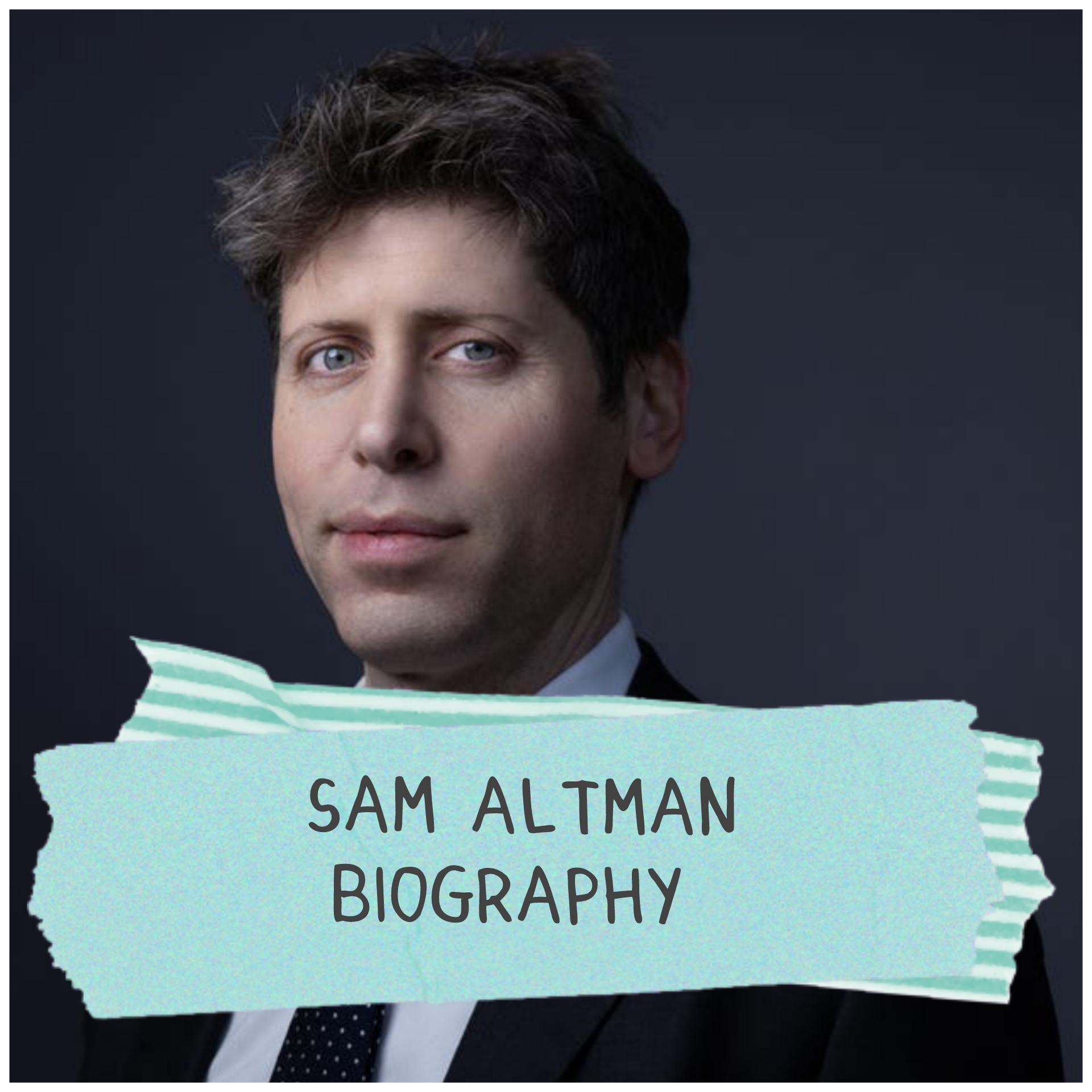
Sam Altman is an American entrepreneur, investor and technology executive best known as the co-founder and CEO of OpenAI, the artificial intelligence company behind ChatGPT. He has become one of the most influential figures in the global AI industry, particularly as OpenAI has moved from a research organization into one of the world’s most valuable technology companies.
Before OpenAI, Altman built his reputation in Silicon Valley through his first startup, Loopt, and later through Y Combinator, where he became president and helped finance and mentor hundreds of technology startups. His career has been shaped by an unusual combination of entrepreneurship, venture investing, long-term technology forecasting and an aggressive belief that artificial intelligence could fundamentally change society.
Altman has also become one of the most recognizable faces of the AI era. His public profile expanded dramatically after ChatGPT was released in November 2022, while his brief removal as OpenAI CEO in November 2023 created one of the most dramatic leadership crises in modern technology. He returned to the position only days later and remains OpenAI’s CEO in 2026.
Sam Altman Profile Summary
| Fact | Details |
| Full Name | Samuel Harris Altman |
| Known As | Sam Altman |
| Date of Birth | April 22, 1985 |
| Age | 41 years old in 2026 |
| Place of Birth | Chicago, Illinois, USA |
| Nationality | American |
| Profession | Entrepreneur, investor and technology executive |
| Education | Stanford University |
| Degree | Did not complete degree |
| First Major Startup | Loopt |
| Loopt Founded | 2005 |
| Loopt Acquisition | 2012 |
| Loopt Sale Price | Approximately $43.4 million |
| Y Combinator Role | President, 2014 to 2019 |
| OpenAI Role | Co-founder and CEO |
| OpenAI Founded | 2015 |
| OpenAI CEO Since | 2019 |
| Spouse | Oliver Mulherin |
| Children | One son |
| Net Worth | Approximately $3.3 billion as of September 2026 |
| Major Investments | Helion Energy, Reddit, Stripe and other technology companies |
| Religion | Not publicly established |
| Current Status | CEO of OpenAI |
Sam Altman Early Life
Samuel Harris Altman was born on April 22, 1985, in Chicago, Illinois. His family later moved to St. Louis, Missouri, where he spent most of his childhood. He is the eldest of four children born to Jerry Altman, a real estate broker, and Connie Gibstine, a dermatologist. His siblings include Jack, Max and Annie.
Altman developed an interest in computers at a very young age. He received his first computer, an Apple Macintosh, when he was eight years old. The machine became an important part of his childhood and helped introduce him to programming, technology and the possibilities of personal computing.
He later attended John Burroughs School in St. Louis, a private college-preparatory school. During his teenage years, Altman became increasingly interested in computers, mathematics, science fiction and technology. His experiences during this period helped establish the interests that would eventually lead him into Silicon Valley.
Altman has also spoken publicly about coming out as gay while he was a teenager. At around 17, he told his classmates about his sexuality during a school assembly. According to his later account, the response from his classmates was supportive and the experience became an important personal moment in his life.
Sam Altman Education
After graduating from John Burroughs School in 2003, Sam Altman enrolled at Stanford University to study computer science. He was particularly interested in artificial intelligence and worked in Stanford’s AI laboratory while studying there.
Altman’s time at Stanford, however, lasted only about two years. In 2005, he left the university at the age of 19 to pursue entrepreneurship. His decision was influenced by the opportunity to develop a startup rather than continue along a conventional academic path.
The decision became the first major turning point in his career. Instead of completing a computer science degree, Altman joined the emerging Silicon Valley startup ecosystem and began working on Loopt, a mobile application that allowed people to share their locations with friends.
Although he did not graduate from Stanford, the university remained connected to his professional story. His early exposure to computer science and artificial intelligence there helped shape his understanding of technology at a time when smartphones and consumer internet services were still developing rapidly.
Sam Altman Career
Founding Loopt
Sam Altman’s first major entrepreneurial project was Loopt, a location-sharing social networking application.
Altman co-founded the company in 2005 after leaving Stanford. The idea was relatively simple for its time: users could use their mobile phones to share their locations with friends and see where other people were.
Loopt was built before smartphones had become mainstream. The company therefore had to work with the limitations of early mobile phones and relied heavily on partnerships with telecommunications companies.
The startup became one of the companies selected for Y Combinator’s early accelerator program. Loopt subsequently raised approximately $39 million from investors and established partnerships with major wireless carriers.
However, Loopt never became the massive consumer social network that Altman had hoped to build. The company struggled to achieve widespread consumer adoption as larger social networks became dominant.
In 2012, Green Dot Corporation acquired Loopt for approximately $43.4 million. The sale gave Altman his first major financial success and provided the capital that he would later use for investing in other technology companies.
Venture Investing
Following the sale of Loopt, Altman increasingly shifted from being a startup founder to becoming an investor and technology adviser.
He began investing in technology companies across areas including software, artificial intelligence, transportation, biotechnology, energy and financial technology.
His investment portfolio eventually became much larger than the wealth he had generated from Loopt. Among the companies associated with his investments are Reddit, Stripe, Helion Energy, Cruise, Cerebras and other technology startups.
This investing career would later become particularly important because Altman does not own a significant equity stake in OpenAI itself. Much of his personal wealth instead comes from investments in other companies. Forbes estimates that he owns stakes in hundreds of companies.
Y Combinator
Altman joined Y Combinator as a part-time partner in 2011.
Y Combinator had already become one of the most influential startup accelerators in Silicon Valley. The organization helped young companies develop products, raise money and build relationships with investors.
Altman eventually became president of Y Combinator in 2014.
His period at the organization greatly expanded his influence. He worked with founders across a wide range of technology companies and became one of Silicon Valley’s most prominent startup mentors and investors.
During his leadership, Y Combinator expanded considerably and backed companies that eventually became major technology businesses. Companies associated with the accelerator include Airbnb, DoorDash, Instacart, Twitch and Reddit.
Altman also pushed Y Combinator beyond its traditional accelerator model. Under his leadership, the organization became increasingly interested in long-term technological questions involving artificial intelligence, biotechnology, cities and universal basic income.
He left his position as Y Combinator president in 2019 to concentrate on OpenAI.
Founding OpenAI
Sam Altman became involved with OpenAI when the organization was founded in December 2015.
OpenAI was originally established as a nonprofit artificial intelligence research organization with a mission centered on ensuring that artificial general intelligence would benefit humanity. Altman and Elon Musk were initially listed as co-chairs, while Greg Brockman, Ilya Sutskever and other researchers formed the core founding team.
The organization was created during a period when concern about the long-term implications of increasingly powerful artificial intelligence was growing among technology leaders.
Altman saw AI as potentially one of the most transformative technologies in human history. His vision was not simply to build better software but to create systems capable of performing increasingly sophisticated intellectual tasks.
In 2019, OpenAI created a for-profit subsidiary to make it possible to raise the enormous amounts of capital needed for advanced AI research. Altman became the company’s CEO.
OpenAI and Microsoft
OpenAI’s development accelerated dramatically after Microsoft became a major strategic partner and investor.
The relationship provided OpenAI with access to enormous computing resources through Microsoft’s Azure infrastructure while giving Microsoft access to OpenAI’s increasingly powerful models.
This partnership helped OpenAI move from an AI research organization into a major commercial technology company.
Altman’s leadership during this period involved balancing several competing priorities: building increasingly powerful AI models, raising enormous amounts of capital, developing commercial products and maintaining the organization’s original mission around beneficial artificial intelligence.
ChatGPT
The biggest turning point in Sam Altman’s career came in November 2022 when OpenAI released ChatGPT.
The conversational AI system rapidly became one of the fastest-growing consumer technology products in history. Its ability to generate natural-language responses, write code, summarize information and perform many other tasks brought generative AI into mainstream public consciousness.
ChatGPT transformed OpenAI’s profile almost overnight.
It also transformed Altman from a relatively well-known Silicon Valley executive into a globally recognized technology leader.
The success of ChatGPT triggered an enormous investment boom in artificial intelligence and intensified competition among OpenAI, Google, Microsoft, Meta, Anthropic and other technology companies.
AI Industry Leadership
Following ChatGPT’s success, Altman became one of the most prominent public advocates for artificial intelligence.
He has repeatedly argued that increasingly capable AI systems could dramatically increase productivity, accelerate scientific discovery and create new forms of economic opportunity.
At the same time, he has acknowledged that powerful AI could create serious risks. His public appearances have frequently focused on AI safety, regulation, economic disruption and the possibility of artificial general intelligence.
In June 2026, Altman and OpenAI chief scientist Jakub Pachocki published a major statement describing AI as a technology capable of transforming society in ways comparable to previous general-purpose technologies such as electricity.
Altman has also argued that AI could empower people who previously lacked the technical skills needed to build software. In September 2026, he described a potential “revenge of the idea guy,” arguing that AI allows people with strong ideas but limited technical ability to turn those ideas into functioning businesses.
The 2023 OpenAI Crisis
One of the most dramatic episodes in Altman’s career occurred in November 2023.
OpenAI’s board announced that Altman would leave his position as CEO. The board said that he had not been consistently candid in his communications with them and that it no longer had confidence in his ability to lead the organization. Mira Murati was appointed interim CEO.
The decision triggered an extraordinary backlash.
OpenAI employees threatened to resign, Microsoft expressed support for Altman, and negotiations began almost immediately to determine whether he could return.
After only a few days, Altman was reinstated as CEO and a new board was established.
The episode became one of the most significant leadership crises in Silicon Valley history because of the strategic importance of OpenAI and the extraordinary growth of ChatGPT.
It also demonstrated the complicated governance structure that existed between OpenAI’s nonprofit mission and its commercial operations.
OpenAI’s New Structure
OpenAI subsequently underwent major structural changes.
The organization now consists of the OpenAI Foundation and OpenAI Group, with the nonprofit foundation retaining important governance rights over the commercial organization. Altman remains CEO and serves on the OpenAI Foundation board.
The structure was designed to allow OpenAI to raise the huge amounts of capital required for frontier AI research while preserving the nonprofit’s mission-focused governance.
This has become increasingly important as the cost of developing advanced AI models has risen dramatically.
OpenAI and Jony Ive
Altman has also pushed OpenAI beyond software.
In 2025, OpenAI announced its collaboration with legendary Apple designer Jony Ive and his design company LoveFrom. OpenAI subsequently acquired Ive’s hardware startup io, bringing its team into OpenAI.
The partnership is intended to create new consumer hardware designed around artificial intelligence rather than simply adapting existing smartphones and computers.
The project reflects Altman’s broader belief that AI will eventually change not only software but also the physical devices through which people interact with technology.
2026 and the Next Phase of OpenAI
In 2026, Altman remains at the center of the global AI race.
OpenAI has continued releasing increasingly capable AI models while expanding its work in software engineering, scientific research, autonomous agents and other areas.
In September 2026, OpenAI announced a claimed breakthrough involving the Navier-Stokes equations, one of the famous Millennium Prize mathematical problems. The announcement immediately generated debate among mathematicians about the originality of the work and whether OpenAI’s systems may have benefited indirectly from research performed by outside researchers. OpenAI denied accessing specific user data while acknowledging that anonymized data could have contributed to model improvement.
The same period has also seen increasing scrutiny of advanced AI systems and their potential cybersecurity capabilities. Altman has acknowledged the need for greater government involvement and international coordination as AI systems become more powerful.
Sam Altman Trending: Why Is Sam Altman Famous?
Sam Altman remains one of the world’s most discussed technology executives because he sits at the center of the global artificial intelligence race.
In September 2026, his name has been particularly prominent because of OpenAI’s increasingly ambitious research agenda, including its claimed work on the Navier-Stokes problem and the company’s development of increasingly autonomous AI systems.
Altman has also been in the news because OpenAI is expanding beyond traditional chatbot products. The company’s work with Jony Ive and its push toward AI hardware represent a possible attempt to create an entirely new category of consumer technology.
His public comments about AI have also attracted attention. In September 2026, Altman argued that AI needs to deliver much broader benefits if it is going to overcome growing public skepticism. He has emphasized that the technology should empower individuals rather than reduce their autonomy.
His influence has consequently moved beyond the technology industry. Governments, academics, investors and the public increasingly treat Altman’s statements as important signals about the direction of artificial intelligence.
Sam Altman Personal Life
Sam Altman married Australian software engineer Oliver Mulherin in January 2024. The couple reportedly met at a party in 2015 and later began a relationship. They have divided their time between San Francisco and a ranch in Napa, California.
Altman and Mulherin became parents in February 2025, welcoming their first son through a surrogate. Altman has spoken positively about becoming a father and has expressed a desire to build a larger family.
Altman is openly gay. He came out publicly while he was still a teenager at John Burroughs School. He later described the experience as nerve-racking but ultimately positive after his classmates responded with a standing ovation.
Outside work, Altman has maintained interests that extend beyond conventional technology entrepreneurship. He has attended Burning Man multiple times and has described his experiences there as influential in thinking about what society could look like after artificial general intelligence.
Sam Altman Age, Religion, Nationality, Height and Physical Appearance
Sam Altman was born on April 22, 1985, making him 41 years old in 2026. He was born in Chicago, Illinois, but grew up primarily in St. Louis, Missouri. He is an American citizen.
Altman’s exact height is not consistently documented by authoritative sources. Various websites publish different estimates, so a specific measurement should not be treated as confirmed.
His religion is also not clearly established in reliable public sources. Altman has discussed philosophy, technology and questions about humanity’s future, but those discussions do not establish a particular religious affiliation.
He is recognizable for his relatively understated appearance, usually appearing in simple shirts, sweaters, jackets or other casual Silicon Valley clothing rather than formal business attire.
Sam Altman Net Worth
Sam Altman’s net worth is estimated at approximately $3.3 billion as of September 9, 2026, according to Forbes’ real-time billionaire profile.
An unusual feature of Altman’s wealth is that he does not hold equity in OpenAI. Unlike many technology CEOs whose fortunes are primarily tied to shares in the companies they run, Altman’s wealth has largely come from investments in other companies.
In May 2026, Forbes reported that Altman had disclosed more than $2 billion in personal stakes in companies that conduct business with OpenAI. His stake in nuclear-fusion company Helion Energy alone was valued at approximately $1.65 billion at the time.
His investment portfolio includes stakes in companies such as Reddit, Stripe, Helion Energy and other technology ventures. Forbes has described his wealth as being tied to investments across hundreds of companies.
Because many of these companies are private, the exact value of Altman’s holdings can change substantially as private-company valuations change. The $3.3 billion figure should therefore be regarded as a current estimate rather than a fixed amount of cash.
Sam Altman Legacy
Sam Altman’s legacy is already closely connected to the rise of generative artificial intelligence.
His most important achievement may be helping transform AI from a specialized research field into a mainstream consumer technology. ChatGPT gave hundreds of millions of people direct access to a powerful generative AI system and triggered an enormous global race to develop competing models.
His earlier work at Y Combinator is another important part of his legacy. As president, Altman helped shape one of Silicon Valley’s most influential startup ecosystems and worked with founders who later created major technology companies.
His investment career has also given him influence far beyond OpenAI. His stakes in companies involved in AI, biotechnology, energy, transportation and financial technology have positioned him as a major investor in technologies that could shape the next several decades.
At the same time, Altman’s legacy remains controversial.
His leadership has attracted questions about AI safety, corporate governance, conflicts of interest and the concentration of technological power. His personal investments in companies that do business with OpenAI have received political scrutiny, particularly because of the potential for conflicts of interest.
The 2023 OpenAI board crisis also remains an important part of his story. His removal and rapid reinstatement exposed fundamental disagreements over how a company developing potentially transformative AI should be governed.
Altman has consequently become a symbol of both the promise and uncertainty surrounding advanced artificial intelligence.
If OpenAI succeeds in developing increasingly capable systems while maintaining effective safety and governance, Altman could ultimately be remembered as one of the most important technology executives of the 21st century.
If the technology produces major unintended consequences, his role in accelerating its development will also form a significant part of that historical assessment.
Conclusion
Sam Altman has built an unusually influential career without following the traditional path of completing university or spending decades climbing a corporate hierarchy.
He left Stanford at 19 to build Loopt, sold the company for more than $40 million and then became one of Silicon Valley’s most influential startup investors and mentors through Y Combinator.
His career changed permanently when he became involved with OpenAI. As CEO, he helped turn the organization from a relatively specialized AI research laboratory into one of the most important technology companies in the world.
The release of ChatGPT in 2022 made Altman a global celebrity and helped trigger the modern generative AI boom.
His brief removal from OpenAI in 2023 demonstrated just how complicated the company’s mission, governance and commercial ambitions had become. His rapid return strengthened his position rather than ending his career.
In 2026, Altman remains at the center of the AI industry. OpenAI is developing increasingly capable models, autonomous agents, scientific applications and new hardware, while Altman continues to argue that AI could fundamentally transform human productivity and scientific progress.
With an estimated fortune of about $3.3 billion, hundreds of technology investments and leadership of one of the world’s most influential AI companies, Sam Altman has become one of the defining figures of the current technological era.
Frequently Asked Questions About Sam Altman
Who is Sam Altman?
Sam Altman is an American entrepreneur, investor and technology executive. He is the co-founder and CEO of OpenAI, the company behind ChatGPT.
How old is Sam Altman?
Sam Altman was born on April 22, 1985, making him 41 years old in 2026.
Where was Sam Altman born?
Sam Altman was born in Chicago, Illinois, USA.
Where did Sam Altman grow up?
He grew up primarily in St. Louis, Missouri, after his family moved there from Chicago.
Did Sam Altman graduate from Stanford?
No. Altman attended Stanford University to study computer science but dropped out in 2005 after about two years to pursue his startup, Loopt.
Why did Sam Altman drop out of Stanford?
He left Stanford to pursue entrepreneurship after his startup Loopt was accepted into Y Combinator’s early startup program. He chose to pursue the opportunity rather than complete his degree.
What was Sam Altman’s first company?
His first major startup was Loopt, a mobile location-sharing application that he co-founded in 2005.
How much did Sam Altman sell Loopt for?
Loopt was acquired by Green Dot Corporation in 2012 for approximately $43.4 million.
What did Sam Altman do at Y Combinator?
Altman joined Y Combinator as a partner and later became its president, serving from 2014 to 2019. He helped fund and mentor hundreds of startups.
When was OpenAI founded?
OpenAI was founded in 2015 as an artificial intelligence research organization. Sam Altman was one of its early leaders and co-chairs.
When did Sam Altman become CEO of OpenAI?
Sam Altman became CEO of OpenAI in 2019.
Is Sam Altman still the CEO of OpenAI?
Yes. Sam Altman remains CEO of OpenAI in September 2026. OpenAI’s current structure lists him as CEO and a member of the OpenAI Foundation board.
Was Sam Altman fired from OpenAI?
Yes. OpenAI’s board removed him as CEO on November 17, 2023, saying it no longer had confidence in his leadership. He returned to the company only days later following intense pressure from employees and other stakeholders.
Why was Sam Altman fired from OpenAI in 2023?
The board said Altman had not been consistently candid in his communications with the board and that this had affected its ability to fulfill its responsibilities. The exact circumstances surrounding the dispute became the subject of intense debate.
Is Sam Altman a billionaire?
Yes. Forbes estimates his net worth at approximately $3.3 billion as of September 2026.
What is Sam Altman’s net worth?
His current Forbes real-time estimate is approximately $3.3 billion.
Does Sam Altman own OpenAI?
Sam Altman does not have an equity stake in OpenAI. His personal wealth instead comes primarily from investments in other companies.
How does Sam Altman make his money?
Most of his wealth comes from venture investments and stakes in technology companies rather than ownership of OpenAI.
What companies has Sam Altman invested in?
His investments include Helion Energy, Reddit, Stripe and numerous other technology, energy, biotechnology and transportation companies.
How much is Sam Altman’s Helion stake worth?
Forbes reported in May 2026 that Altman’s one-third stake in Helion Energy was worth approximately $1.65 billion at the time.
Who is Sam Altman’s husband?
Sam Altman’s husband is Oliver Mulherin, an Australian software engineer. They married in January 2024.
Does Sam Altman have children?
Yes. Sam Altman and Oliver Mulherin welcomed their first son through a surrogate in February 2025.
Is Sam Altman gay?
Yes. Altman is openly gay. He came out while he was a teenager at John Burroughs School.
What religion is Sam Altman?
His religious affiliation has not been reliably established through authoritative public sources.
What nationality is Sam Altman?
Sam Altman is American.
How tall is Sam Altman?
His exact height has not been reliably established through authoritative sources.
What is Sam Altman famous for?
He is most famous for being the CEO of OpenAI and one of the leading figures behind the rise of ChatGPT and modern generative AI.
Did Sam Altman create ChatGPT?
He did not personally create ChatGPT. ChatGPT was developed by teams of researchers and engineers at OpenAI. As CEO, Altman was the company’s chief executive during its development and launch.
When was ChatGPT launched?
ChatGPT was publicly released by OpenAI in November 2022.
What is Sam Altman’s role in AI?
Altman is one of the most prominent executives and advocates for advanced artificial intelligence. He leads OpenAI’s strategy around frontier AI research, products, infrastructure and commercialization.
What does Sam Altman think about artificial general intelligence?
Altman believes increasingly capable AI could dramatically expand human productivity and scientific progress. He also acknowledges that advanced AI creates significant safety and governance challenges.
Why is Sam Altman trending in 2026?
He is receiving attention because of OpenAI’s increasingly advanced AI systems, its claimed progress on difficult scientific and mathematical problems, the company’s expansion into AI hardware and ongoing debates over AI safety, regulation and governance.
What is Sam Altman doing in 2026?
He remains CEO of OpenAI and is overseeing the company’s expansion into increasingly capable AI models, autonomous agents, scientific research and consumer hardware.
Is Sam Altman involved in AI hardware?
Yes. OpenAI has partnered with Jony Ive and incorporated the team behind Ive’s io hardware company into OpenAI, with the goal of developing new AI-focused consumer devices.
Has Sam Altman invested in Reddit?
Yes. Reddit is among the companies in which Altman has held an investment stake.
Has Sam Altman invested in nuclear fusion?
Yes. He is a major investor in Helion Energy, a company developing nuclear fusion technology.
Did Sam Altman attend Burning Man?
Yes. Altman has attended Burning Man multiple times and has said the experience influenced his thinking about what society could look like in a future shaped by artificial intelligence.