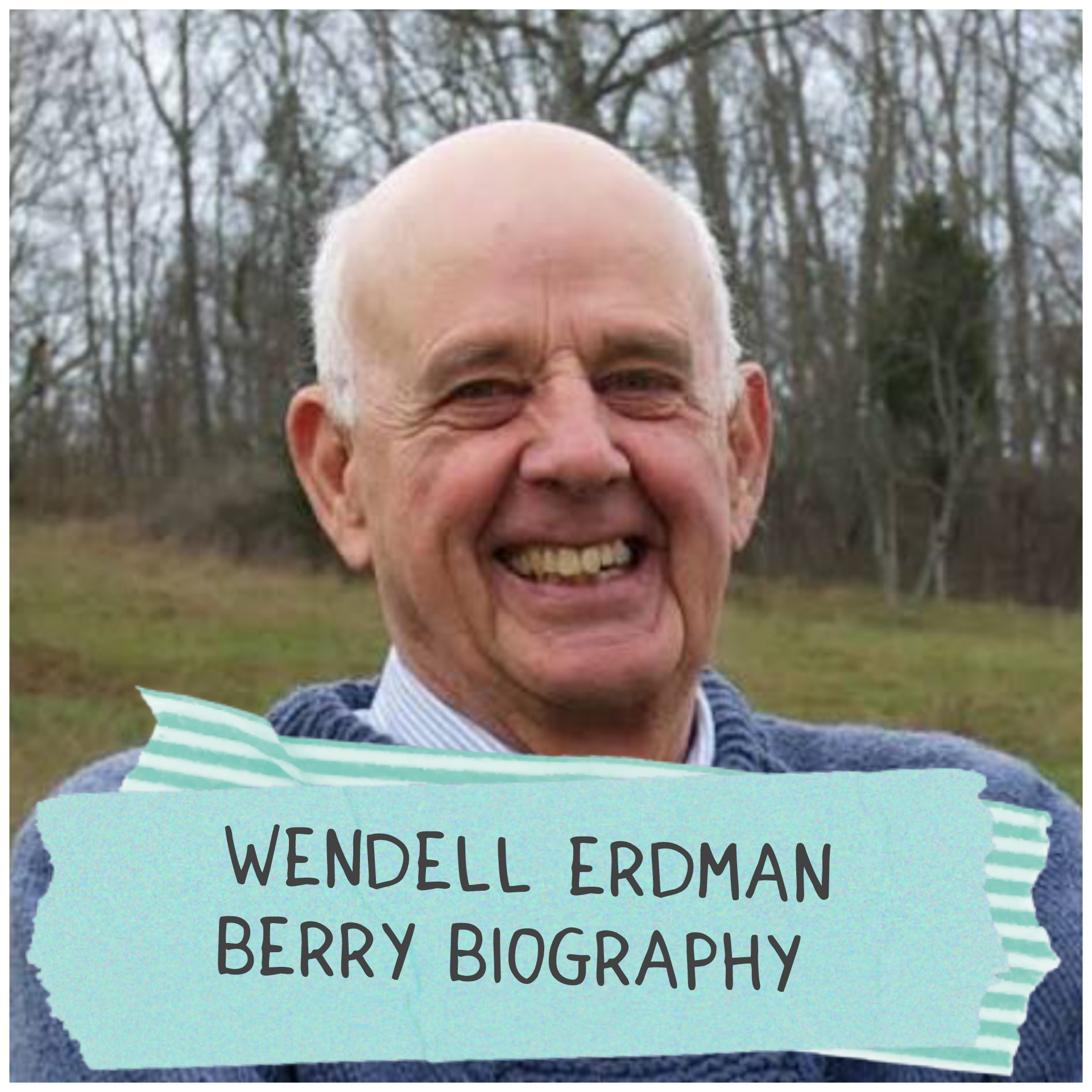
Wendell Berry was an American poet, novelist, essayist, farmer, and environmentalist whose work shaped conversations about agriculture, rural life, community, and humanity’s relationship with the land. Born on August 5, 1934, in Henry County, Kentucky, Berry became one of the most influential literary voices of his generation, producing poetry, fiction, and essays that reflected his deep commitment to farming and rural communities.
Throughout his long career, Berry wrote more than 40 books and became particularly known for works such as The Unsettling of America, Jayber Crow, and the Port William series. His writing challenged industrial agriculture and consumerism while advocating for sustainable farming, local communities, responsible land stewardship, and a simpler way of life. His ideas earned him major honors, including the National Humanities Medal and recognition from the National Book Critics Circle.
Wendell Berry died at the age of 92 on August 31, 2026, at his home in Port Royal, Kentucky. His death marked the end of a remarkable life devoted to literature, farming, conservation, and the preservation of rural culture. Although his life has ended, his books, environmental philosophy, and ideas about community and responsible stewardship continue to influence readers, writers, farmers, and environmental advocates.
Wendell Erdman Berry Early Life
Wendell Erdman Berry was born on August 5, 1934, in Henry County, Kentucky, United States. He grew up in a farming family and developed a strong connection to the rural landscape and agricultural traditions of Kentucky from an early age. His childhood experiences in the countryside later became a major influence on his poetry, fiction, essays, and philosophy about land and community.
Berry attended Millersburg Military Institute before continuing his education at the University of Kentucky. He studied English and earned a bachelor’s degree in 1956, followed by a master’s degree in 1957. His academic background strengthened his interest in literature and writing while his Kentucky upbringing continued to shape his understanding of farming, rural communities, and the relationship between people and the land.
After completing his studies, Berry pursued writing and further developed his literary career. In 1958, he received a Wallace Stegner Fellowship at Stanford University, where he studied creative writing. His early experiences in Kentucky, combined with his formal literary education and exposure to other writers, helped establish the foundation for the career that would eventually make him one of America’s best-known writers on agriculture, rural life, and environmental stewardship.
Wendell Erdman Berry Education
Wendell Berry began his formal education at Millersburg Military Institute in Kentucky, where he received a foundation that prepared him for further academic study. Growing up in Kentucky also exposed him to the farming traditions and rural culture that would later become central themes in his literary work.
Berry continued his education at the University of Kentucky, where he studied English. He earned a Bachelor of Arts degree in English in 1956 and followed it with a Master of Arts degree in the same field in 1957. His university education deepened his understanding of literature and strengthened his development as a writer.
In 1958, Berry received a Wallace Stegner Fellowship at Stanford University, allowing him to study creative writing under the guidance of renowned writer Wallace Stegner. The fellowship gave Berry an opportunity to develop his literary skills and connect with other emerging writers. His education and early literary training helped lay the foundation for his later career as a poet, novelist, essayist, and influential voice on agriculture and rural life.
Wendell Erdman Berry Career
Wendell Berry began his professional literary career after completing his education and receiving the Wallace Stegner Fellowship at Stanford University in 1958. He later taught at Stanford and worked at several universities, including New York University and the University of Kentucky. During these early years, he continued developing his poetry, fiction, and essays, gradually establishing himself as an important American literary voice.
Berry published his first novel, Nathan Coulter, in 1960, marking the beginning of a prolific writing career. He went on to produce poetry collections, novels, short stories, and essays, many of which explored family, community, farming, work, nature, and the changing character of rural America. His fictional community of Port William became one of the defining settings of his literary career, appearing across numerous works.
A major turning point in Berry’s career came with the publication of The Unsettling of America: Culture & Agriculture in 1977. The book strongly criticized the industrialization and commercialization of American agriculture while defending small-scale farming, local food systems, and responsible stewardship of the land. It helped establish Berry as not only a celebrated writer but also an influential thinker on agriculture, environmentalism, economics, and rural culture.
Alongside his writing, Berry was a working farmer in Kentucky, an experience that gave practical grounding to many of his ideas. He returned to Kentucky and farmed near Port Royal, where he practiced and promoted approaches centered on conservation, sustainability, local communities, and respect for the land. He also became an outspoken critic of environmentally destructive practices, including industrial agriculture and mountaintop-removal coal mining.
Over the course of more than six decades, Berry produced more than 40 books and received numerous honors for his literary and cultural contributions. His work earned him the National Humanities Medal in 2010, and he was selected as the Jefferson Lecturer in the Humanities in 2012. By the end of his life, Berry had become widely recognized as a major American writer whose career brought literature, farming, environmental stewardship, and community life into a single body of work.
Wendell Erdman Berry Dies at 92
Wendell Berry is receiving renewed attention following his death at the age of 92 on August 31, 2026, at his home in Port Royal, Kentucky. His daughter, Mary Berry, confirmed his death, bringing an end to the life of a writer whose work profoundly influenced discussions about farming, rural communities, environmental conservation, and responsible stewardship of the land.
Berry’s death has prompted renewed interest in his extensive literary career, particularly The Unsettling of America, his influential 1977 book examining the effects of industrial agriculture on American culture and farming. His novels, poetry, and essays also attracted generations of readers interested in community, nature, family, work, and the preservation of rural traditions.
The timing has also drawn attention to the 50th-anniversary edition of The Unsettling of America, released by Counterpoint on August 25, 2026, just days before his death. The new edition includes a foreword by Berry, giving renewed relevance to one of his most important works. While no public cause of death had been disclosed in the latest reports, his death has already led to widespread reflection on his decades-long contribution to American literature, agriculture, and environmental thought.
Wendell Erdman Berry Personal Life and Family
Wendell Berry was married to Tanya Berry, with whom he shared a long family life rooted in Kentucky. The couple built their life around farming, writing, and their connection to the land, eventually settling near Port Royal, where Berry continued farming while developing many of the ideas that became central to his literary work. Their partnership remained an important part of his life and his commitment to a simpler, community-centered way of living.
Berry and Tanya raised a family, including their daughter Mary Berry, who became closely associated with her father’s work and later served as executive director of the Berry Center, an organization founded to promote the values reflected in Berry’s writings on land, farming, and rural communities. His family life, like his writing, was closely connected to Kentucky and the traditions of rural life that he spent much of his career documenting and defending.
Berry’s family background also influenced his understanding of agriculture and community. He came from a Kentucky farming family and maintained strong ties to the region throughout his life. Rather than separating his literary career from his personal life, Berry incorporated his experiences as a husband, father, farmer, and member of a rural community into his writing, helping make family, place, work, and stewardship recurring themes throughout his body of work.
Wendell Erdman Berry Age, Religion, Nationality, Height and Physical Appearance
Wendell Berry was 92 years old when he died on August 31, 2026. He was born on August 5, 1934, in Henry County, Kentucky, and spent much of his life connected to the state where he was raised and later farmed. His long life covered more than six decades of influential work as a writer, farmer, and environmental thinker.
Berry was American by nationality and was deeply influenced by Christian faith and spirituality. Religious themes frequently appeared in his poetry, essays, and reflections on nature, work, community, and humanity’s responsibility toward creation. Rather than treating faith as separate from everyday life, Berry often connected spiritual responsibility with the care of people, communities, and the natural world.
There is no reliably documented public information establishing Wendell Berry’s exact height. In photographs from different periods of his life, he was recognizable by his distinctive white hair, beard, glasses, and understated appearance. In his later years, he maintained a modest, traditional appearance that reflected the rural Kentucky lifestyle and values with which he was closely associated.
Wendell Erdman Berry Net Worth
Wendell Berry’s exact net worth was not publicly disclosed, so there is no verified figure for the total value of his assets, investments, farm, and literary earnings. However, his income over a career spanning more than six decades came primarily from book royalties, writing, teaching, speaking engagements, and farming. His extensive body of published work provided him with a long-term source of literary income.
Based on the length and success of his career as a bestselling and widely studied author, along with his work as a university teacher and Kentucky farmer, Berry’s net worth can reasonably be estimated in the $1 million to $5 million range. This should be treated as an approximate estimate rather than a confirmed figure, particularly because the value of his private property, literary rights, and other personal assets was not publicly documented.
Berry’s financial legacy, however, extended beyond personal wealth. Much of his public work focused on challenging consumerism and promoting sustainable agriculture, local economies, and responsible stewardship of land. His greatest contribution was therefore his literary and cultural influence, with decades of books, essays, poetry, and ideas that continued to attract readers and shape conversations about farming, environmentalism, and rural life.
Wendell Erdman Berry Legacy
Wendell Berry leaves behind a lasting legacy as one of America’s most influential writers on agriculture, rural life, environmental stewardship, and community. Through poetry, novels, essays, and nonfiction, he challenged the effects of industrialization and consumerism while advocating for sustainable farming, local economies, meaningful work, and a stronger relationship between people and the land. His writing connected literary expression with practical concerns about how communities live and how the natural world is treated.
Berry’s literary legacy is particularly evident in works such as The Unsettling of America, Jayber Crow, and the novels and stories set in the fictional Port William community. His work reached far beyond traditional literary audiences, influencing farmers, environmentalists, food activists, educators, and readers concerned about the future of rural communities. His ideas about land, conservation, family, and responsibility remained relevant throughout his long career and continued to attract new generations of readers.
Following his death at age 92 in August 2026, Berry’s influence is likely to receive renewed attention. His books and essays preserve a distinctive vision of Kentucky life while presenting broader arguments about humanity’s responsibility to one another and to the earth. More than a prolific author, Berry will be remembered as a farmer and public intellectual who devoted his life to defending the value of place, community, craftsmanship, and responsible stewardship.
Conclusion
Wendell Berry’s life was defined by a rare combination of literature, farming, environmentalism, and devotion to community. From his Kentucky roots and academic training to his decades as a celebrated poet, novelist, essayist, and farmer, he used his work to question industrial agriculture and advocate for responsible relationships with land and people. His death at the age of 92 on August 31, 2026, marked the end of an extraordinary life, but his books, ideas, and enduring commitment to rural life and environmental stewardship ensure that his influence will continue for generations to come.
Frequently Asked Questions About Wendell Erdman Berry
Who was Wendell Berry?
Wendell Berry was an American poet, novelist, essayist, farmer, and environmentalist best known for writing about agriculture, rural life, community, nature, and responsible stewardship of the land.
How old was Wendell Berry when he died?
Wendell Berry was 92 years old when he died on August 31, 2026. He was born on August 5, 1934, in Henry County, Kentucky.
When did Wendell Berry die?
Wendell Berry died on August 31, 2026, at his home in Port Royal, Kentucky, at the age of 92.
What was Wendell Berry’s cause of death?
Wendell Berry’s cause of death had not been publicly disclosed at the time of the latest reports about his death.
Who was Wendell Berry’s wife?
Wendell Berry was married to Tanya Berry. They shared a long family life in Kentucky and were closely connected to farming and rural life.
Did Wendell Berry have children?
Yes. Wendell Berry and his wife, Tanya Berry, had children, including their daughter Mary Berry, who later became associated with the Berry Center.
Where was Wendell Berry born?
Wendell Berry was born in Henry County, Kentucky, United States, on August 5, 1934.
What was Wendell Berry famous for?
Wendell Berry was famous for his poetry, novels, essays, farming, and environmental advocacy, particularly his criticism of industrial agriculture and his support for sustainable farming and rural communities.
What is Wendell Berry’s most famous book?
One of Wendell Berry’s most influential books is The Unsettling of America: Culture & Agriculture, originally published in 1977. The book examines industrial agriculture and argues for more sustainable and community-centered approaches to farming.
What did Wendell Berry study?
Wendell Berry studied English at the University of Kentucky, earning a bachelor’s degree in 1956 and a master’s degree in 1957. He later received a Wallace Stegner Fellowship at Stanford University.
What was Wendell Berry’s net worth?
Wendell Berry’s exact net worth was not publicly disclosed. Based on his decades-long career as an author, university teacher, farmer, and speaker, his net worth can be estimated at approximately $1 million to $5 million, although this figure is not independently verified.
What was Wendell Berry’s religion?
Wendell Berry was strongly influenced by Christian faith, which was reflected in his writings about creation, nature, community, morality, and humanity’s responsibility toward the land.
What was Wendell Berry’s nationality?
Wendell Berry was American. He was born and raised in Kentucky and spent much of his life farming and writing in the state.
How tall was Wendell Berry?
Wendell Berry’s exact height was not publicly documented in reliable sources. Therefore, a confirmed height cannot be given.
What is Wendell Berry’s legacy?
Wendell Berry’s legacy is that of a major American literary and environmental thinker who connected writing with farming, conservation, community, and responsible stewardship. His books and ideas continue to influence discussions about sustainable agriculture and rural life.