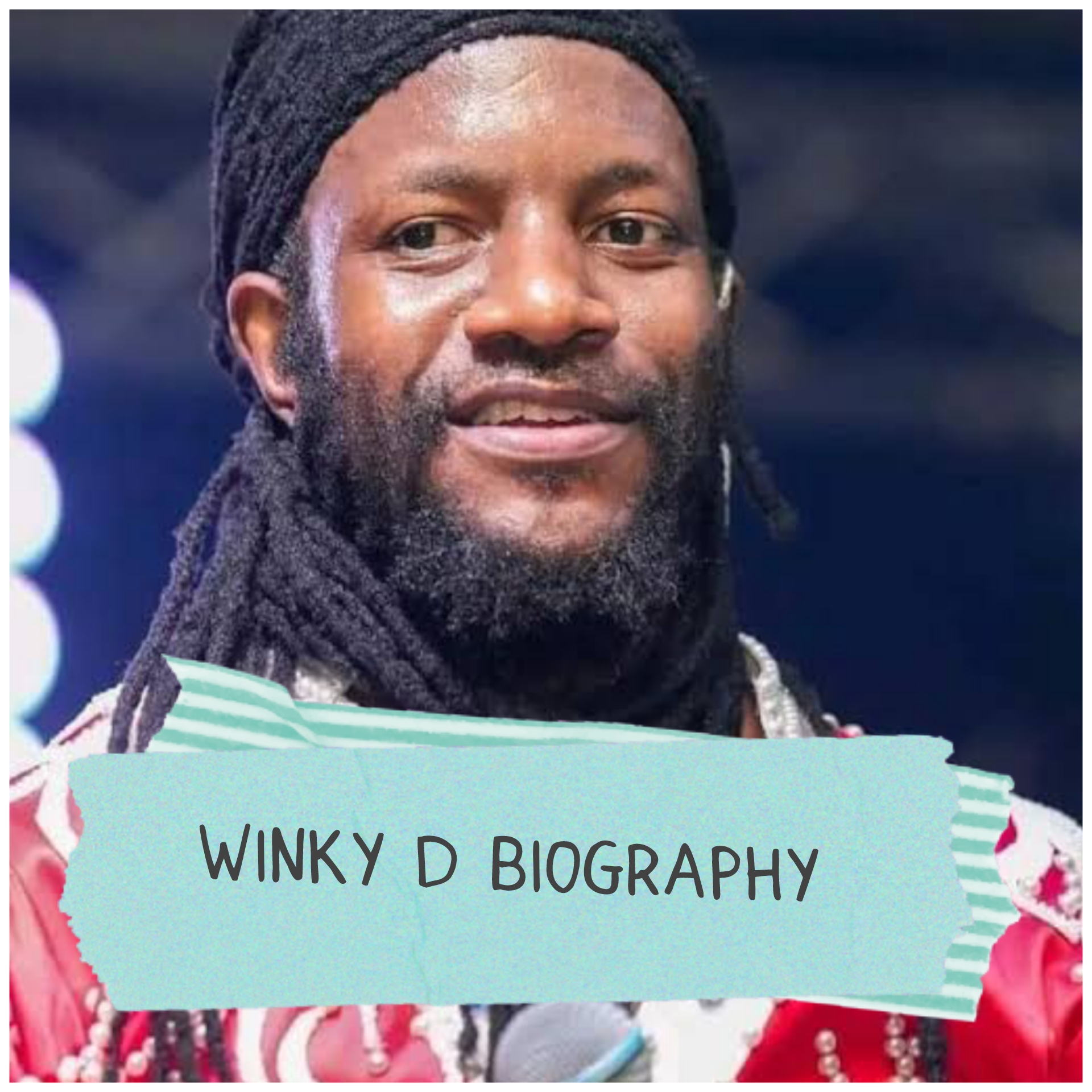
Winky D is one of the most influential figures in Zimbabwean music and one of the artists most closely associated with the development of Zimdancehall. Born Wallace Chirumiko on February 1, 1983, he built his reputation through reggae and dancehall before becoming known for a distinctive style that combines energetic performances with commentary on poverty, politics, corruption, inequality, youth struggles and everyday life in Zimbabwe.
Often called The Big Man, Di Bigman or Gafa, Winky D has maintained an unusually private personal life despite becoming one of Zimbabwe’s most recognisable entertainers. For more than two decades, he has largely allowed his music to speak for him, rarely giving extensive interviews about his family, relationships or private affairs.
His career has also gone beyond conventional entertainment. Songs such as “Ibotso,” “Njema,” “Gombwe” and “Dzimba Dzemabwe” have positioned him as a social commentator whose music frequently addresses difficult realities facing Zimbabweans. That approach has sometimes put him at the centre of controversy, including the disruption of one of his performances in 2023. Despite this, he has continued releasing music, touring internationally and attracting major audiences.
Winky D Profile Summary
| Field | Details |
| Full Name | Wallace Chirumiko |
| Stage Name | Winky D |
| Nicknames | The Big Man, Di Bigman, Gafa, Gaffa |
| Date of Birth | February 1, 1983 |
| Age | 43 years (as of 2026) |
| Place of Birth | Kambuzuma, Harare, Zimbabwe |
| Nationality | Zimbabwean |
| Profession | Musician, Singer, Songwriter and Performer |
| Genres | Zimdancehall, Dancehall and Reggae |
| Active Since | Around 2004 |
| Music Label | Vigilance Music / Independent |
| Brother | Trevor Chirumiko, also known as Layan Soulja |
| Famous For | Zimdancehall, reggae-dancehall and social commentary |
| Major Albums | Igofigo, Gafa Life Kickstape, Gafa Futi, Gombwe: ChiExtra, Njema, Eureka Eureka |
| Latest Major Project | Pabho EP |
| Wife | Private / not reliably confirmed by authoritative sources |
| Children | Reported in some biographies, but details are not consistently verified |
| Religion | Not reliably publicly established |
| Height | Not reliably publicly established |
| Net Worth | No authoritative figure publicly confirmed |
Winky D Early Life
Winky D was born Wallace Chirumiko on February 1, 1983, in Kambuzuma, a high-density suburb of Harare, Zimbabwe. Kambuzuma became an important part of the cultural identity that would later appear throughout his music, particularly in his focus on the experiences of ordinary people living in urban and economically challenged communities. His connection to the ghetto was not merely a marketing concept; it became one of the central themes of his artistic identity.
His interest in music developed while he was young. Accounts of his childhood and teenage years describe him as being attracted to reggae from an early age. His brother Trevor Chirumiko, who is known professionally as Layan Soulja, also became involved in music and entertainment. The presence of music within the family helped create an environment in which Winky D could develop his own artistic interests.
As a teenager, Winky D began performing at local events and participating in competitions designed to identify emerging artists. One of the important platforms was the Ghetto Lane Clashes, where young performers competed in DJ and lyrical battles. It was during this period that the identity that eventually became Winky D began to take shape. His original nickname was associated with “Wicked DeeJay,” which was later shortened to Winky D.
Winky D Education
Public information about Winky D’s formal education is considerably more limited than information about his music career. Several Zimbabwean biography sources report that he attended Rukudzo Primary School and later Kambuzuma High School, but detailed records of his educational history have not been widely published.
Unlike artists whose university education forms an important part of their public biographies, Winky D’s story is primarily connected to his development through performance, street culture and the early Zimbabwean dancehall scene. His teenage participation in local music competitions became more important to his eventual career than formal academic credentials.
The limited public information about his schooling is consistent with Winky D’s broader approach to privacy. He has historically avoided making his personal background the centre of his public identity. His career has instead been constructed around his music, his performances and the social messages contained in his work.
Winky D Career
Beginning in Zimdancehall
Winky D began building his professional music career in the early 2000s, with 2004 commonly identified as the beginning of his active recording career. He emerged at a time when Zimbabwe’s dancehall scene was developing its own local identity.
Rather than simply reproducing Jamaican dancehall, Winky D helped adapt the genre to Zimbabwean realities. He incorporated local slang, Shona-language lyrics, reggae influences and stories about life in urban communities. This approach helped make Zimdancehall a distinctive part of Zimbabwe’s popular-music landscape.
His early performances quickly established him as an energetic live performer. His ability to command audiences became one of the foundations of his popularity, and he began performing at increasingly prominent events both within Zimbabwe and abroad.
Rise of The Big Man and Gafa
As his reputation grew, Winky D acquired several nicknames, including “The Big Man” and “Gafa.” These names became closely connected with his public identity.
His lyrics often focused on the struggles of ordinary people. Instead of limiting his music to romantic themes or party songs, he addressed unemployment, poverty, corruption, political frustration, social inequality and the difficulties experienced by young people.
That approach distinguished him from many of his contemporaries. His music could be commercially successful while still functioning as social commentary, allowing him to build an audience that valued both his entertainment and the messages contained in his songs.
International Performances
Winky D eventually expanded beyond Zimbabwe and performed in a number of countries. His international appearances have included the United Kingdom, South Africa, Australia, the United States and other parts of North America.
His international presence was important for Zimdancehall because it demonstrated that Zimbabwean dancehall could connect with audiences outside the country. He performed at major African and international music events and shared stages with artists from different musical backgrounds.
His 2009 appearance at the Southern Africa Music Airwaves Festival was one of the notable milestones in his growing international profile.
Major Songs
Winky D has built a substantial catalogue over the course of his career. Some of his best-known songs include “Rasta,” “Head Ina War,” “Musarova BigMan,” “Ngirozi,” “Gombwe,” “Njema,” “Area 51,” “My Woman,” “Panorwadza Moyo,” “Igofigo” and “Ibotso.”
His collaborations have also broadened his musical reach. He has worked with artists including Oliver Mtukudzi and Jamaican dancehall star Beenie Man, while also collaborating with other major names within Zimbabwe’s dancehall movement.
Rather than depending on a single signature song, Winky D has maintained relevance by consistently producing projects that reflect changing social and cultural conditions.
Gafa Life Kickstape
Released in 2015, Gafa Life Kickstape became part of the catalogue that reinforced Winky D’s Gafa identity. The project demonstrated his ability to blend dancehall rhythms with the street-oriented language and social themes that had become central to his music.
The project helped maintain his position during a period in which Zimbabwe’s dancehall scene was becoming increasingly competitive and a new generation of artists was emerging.
Gafa Futi
Winky D followed with Gafa Futi in 2016. The project continued his exploration of Zimdancehall while strengthening the identity he had built around the Gafa persona.
By this stage, Winky D was no longer simply an established dancehall artist. He had become one of the figures against whom the success and development of Zimbabwe’s dancehall movement were measured.
Gombwe: ChiExtra
In 2018, Winky D released Gombwe: ChiExtra, another important project in his discography. The album continued his use of dancehall as a vehicle for storytelling and social observation.
The word “Gombwe” and the broader imagery surrounding the project also contributed to the mythology that had developed around Winky D. His artistic identity increasingly combined music, performance, symbolism and social commentary.
Njema
Njema, released in 2019, became one of Winky D’s most critically recognised projects.
The album demonstrated his continued willingness to discuss social issues through music. Its themes included personal struggle, resilience and the social conditions affecting ordinary Zimbabweans.
The title track also became associated with Winky D’s broader reputation for accountability-focused music. In 2021, “Njema” won the Accountability Music Award organised through a partnership involving ONE in Africa, Accountability Lab and the African Union.
The award specifically recognised African music that addresses corruption and accountability. Winky D’s selection demonstrated how his music had developed into a form of social advocacy as well as entertainment.
Eureka Eureka
Winky D released Eureka Eureka in the early 2020s, with the project becoming another major stage in his musical evolution.
Songs such as “Ibotso” and “Dzimba Dzemabwe” dealt with social and economic issues in Zimbabwe. The project reinforced his reputation for using music to discuss problems that other entertainers might avoid.
The album also became central to a major controversy surrounding one of his live performances.
Pabho EP
In 2025, Winky D released the six-track Pabho EP. The project showed that he remained active and commercially relevant more than two decades after beginning his career.
Songs such as “Siya” explored themes of perseverance, resilience and social justice. The EP also attracted significant attention online and demonstrated that Winky D’s audience had continued to follow him into a new phase of his career.
Winky D and Social Commentary
One of the defining features of Winky D’s career is his use of music to discuss social problems. His songs frequently examine poverty, corruption, inequality, unemployment, political frustration and the difficulties experienced by young people.
He has often resisted being reduced to a purely political musician. Instead, his work tends to focus on the lived experiences of ordinary people and the systems that shape those experiences.
His music has consequently developed a dual function. It is entertainment for his fans, but it is also a record of social conditions in Zimbabwe. This is one reason his songs have remained relevant beyond the period in which they were released.
In a 2021 interview connected to the Accountability Music Awards, Winky D explained that his intention was not simply to entertain but to encourage deeper thought about the purpose of music in society. That philosophy has remained visible throughout his catalogue.
Winky D Controversies
The Ibotso Performance Shutdown
Winky D’s use of social commentary has occasionally resulted in confrontation with authorities and political groups.
In March 2023, police shut down a Winky D performance in Chitungwiza shortly after he began performing “Ibotso.” The song had attracted controversy because of its critical commentary on Zimbabwean society and political conditions.
The incident generated widespread debate about freedom of expression and the relationship between music and politics in Zimbabwe. Supporters argued that the disruption demonstrated the sensitivity surrounding Winky D’s lyrics, while critics of his work have accused him of using music to push political messages.
The incident ultimately increased attention around both the song and the artist.
Cancellation of HICC Concert
Another controversy emerged in December 2024 when Winky D’s planned New Year’s Eve concert at the Harare International Conference Centre was cancelled.
Reports indicated that Winky D had secured the venue months in advance but that another event was subsequently prioritised. The cancellation generated public anger and led to allegations of political interference.
Those allegations became part of a wider discussion surrounding Winky D’s relationship with Zimbabwe’s political establishment. However, claims of specific political involvement should be distinguished from confirmed facts about the venue dispute.
Winky D Awards and Recognition
Winky D has received recognition from Zimbabwean, African and international music organisations throughout his career.
Among his notable achievements are the Best Male Artist in Southern Africa award at the 2022 All Africa Music Awards and the Best Dancehall Artist award at the African Entertainment Awards USA in 2020.
He has also received recognition at the National Arts Merit Awards, including multiple People’s Choice honours. His album Njema won Best Album at the Zimdancehall Awards.
Internationally, he has been recognised by the International Reggae and World Music Awards as Best African Dancehall Entertainer.
In 2021, he won the Accountability Music Award for “Njema,” highlighting the social and anti-corruption dimensions of his music. The award was particularly significant because it recognised music for its ability to encourage public accountability rather than simply its commercial performance.
Winky D Trending: Why Is Winky D Famous?
Winky D remains famous because he has become far more than a successful dancehall performer. He is regarded as one of the pioneers and defining voices of Zimbabwe’s Zimdancehall movement, with a career spanning more than two decades.
His continued relevance has been reinforced by his newer projects, particularly the Pabho EP released in 2025. At the same time, his earlier songs continue to be discussed because of their commentary on Zimbabwean society, corruption, political accountability and the struggles of ordinary people.
His name also continues to attract attention because of the controversy surrounding his performances and lyrics. The 2023 shutdown of his Chitungwiza performance and the 2024 dispute over his HICC New Year’s Eve concert contributed to a public narrative in which Winky D is seen as an artist who operates at the intersection of music, culture and social criticism.
Winky D Personal Life
Winky D has deliberately kept most details of his personal life away from the public. He is known to have a family, but unlike many celebrities, he rarely places his wife, children or private relationships at the centre of his public identity.
Some Zimbabwean entertainment publications have reported that he is married and has a child, while other online biographies have made different claims about his spouse and family. Because these reports are inconsistent and Winky D himself has generally maintained privacy around his family, specific claims about his wife and children should be treated cautiously.
His brother Trevor Chirumiko, professionally known as Layan Soulja, is one of the better-documented members of his family in the public domain. Trevor has worked in music production as well as television and radio, meaning that Winky D’s connection to the entertainment industry extends beyond his own performance career.
Winky D Age, Religion, Nationality, Height and Physical Appearance
Winky D was born on February 1, 1983, in Kambuzuma, Harare, Zimbabwe. He is 43 years old in 2026 and is Zimbabwean by nationality. His identity is strongly connected to Harare and to the urban communities that inspired much of his music.
His religion has not been reliably established through strong public sources. Although various online profiles make claims about his religious beliefs, there is insufficient authoritative information to state a specific religion as fact.
His exact height is also not reliably documented. Winky D is recognisable for his distinctive stage presentation, energetic performances and carefully maintained “Gafa” image. Unlike some entertainers who frequently publish personal details, he has maintained a relatively private public persona, meaning that basic physical statistics are not consistently available from reliable sources.
Winky D Social Media Presence
Winky D maintains a significant online following, although his digital presence is generally used to promote music, performances and projects rather than to reveal extensive details about his personal life.
His social-media platforms have played an important role in promoting releases and connecting his music with audiences in Zimbabwe and abroad. Online platforms have also helped extend the life of his songs, particularly when performances or lyrics become subjects of public discussion.
Because social-media accounts can be impersonated or renamed, readers should verify the authenticity of any account claiming to represent Winky D before treating it as official. His public online identity is primarily centred around the Winky D and Gafa brands.
Winky D Net Worth
Winky D’s exact net worth is not publicly verified. Numerous entertainment and celebrity websites publish estimated figures, but there is no reliable public financial statement establishing how much he owns or earns.
His income sources likely include music sales and streaming, live performances, international tours, royalties, collaborations and other entertainment-related activities. With a career spanning more than 20 years and an extensive catalogue, his music represents an important long-term source of intellectual-property value.
It is therefore reasonable to describe Winky D as a financially successful Zimbabwean musician, but a precise net-worth figure would be speculative. His extensive career, international performances and enduring popularity indicate substantial commercial success, yet his private financial affairs remain largely undisclosed.
Winky D Legacy
Winky D’s greatest contribution to Zimbabwean music is his role in establishing Zimdancehall as a serious cultural and musical force. He helped demonstrate that dancehall could be adapted to Zimbabwean language, urban culture and social realities without losing its energy or international appeal.
His influence also extends to the relationship between music and social commentary. Through songs dealing with poverty, corruption, inequality and political accountability, he has demonstrated how popular music can function as a platform for public discussion. This has made him particularly important to younger Zimbabweans who identify with the social realities reflected in his work.
After more than two decades in the industry, Winky D remains one of Zimbabwe’s most enduring musical figures. His awards, international performances, extensive catalogue and ability to generate discussion around new releases all point to an artist whose influence extends well beyond individual songs. Whether audiences view him primarily as a dancehall star, cultural commentator or voice of the ghetto, his place in Zimbabwean music history is firmly established.
Conclusion
Winky D’s journey from Wallace Chirumiko, a young performer from Kambuzuma, to one of Zimbabwe’s most influential Zimdancehall artists is a story of musical persistence, cultural identity and social commentary. Over more than two decades, he has built an enduring career through energetic performances, internationally recognised projects and songs that address the realities facing ordinary Zimbabweans. His willingness to tackle controversial subjects has sometimes brought conflict and public debate, but it has also helped distinguish him from other artists. With projects such as Njema, Eureka Eureka and Pabho, Winky D continues to demonstrate why he is regarded as one of the defining voices of Zimbabwean dancehall.
Frequently Asked Questions About Winky D
What is Winky D’s real name?
Winky D’s real name is Wallace Chirumiko.
When was Winky D born?
Winky D was born on February 1, 1983.
How old is Winky D in 2026?
Winky D is 43 years old in 2026.
Where was Winky D born?
He was born in Kambuzuma, Harare, Zimbabwe.
What is Winky D famous for?
Winky D is famous for his reggae-dancehall and Zimdancehall music, energetic live performances and socially conscious lyrics dealing with issues such as poverty, corruption, inequality and political accountability.
What is Winky D’s nickname?
His best-known nicknames include The Big Man, Di Bigman and Gafa.
When did Winky D start his music career?
Winky D began building his professional music career around 2004, after developing his skills through local performances and competitions.
What genre does Winky D sing?
Winky D is primarily associated with Zimdancehall, reggae and dancehall.
What are Winky D’s most popular songs?
Some of his best-known songs include “Ibotso,” “Njema,” “Ngirozi,” “Gombwe,” “Rasta,” “Head Ina War,” “Musarova BigMan,” “Area 51,” “Panorwadza Moyo” and “My Woman.”
What is Winky D’s latest album?
One of his most recent major releases is the Pabho EP, released in 2025.
How many albums has Winky D released?
Winky D has released numerous albums and projects throughout his career, including Igofigo, Gafa Life Kickstape, Gafa Futi, Gombwe: ChiExtra, Njema, Eureka Eureka and Pabho.
Is Winky D married?
Winky D is widely reported to be married, but he keeps his family life private and reliable public information about his wife is limited.
Who is Winky D’s wife?
Various online publications have made different claims about Winky D’s wife. Because the information is inconsistent and he maintains a private personal life, his wife’s identity should not be stated as confirmed without stronger evidence.
Does Winky D have children?
Some Zimbabwean biographies report that Winky D has a child, but detailed information about his children is not consistently documented in authoritative public sources.
Who is Winky D’s brother?
His brother is Trevor Chirumiko, professionally known as Layan Soulja. Trevor has worked as a music producer as well as a television and radio presenter.
Is Winky D from Kambuzuma?
Yes. Winky D was born in Kambuzuma, Harare, and his connection to the community has been an important part of his artistic identity.
Why does Winky D sing about politics?
Winky D’s music frequently addresses social conditions, poverty, corruption, inequality and political accountability. He has described his music as a way of expressing the experiences and struggles of ordinary people.
What happened to Winky D’s concert in Chitungwiza?
In March 2023, police shut down a Winky D performance in Chitungwiza shortly after he began performing “Ibotso.” The incident generated significant debate about artistic freedom and political expression in Zimbabwe.
Why was Winky D’s HICC concert cancelled?
His planned New Year’s Eve concert at the Harare International Conference Centre was cancelled in December 2024 after the venue was reportedly allocated to another event. The cancellation generated allegations of political interference, although such allegations should be distinguished from confirmed facts about the venue decision.
Has Winky D won awards?
Yes. He has won numerous awards, including the Best Male Artist in Southern Africa at the 2022 All Africa Music Awards, Best Dancehall Artist at the 2020 African Entertainment Awards USA and Best African Dancehall Entertainer at the International Reggae and World Music Awards.
What award did Winky D win for “Njema”?
“Njema” won the 2021 Accountability Music Award, recognising its contribution to conversations around accountability and social issues.
Is Winky D the king of Zimdancehall?
Winky D is widely regarded as one of the pioneers and most influential figures in Zimdancehall. The phrase “king of Zimdancehall” is commonly used by fans and media, although it is a descriptive title rather than an official position.
What is Winky D’s net worth?
Winky D’s exact net worth is not publicly verified. He has multiple potential income sources through music, performances, royalties and international work, but published net-worth figures should be treated as estimates rather than confirmed financial information.
What is Winky D’s religion?
His religion has not been reliably established through authoritative public information, so a specific religious affiliation should not be stated as fact.
How tall is Winky D?
Winky D’s exact height has not been reliably documented by authoritative public sources.
Is Winky D still making music?
Yes. Winky D has remained active in music, with the 2025 Pabho EP demonstrating his continued recording activity and relevance more than two decades after his career began.