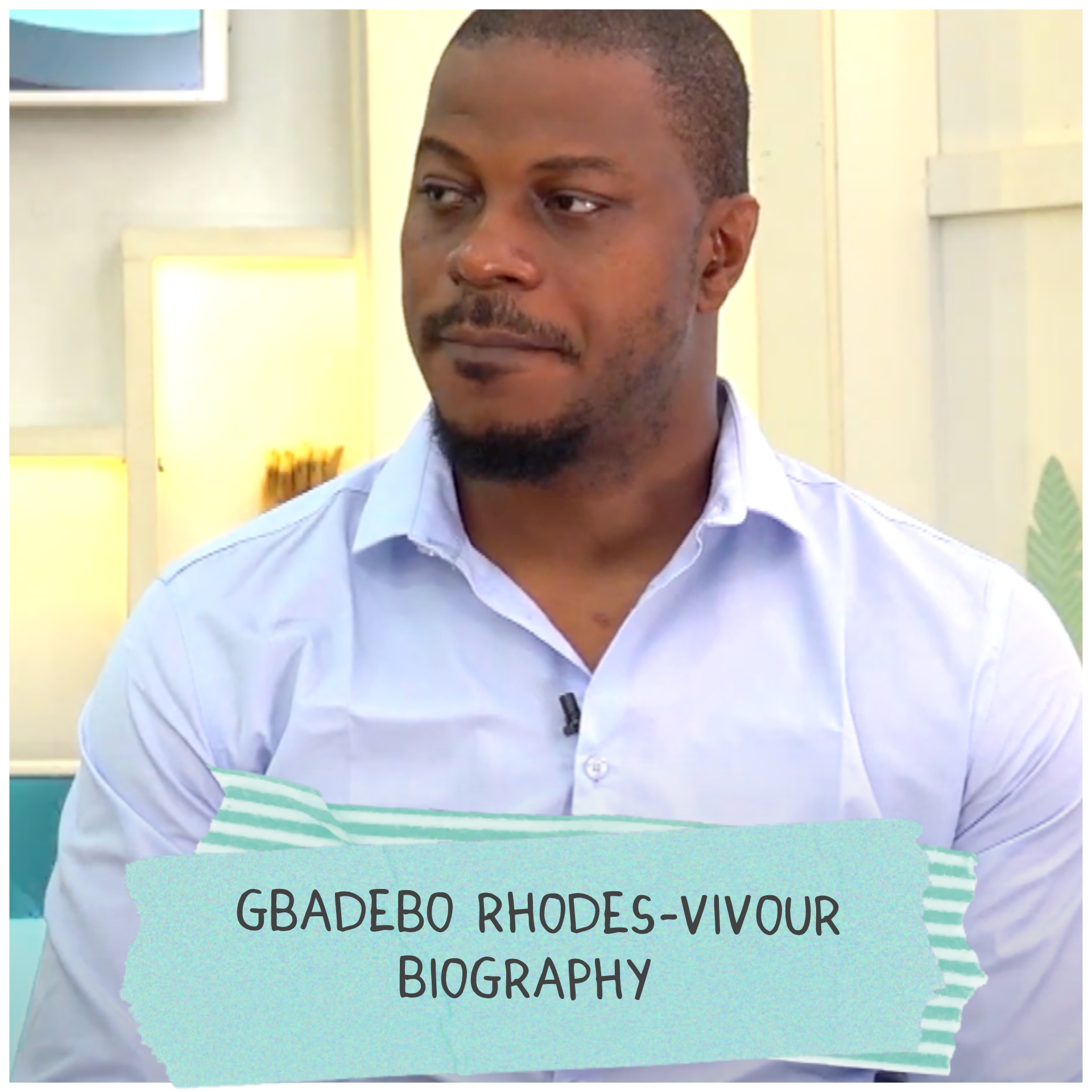
Gbadebo Patrick Rhodes-Vivour, popularly known as GRV, is a Nigerian architect, entrepreneur, activist and politician who became one of the most prominent opposition figures in Lagos politics following the 2023 governorship election. Born on March 8, 1983, on Lagos Island, he grew up in Ikeja and comes from a prominent Lagos family with a long history in law, the judiciary and public service.
Before entering mainstream politics, Rhodes-Vivour built a career in architecture and became involved in environmental, health, education and governance advocacy. He founded Spatial Tectonics, a design and construction firm focused on innovative and more affordable approaches to housing, and has been associated with several companies and development projects. He also became involved in the campaign against genetically modified foods and other environmental causes.
His political profile rose sharply after he contested the Lagos West senatorial election under the Peoples Democratic Party in 2019 and later moved to the Labour Party. In 2023, he became the Labour Party’s Lagos governorship candidate and secured 312,329 votes, finishing second to incumbent Governor Babajide Sanwo-Olu, who won with 762,134 votes. In 2026, Rhodes-Vivour emerged as the African Democratic Congress candidate for the 2027 Lagos governorship election, making him one of the leading opposition figures challenging the ruling political establishment in the state.
Gbadebo Rhodes-Vivour Early Life
Gbadebo Patrick Rhodes-Vivour was born on March 8, 1983, on Lagos Island, Lagos State. Although he was born on the Island, he spent much of his childhood growing up in Ikeja. His upbringing connected him closely to Lagos and its history, something that later became an important part of his political identity.
He was born into the Rhodes-Vivour family, a prominent Lagos family whose history includes lawyers, judges, traditional figures and public servants. His parents are Barrister Olawale Rhodes-Vivour and Nkechi Rhodes-Vivour. His family tree includes former Supreme Court Justice Bode Rhodes-Vivour, who is his uncle, and the late Judge Akinwunmi Rhodes-Vivour, his grandfather. His wider ancestry has also been linked to Steven Bankole Rhodes, one of Nigeria’s early indigenous judges, and William Vivour, a prominent 19th-century Lagos figure.
Rhodes-Vivour’s family background has also featured prominently in discussions about his identity. His father is generally described as Yoruba, while his mother has Igbo heritage. Rhodes-Vivour has therefore been publicly associated with both Yoruba and Igbo heritage. The issue became particularly prominent during the 2023 Lagos election, when questions about his ethnic identity were repeatedly raised in political debates.
Gbadebo Rhodes-Vivour Education
Rhodes-Vivour began his education at Chrisland Schools in Lagos, where he studied through part of his secondary education. He later moved to Paris, France, where he completed his secondary education at École Active Bilingue. His international education exposed him to different cultures and educational systems before he returned to Britain for university.
He studied Architecture at the University of Nottingham in the United Kingdom, earning a Bachelor of Architecture degree. He subsequently proceeded to the Massachusetts Institute of Technology (MIT) in the United States, where he obtained a master’s degree in Architecture. His training at MIT became an important part of his professional identity and later influenced his approach to affordable housing and alternative construction methods.
After completing his architectural master’s programme, Rhodes-Vivour returned to Nigeria and completed his National Youth Service Corps programme between 2008 and 2009. He later pursued another master’s degree, this time in Research and Public Policy at the University of Lagos (UNILAG). His combination of architecture and public policy education helped shape the intersection between his professional career and political activism.
Gbadebo Rhodes-Vivour Career
Gbadebo Rhodes-Vivour Architecture Career
Rhodes-Vivour began his professional architecture career in the United Kingdom, where he worked with Franklin Ellis Architects. After returning to Nigeria, he worked with firms including SISA, Kliff Consulting, later known as Building Partnership CCP, and Patrick Waheed Architects. These experiences exposed him to different aspects of architecture, construction and urban development.
He eventually founded Spatial Tectonics, a design firm focused on unconventional construction techniques and approaches to making quality housing more accessible. His professional interests have included alternative building systems, modular construction and the use of innovative materials to reduce construction costs.
His architectural work has extended beyond individual buildings. He has been associated with larger commercial and urban-development projects and has served on the boards of companies including Alhuda Construction Nigeria and Delta International Commercial City. His professional portfolio has consequently placed him within Nigeria’s architecture, construction and property-development sectors.
Gbadebo Rhodes-Vivour Activism
Long before he became a prominent electoral politician, Rhodes-Vivour was involved in activism around environmental protection, agriculture, education and public policy.
He became particularly known for his opposition to genetically modified organisms and was associated with Nigerians Against GMO, a campaign that raised questions about the environmental, agricultural and health implications of genetically engineered crops. His activism included public advocacy, media appearances and engagement with policymakers.
In 2017, Rhodes-Vivour and environmental activist Nnimmo Bassey were involved in a large march to Nigeria’s National Assembly concerning environmental degradation. He has also advocated for the restoration of history as a subject within Nigeria’s school curriculum, arguing that understanding the country’s past is important for national development and civic consciousness.
His advocacy has not been limited to environmental issues. He has also been involved in initiatives relating to health, education and access to social services. In 2022, for example, he partnered with WellaHealth on a programme intended to provide free health checks and micro-health insurance coverage to Lagos residents with voter cards, linking healthcare access with civic participation.
Gbadebo Rhodes-Vivour Political Career
Rhodes-Vivour’s formal political career developed during the period when Nigeria’s Not Too Young To Run movement was gaining momentum.
In 2017, he contested the chairmanship of Ikeja Local Government Area under the KOWA Party. He was among a generation of younger Nigerians attempting to challenge the dominance of established political structures. He did not win the election, but the contest marked an important step in his transition from activist and professional to electoral politician.
His next major electoral contest came in the 2019 Lagos West senatorial election, where he ran under the Peoples Democratic Party. The election was won by APC candidate Solomon Olamilekan Adeola, who received 323,817 votes. Rhodes-Vivour came second with 243,516 votes, or approximately 40 percent of the vote.
The result was significant because Rhodes-Vivour demonstrated that he could attract a substantial number of votes in one of Lagos’s largest senatorial districts despite running against an established political figure. His political profile grew further in the years that followed.
Gbadebo Rhodes-Vivour and the Labour Party
Rhodes-Vivour initially sought to pursue his political ambitions within the PDP ahead of the 2023 Lagos governorship election. However, he eventually left the party and joined the Labour Party.
He won the Labour Party’s Lagos governorship primary in August 2022 after the party conducted a substitute primary. Rhodes-Vivour reportedly secured 111 votes, defeating former APC chieftain Moshood Salvador, who received 102 votes. This made him the Labour Party’s candidate for the 2023 Lagos State governorship election.
His emergence coincided with the rapid growth of the Peter Obi-led political movement ahead of the 2023 presidential election. Although Rhodes-Vivour was contesting for governor rather than president, the Labour Party’s growing popularity and the emergence of the Obidient movement dramatically changed the political landscape in Lagos.
Gbadebo Rhodes-Vivour and the 2023 Lagos Governorship Election
The 2023 Lagos governorship election transformed Rhodes-Vivour from a relatively prominent politician into a nationally recognised political figure.
He contested against incumbent Governor Babajide Sanwo-Olu of the APC and PDP candidate Abdul-Azeez Olajide Adediran, popularly known as Jandor. When the results were announced, Sanwo-Olu won with 762,134 votes, while Rhodes-Vivour finished second with 312,329 votes. Jandor came third with 62,449 votes.
Rhodes-Vivour’s 312,329 votes represented roughly 27 percent of the total vote and made the election much more competitive than many previous Lagos governorship contests. His campaign also benefited from the momentum generated by Peter Obi’s presidential campaign, although Rhodes-Vivour has since insisted that his own political structure has grown considerably beyond the 2023 Obidient movement.
Following the election, Rhodes-Vivour challenged the result in court. The Lagos State Governorship Election Petition Tribunal dismissed his petition in September 2023. The Court of Appeal subsequently upheld the decision, and the Supreme Court later dismissed his appeal, leaving Sanwo-Olu’s victory intact.
The court battles nevertheless cemented Rhodes-Vivour’s position as one of the most prominent opposition politicians in Lagos.
Gbadebo Rhodes-Vivour Trending: Why Is Gbadebo Rhodes-Vivour Famous?
Gbadebo Rhodes-Vivour is currently trending primarily because of his role in the 2027 Lagos governorship race.
In May 2026, Rhodes-Vivour won the African Democratic Congress governorship primary in Lagos State. He defeated Owolabi Salis, securing 12,948 votes against Salis’ 6,183 votes, according to reports of the party’s primary. This positioned him as the ADC’s candidate for the 2027 Lagos governorship election.
His return to the Lagos governorship race is particularly significant because the political environment is different from 2023. Peter Obi, who was an important part of the Labour Party’s 2023 political coalition, subsequently left the ADC and moved to the Nigeria Democratic Congress. Rhodes-Vivour, however, remained with the ADC and said he intends to build a political structure capable of winning Lagos without relying on Obi or the Obidient movement.
In July 2026, Rhodes-Vivour said the version of himself contesting in 2026 was politically different from the candidate who contested in 2023. He argued that his years of grassroots organising had given him a stronger political structure across Lagos communities. He also said his coalition was designed not only to mobilise voters but to protect votes during the election.
His 2027 campaign has also been built around opposition to the political establishment in Lagos. In interviews, he has criticised the state’s approach to demolitions, governance and opposition politics, while presenting himself as an alternative to the APC’s long-running dominance in the state.
Gbadebo Rhodes-Vivour Personal Life
Gbadebo Rhodes-Vivour is married to Dr. Ifeyinwa “Ify” Rhodes-Vivour, formerly Ifeyinwa Aniebo. She is described as a molecular geneticist and is from the Aniebo family. Her father, Augustine Aniebo, served as a military administrator of Kogi and Borno States.
Rhodes-Vivour and his wife have children. He has spoken publicly about raising his children with an appreciation for Yoruba culture and said he was teaching them to speak Yoruba. However, he generally keeps details about his children and day-to-day family life away from the political spotlight.
His marriage also reflects the multicultural background that has characterised his family. Rhodes-Vivour is generally described as having Yoruba heritage through his father and Igbo heritage through his mother, while his wife also comes from an Igbo background. His family identity has therefore featured prominently in discussions about his political appeal in Lagos.
Gbadebo Rhodes-Vivour Age, Religion, Tribe, Height and Physical Appearance
Gbadebo Rhodes-Vivour was born on March 8, 1983, making him 43 years old in 2026. His birthplace is Lagos Island, Lagos State, Nigeria.
His ethnic background is mixed. His father, Olawale Rhodes-Vivour, is widely described as Yoruba, while his mother, Nkechi Rhodes-Vivour, has Igbo heritage. Rhodes-Vivour has nevertheless strongly identified with Lagos and was installed in 2025 with the traditional title Obalefun, with Yoruba traditionalists describing him as a bona fide Yoruba son of Lagos Island.
His religion is not as consistently documented in authoritative sources as his ethnic background, so it is preferable not to state a specific denomination as fact without a direct statement from Rhodes-Vivour himself. His precise height is also not reliably documented by authoritative sources.
Gbadebo Rhodes-Vivour Chieftaincy Title
In April 2025, Rhodes-Vivour was installed as Obalefun by the Ijo Olorisa Parapo in the Badagry Division of Lagos State.
The ceremony took place on April 12, 2025, and was attended by members of his family, including his parents and wife. The traditional organisation also inducted him as a Peace Ambassador in recognition of what it described as his contributions to social welfare, peace and development.
The title generated controversy because of debates over Rhodes-Vivour’s ethnic background. Some critics questioned whether someone with an Igbo mother could receive a Yoruba traditional title. Traditionalists who supported the installation rejected that argument, saying Rhodes-Vivour was a bona fide Lagos indigene with Yoruba roots.
The development added another dimension to his public identity. Beyond his political career, Rhodes-Vivour increasingly presented himself as a Lagos indigene with a strong connection to the history, culture and traditional institutions of the state.
Gbadebo Rhodes-Vivour Business Interests
Rhodes-Vivour’s principal professional background is architecture and property development.
Through Spatial Tectonics, he has focused on innovative approaches to construction and affordable housing. His professional philosophy has centred on using design and alternative construction methods to reduce the cost of housing without necessarily sacrificing quality.
He has also been associated with several companies and organisations, including Multi Development Construction Corporation, HomeQube, E-Terra Technologies and Alkebulan Agro-Allied. His work therefore extends beyond conventional architectural practice into construction, development, technology and agriculture.
His professional experience has also included international exposure. During his time at MIT, reports say he participated in work connected with the reconstruction of New Orleans after Hurricane Katrina and activities related to the Beijing Olympics. These experiences contributed to his interest in urban planning, infrastructure and alternative construction.
Gbadebo Rhodes-Vivour Philanthropy and Social Advocacy
Rhodes-Vivour has been involved in several social initiatives through the Rhodes-Vivour Foundation, where he has served as chairman. The foundation has been associated with efforts to increase access to education and educational materials for disadvantaged people.
His social advocacy has also included healthcare. His 2022 partnership with WellaHealth was designed to provide health checks and micro-health insurance coverage to Lagos residents while encouraging voter registration and civic participation.
Environmental protection remains another important part of his advocacy. His work around genetically modified organisms, environmental degradation and sustainable development predates his electoral career and forms part of the broader public-policy identity he has carried into politics.
Gbadebo Rhodes-Vivour Net Worth
Gbadebo Rhodes-Vivour’s exact net worth is not publicly established. There is no audited public record that provides a reliable figure for the combined value of his architectural business, property interests, investments and other assets.
His financial profile is nevertheless connected to a substantial professional career. He has founded and worked with businesses in architecture and construction and has held positions on the boards of several companies. His involvement in property development also means that his wealth cannot accurately be measured simply by looking at his salary as a politician.
Various websites publish specific dollar estimates for his net worth, but these figures are generally unsupported by audited financial information. For that reason, a specific amount should not be presented as established fact. The safest description is that Rhodes-Vivour is an established architect and entrepreneur with business and investment interests, but his exact net worth remains undisclosed.
Gbadebo Rhodes-Vivour Social Media Presence
Gbadebo Rhodes-Vivour has maintained a significant social-media presence throughout his political career, particularly on platforms used for political communication and grassroots mobilisation.
His online presence became especially important during the 2023 election, when he developed a large following among younger Lagos voters and supporters of the wider Labour Party movement. He has continued to use social media to comment on Lagos politics, government policies, demolitions, opposition politics and the 2027 election.
His digital presence is also part of his wider political strategy. In 2026, he rejected the idea that his support was merely an online phenomenon, arguing that his political organisation had expanded into communities and grassroots structures across Lagos.
Gbadebo Rhodes-Vivour Legacy
Rhodes-Vivour’s political legacy is still developing, but his 2023 governorship campaign already represents one of the most significant challenges to Lagos’s established political order in recent years. His 312,329 votes placed him far ahead of the PDP candidate and established him as the principal opposition challenger to Sanwo-Olu in that election.
His story is also notable because he did not enter politics solely through traditional party structures. His background combines architecture, environmental activism, public policy, entrepreneurship and grassroots advocacy. That combination has helped him cultivate a political identity different from that of many conventional Nigerian politicians.
His 2027 campaign could ultimately become the most important chapter of his political career. As the ADC candidate, he is attempting to turn the momentum of 2023 into an organised statewide political machine. He has repeatedly argued that the new campaign will rely less on the popularity of Peter Obi or the Obidient movement and more on his own grassroots organisation across Lagos.
Conclusion
Gbadebo Rhodes-Vivour is a Nigerian architect, entrepreneur, activist and politician whose journey from professional architecture and environmental advocacy to the centre of Lagos politics has made him one of the country’s most recognisable younger opposition figures. Born into a prominent Lagos family with a long history in law and public service, he studied architecture at the University of Nottingham and MIT before earning a second master’s degree in Research and Public Policy from UNILAG. His career has included architecture, entrepreneurship, environmental advocacy, philanthropy and electoral politics. After finishing second in the 2019 Lagos West senatorial election, he rose to national prominence as the Labour Party’s candidate in the 2023 Lagos governorship election, where he secured 312,329 votes. In 2026, he emerged as the ADC’s candidate for the 2027 Lagos governorship race and has positioned himself as a leading opposition challenger seeking to build a grassroots coalition capable of defeating the APC in Lagos.
Frequently Asked Questions About Gbadebo Rhodes-Vivour
Who is Gbadebo Rhodes-Vivour?
Gbadebo Rhodes-Vivour is a Nigerian architect, entrepreneur, activist and politician. He was the Labour Party’s Lagos governorship candidate in 2023 and is the African Democratic Congress candidate for the 2027 Lagos governorship election.
How old is Gbadebo Rhodes-Vivour?
Gbadebo Rhodes-Vivour is 43 years old in 2026. He was born on March 8, 1983.
When was Gbadebo Rhodes-Vivour born?
He was born on March 8, 1983.
Where was Gbadebo Rhodes-Vivour born?
He was born on Lagos Island, Lagos State, Nigeria, and grew up largely in Ikeja.
What is Gbadebo Rhodes-Vivour’s full name?
His full name is Gbadebo Patrick Rhodes-Vivour. He is popularly known as GRV. Some sources also give the longer form Gbadebo Chinedu Patrick Rhodes-Vivour.
What does Gbadebo Rhodes-Vivour do?
He is an architect, entrepreneur, activist and politician. He founded Spatial Tectonics and has been involved in construction and property-development businesses.
Where did Gbadebo Rhodes-Vivour study?
He studied at Chrisland Schools in Lagos and École Active Bilingue in Paris before earning a Bachelor of Architecture from the University of Nottingham. He later obtained a master’s degree in Architecture from MIT and another master’s degree in Research and Public Policy from the University of Lagos.
Is Gbadebo Rhodes-Vivour married?
Yes. He is married to Dr. Ifeyinwa “Ify” Rhodes-Vivour, a molecular geneticist.
Does Gbadebo Rhodes-Vivour have children?
Yes. Gbadebo Rhodes-Vivour has children, although he keeps detailed information about his children relatively private. He has spoken about teaching his children Yoruba.
What is Gbadebo Rhodes-Vivour’s tribe?
He has a mixed Yoruba and Igbo family background. His father is generally described as Yoruba, while his mother has Igbo heritage. He is also a Lagos Island indigene and has been publicly recognised by Yoruba traditionalists as a Yoruba son of Lagos.
What is Gbadebo Rhodes-Vivour’s religion?
His religion is not consistently documented in sufficiently authoritative public sources, so a specific religious affiliation should not be stated as fact without a direct statement from him.
What is Gbadebo Rhodes-Vivour’s height?
His exact height is not reliably documented in authoritative public sources.
Did Gbadebo Rhodes-Vivour contest the 2019 election?
Yes. He contested the Lagos West senatorial election under the PDP and received 243,516 votes, finishing behind APC’s Solomon Olamilekan Adeola.
How many votes did Gbadebo Rhodes-Vivour get in the 2023 Lagos governorship election?
He received 312,329 votes, finishing second behind Babajide Sanwo-Olu, who received 762,134 votes.
Did Gbadebo Rhodes-Vivour challenge the 2023 Lagos election result?
Yes. He challenged Sanwo-Olu’s victory at the election tribunal and subsequently appealed the decisions through the higher courts. The tribunal, Court of Appeal and ultimately the Supreme Court did not overturn Sanwo-Olu’s victory.
Is Gbadebo Rhodes-Vivour contesting the 2027 Lagos governorship election?
Yes. He emerged as the African Democratic Congress (ADC) governorship candidate for Lagos State in 2026 after winning the party’s primary.
Is Gbadebo Rhodes-Vivour still with Peter Obi?
They were political allies in the Labour Party during the 2023 election, but their political paths diverged after both became associated with the ADC coalition. Peter Obi later left the ADC for the Nigeria Democratic Congress, while Rhodes-Vivour remained with the ADC and is pursuing the 2027 Lagos governorship race.
What political party is Gbadebo Rhodes-Vivour in now?
As of 2026, he is associated with the African Democratic Congress (ADC) and is the party’s Lagos State governorship candidate for the 2027 election.
What is Gbadebo Rhodes-Vivour’s net worth?
His exact net worth is not publicly known. He has built a career in architecture, construction and entrepreneurship, but there is no independently verified figure establishing his total wealth.
What is Gbadebo Rhodes-Vivour’s profession?
His original profession is architecture. He is also an entrepreneur, activist and politician.
What is Spatial Tectonics?
Spatial Tectonics is the design firm founded by Gbadebo Rhodes-Vivour. It focuses on innovative and alternative construction methods, including approaches intended to make quality housing more affordable.
What is Gbadebo Rhodes-Vivour’s traditional title?
He was installed as Obalefun by the Ijo Olorisa Parapo in Lagos in April 2025 and was also inducted as a Peace Ambassador of the organisation.
Why is Gbadebo Rhodes-Vivour famous?
He became nationally prominent as the Labour Party’s Lagos governorship candidate in the 2023 election, when he won 312,329 votes. His political profile has remained high because of his opposition politics and his renewed bid to become Lagos governor in 2027 under the ADC.